

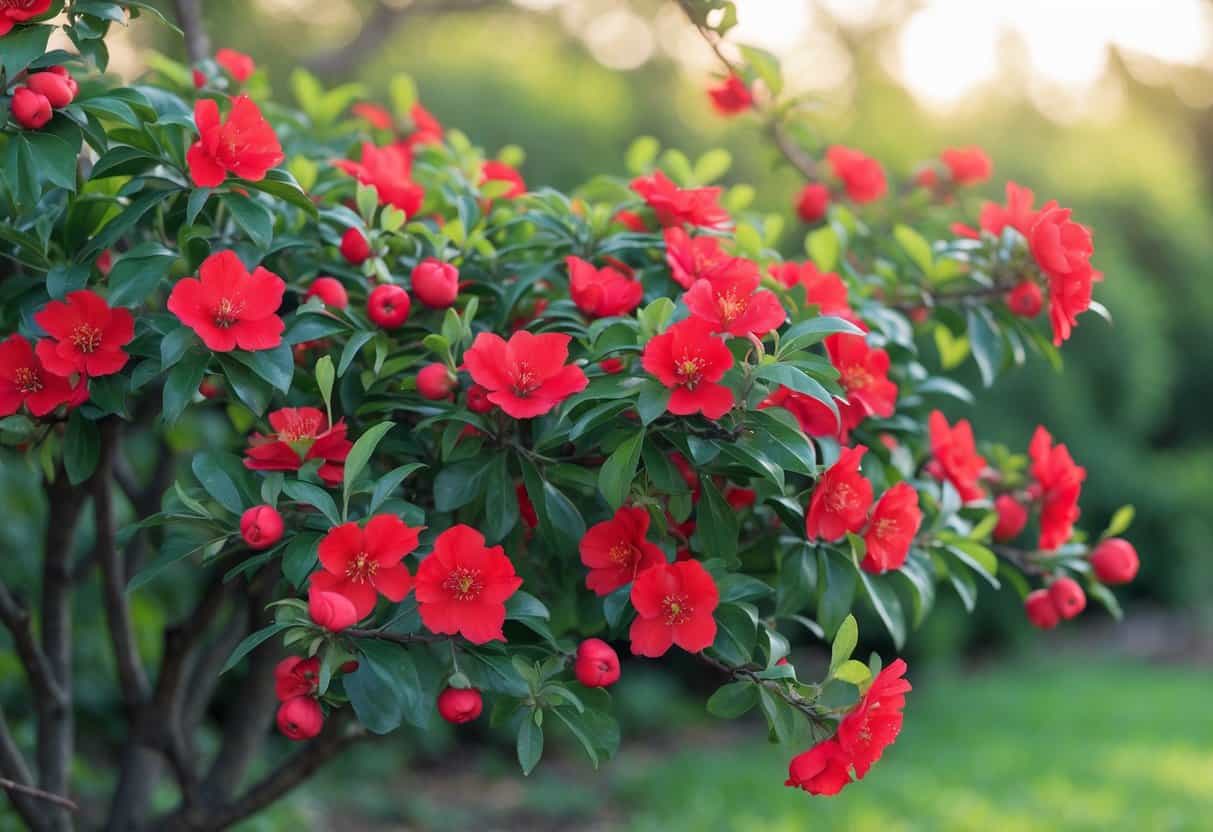
Quick Summary:
Texas Scarlet Flowering Quince brings a burst of brilliant red blooms and lush green foliage to your garden each spring. It’s a low-maintenance beauty, offering edible fruit in both US (zones 5–9) and Australian (temperate to cool) climates.
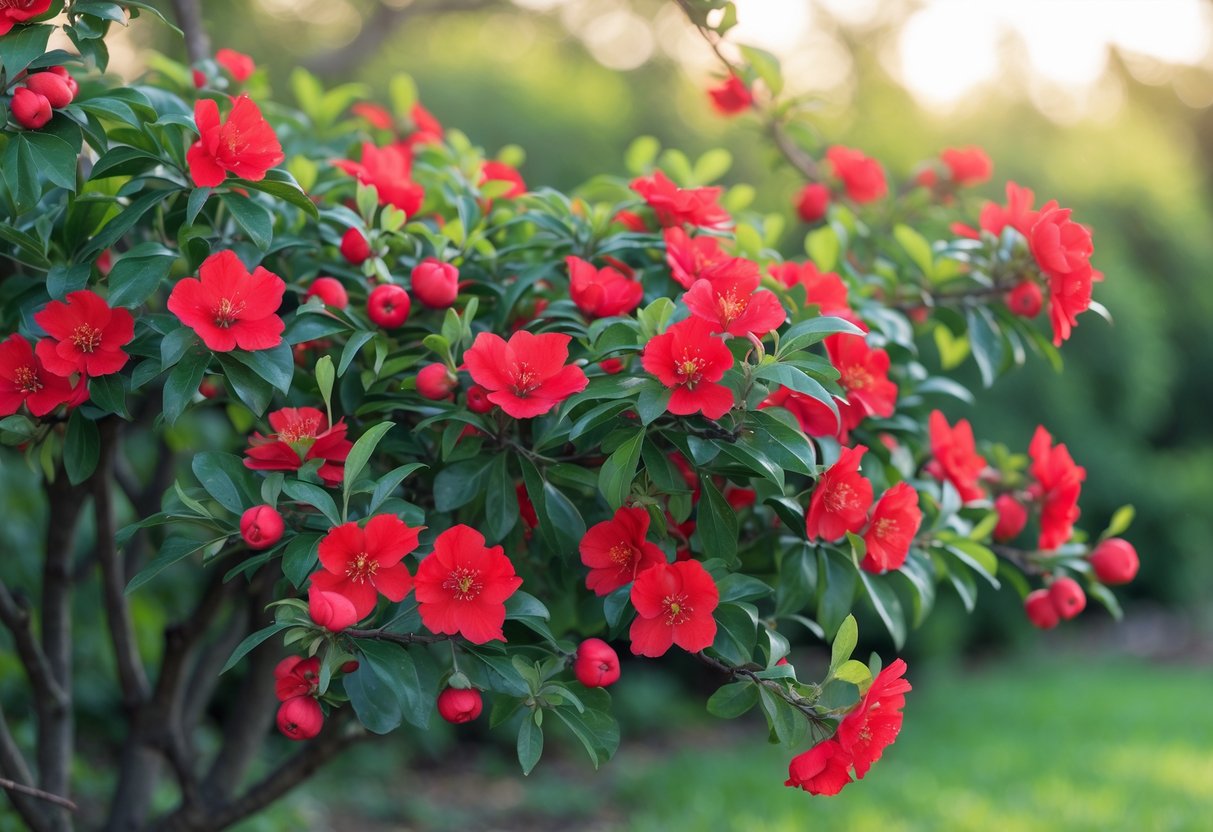
![A Texas Scarlet Flowering Quince shrub bursting with bright red flowers, with glossy leaves and a warm sunlight backdrop. ALT: A vivid, cheerful shrub covered in watermelon-red blooms and shiny green leaves on a sunny spring day.]
Remember that first surprise splash of color after winter? The kind that makes you pause and really look? If you’ve ever wanted more of those moments, Texas Scarlet Flowering Quince might just be your new favorite.
With its rich scarlet flowers and glossy leaves, this compact shrub puts on a show that can light up even the dullest corner. It’s the sort of plant that has a way of making you smile, even on a gray day.
Texas Scarlet Flowering Quince offers eye-catching color in early spring, thrives in a range of climates, and is easy to care for with just a little pruning. That’s what makes it special—and why even beginners can succeed with it.
Key Takeaways
- Texas Scarlet Flowering Quince is a compact, showy bush with bright red blooms.
- Grows well in both US and Australian temperate or cool zones, with minimal care needed.
- Offers beauty in the garden and produces fruit that can be used in cooking.
What Is the Texas Scarlet Flowering Quince?
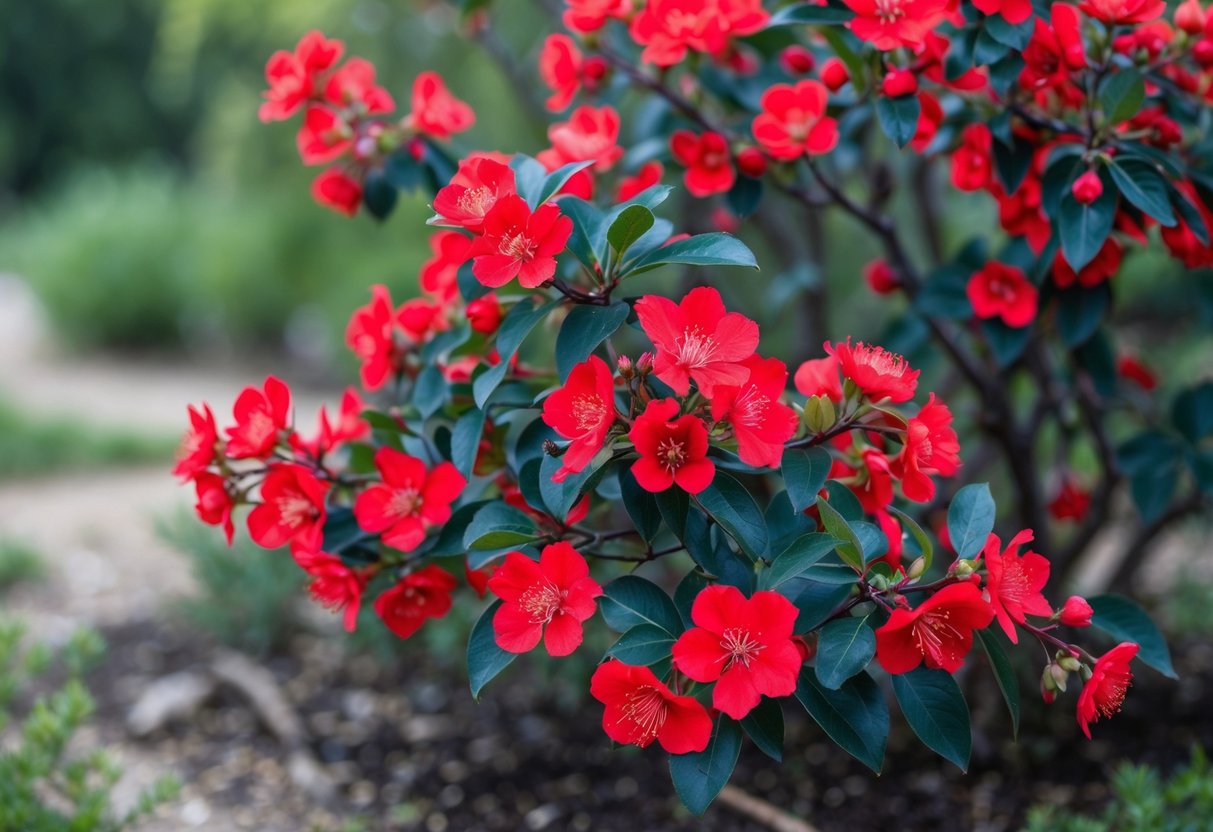
This shrub stands out for its bright red blooms and its ability to thrive with little fuss in many gardens. Its bold color, early spring flowers, and compact form make it a favorite for hedges, small yards, and edible landscaping.
Brief Overview of the Plant
The Texas Scarlet Flowering Quince (Chaenomeles × superba ‘Texas Scarlet’) is a compact, deciduous shrub. It grows about 3–4 feet (90–120 cm) tall and spreads 4–5 feet (120–150 cm) wide.
The plant wakes up early in the year, bursting into watermelon-red flowers, often before the leaves appear. Each flower measures up to 2 inches (5 cm) across and glows against bare branches.
Its glossy, dark green leaves arrive after the blooms. As fall rolls around, the shrub may develop small, hard, yellowish-green fruits.
Gardeners in USDA zones 5–9 (temperate to arid for Australia) will have good luck growing this plant outdoors. Personal anecdote placeholder: The first time I tried growing one, I was surprised how easily it came back even after a chilly spring night.
Tip: Flowering is best in full sun, but the plant tolerates partial shade—making it flexible for busy garden corners.
If you’re still picking which quince to choose, let’s talk about its many popular names.
Common Names: Texas Quince Plant, Texas Quince Bush, Texas Scarlet Quince Shrub
You may hear different names at the nursery, which can get confusing fast. The Texas Scarlet Flowering Quince often goes by:
• Texas Quince Plant
• Texas Quince Bush
• Texas Scarlet Quince Shrub
All these names refer to the same plant. You might also see it labeled as a Japanese Quince hybrid, reflecting its Chaenomeles parentage.
This isn’t a true quince tree (which produces large, edible fruit), but it does grow small, ornamental quinces great for jellies. In Australia, look for local climate tags like “temperate shrub” for best results.
In the US, you’ll often find it listed for USDA zones 5–9. Using the right name helps you spot the correct variety at your local garden center or order from a reputable supplier.
Personal anecdote placeholder: I picked up a “Texas Quince Bush” at a plant sale and only realized it was the Texas Scarlet after the flowers opened.
Tip: Labels for flowering quince can vary, so always check the botanical name (“Chaenomeles x superba ‘Texas Scarlet’”) for the best match.
Image ALT text: Vibrant Texas Scarlet Flowering Quince in early bloom, deep red flowers glowing along spiky bare branches in early spring, bringing brightness to a quiet garden.
About Chaenomeles ‘Texas Scarlet’
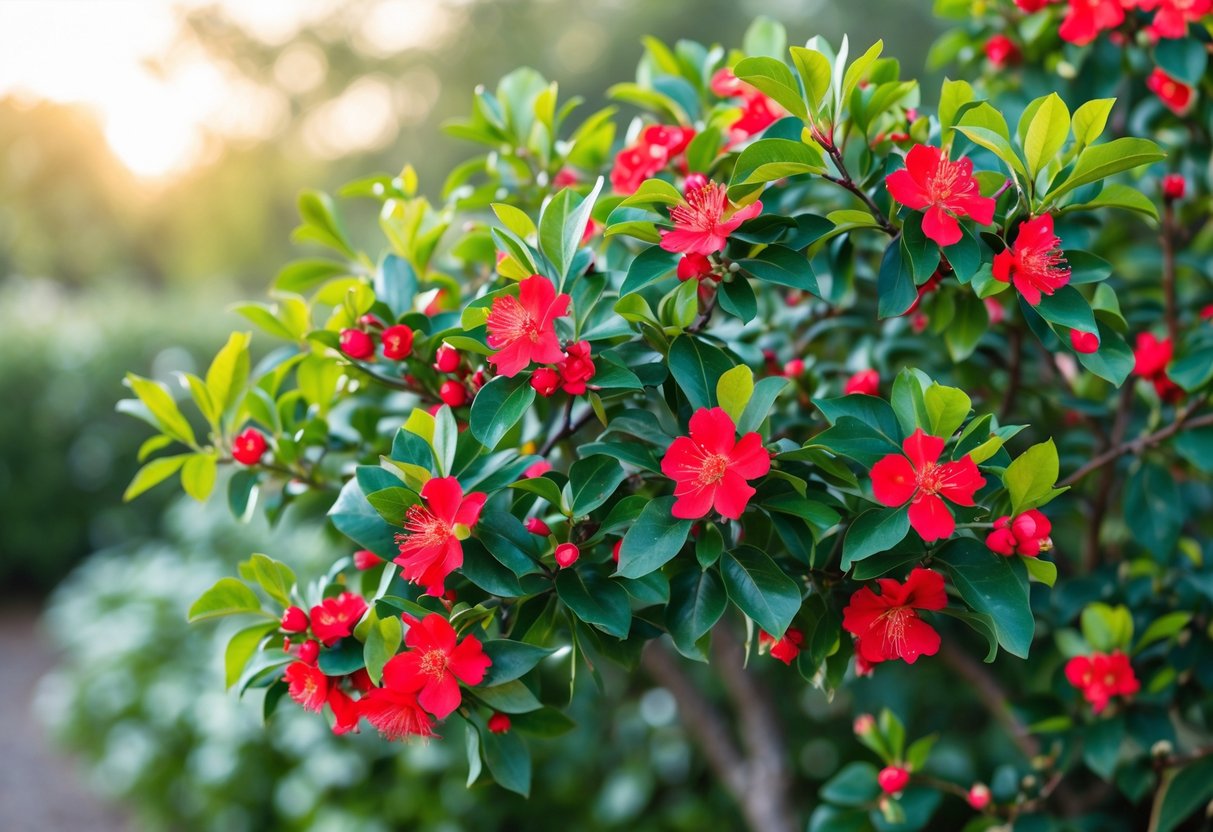
If you’re new to flowering quinces, Texas Scarlet stands out for its eye-catching red blooms and sturdy, compact habit. This hardy shrub is easy to grow and offers reliable color early in spring, just when you need it most.
Botanical Background: Chaenomeles Speciosa, Chaenomeles Japonica
Chaenomeles ‘Texas Scarlet’ comes from a cross between two main species: Chaenomeles speciosa and Chaenomeles japonica. Both are deciduous shrubs in the Rosaceae family, dropping their leaves each autumn.
Chaenomeles speciosa is known for strong, upright branches and grows a bit taller. Chaenomeles japonica tends to stay lower to the ground and spreads more.
The hybrid nature of Texas Scarlet means you get the best of both—a plant that’s compact but still produces showy, vibrant blooms. If you’ve ever pruned back a shrub too much and lost next year’s flowers, you’ll love that this quince puts out most of its blooms on old wood, so light shaping after flowering is all that’s needed.
For US gardeners, this plant thrives in USDA zones 5–9, which is equivalent to temperate to subtropical zones in Australia. Personal anecdote placeholder: First time I tried growing quince, I didn’t realize when to prune and missed out on the blooms—lesson learned.
Unique Features of the ‘Texas Scarlet’ Variety
‘Texas Scarlet’ is prized for its bright red flowers with yellow-gold centers. These blossoms cover the shrub in early spring, showing up before the glossy green leaves and looking almost electric against bare branches.
The shrub is compact, usually reaching 2–4 feet (60–120 cm) tall and 4–5 feet (120–150 cm) wide. It’s ideal for small gardens, low hedges, or anywhere you need a bold splash of color without taking up much space.
Deep green, oval leaves follow the flowers, giving the bush a neat, well-dressed look through summer. Small thorns dot the branches, so give it some space when planting near busy walkways.
If you want more blooms, prune just after flowering to encourage strong “flowering spurs” for next year—but do this sparingly to avoid losing future fruit. Occasionally, the bush will develop small, hard, yellow-green fruits in fall that can be cooked into jellies or preserves.
• Compact size suits borders, entryways, or pots
• Showy, tomato-red flowers in early spring
• Thorny branches can help form a living barrier
• Bitter fruit is best used in jams or left for wildlife
Image ALT text: Close-up of Texas Scarlet quince blooms glowing red on bare tangled branches, giving the early spring garden bold color and energy.
Growing Zones and Climate Requirements
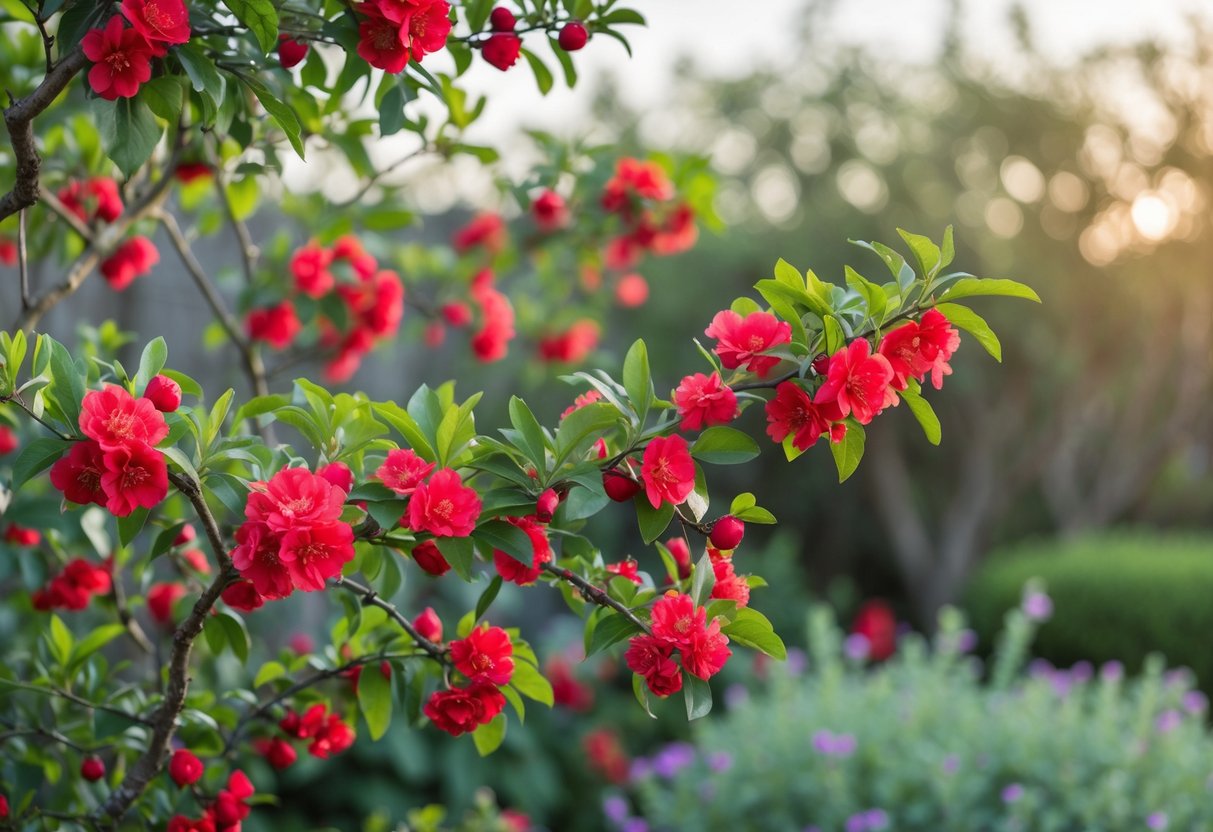
Texas Scarlet Flowering Quince can thrive in a variety of climates if you pay close attention to your zone and garden conditions. Choosing the right spot in your yard and understanding what the shrub needs to stay healthy makes a huge difference in your plant’s success.
Recommended Hardiness Zones for Texas Scarlet Flowering Quince
Texas Scarlet Flowering Quince works best in USDA hardiness zones 5–9. It handles cold down to about -20°F (-29°C), but it also tolerates summer heat.
For Australian gardeners, these zones line up with temperate, cool temperate, and parts of arid zones—think Melbourne, Adelaide, and even some inland Sydney suburbs. If you’re in a colder spot, a late spring frost might damage flower buds.
Plant it near a wall or sheltered spot if your area gets unpredictable weather. In hot climates, “partial shade” in the heat of afternoon helps prevent leaf scorch, especially in drier inland locations.
Here’s a quick table to check if this plant suits your zone:
| Region | USDA Zones | AU Climate Zone |
|---|---|---|
| Northern US | 5-7 | Cool temperate |
| Southern US | 7-9 | Temperate/Subtropical |
| S.E. AU | 8-9 | Temperate/Arid |
ALT text: A cheerful backyard garden with a blooming Texas Scarlet Flowering Quince by a wooden fence, full of vibrant red flowers and gentle spring sunshine.
First time I planted one, I didn’t check my frost dates and lost most blooms—so now I always check zone maps and talk to my local nursery before buying new shrubs.
Climate and Soil Preferences
Texas Scarlet loves full sun for the best flowers but will manage with some light or partial shade, especially if your summers get sweltering. Aim for at least four to five hours of direct sunlight daily, but protect plants from strong afternoon sun in hotter regions.
Well-drained soil is key. Heavy clay can cause root rot, and soggy ground means unhappy quince.
If your garden soil is dense, dig in compost or some coarse sand before planting. Avoid spots where puddles linger after rain.
The roots reach 12–18 inches (30–45 cm) down and spread wide, so give each shrub enough space to stretch. Here’s a quick rundown for planting success:
• Dig a hole twice as wide as the root ball
• Mix in organic compost
• Place shrub at the same depth as in the pot
• Water deeply after planting
• Mulch lightly, keeping clear of stems
Here’s a tip most folks miss: prune only after blooming to encourage more flowers next year—don’t trim in fall or you’ll accidentally chop off next season’s buds!
How to Plant and Care for Texas Scarlet Quince Bushes
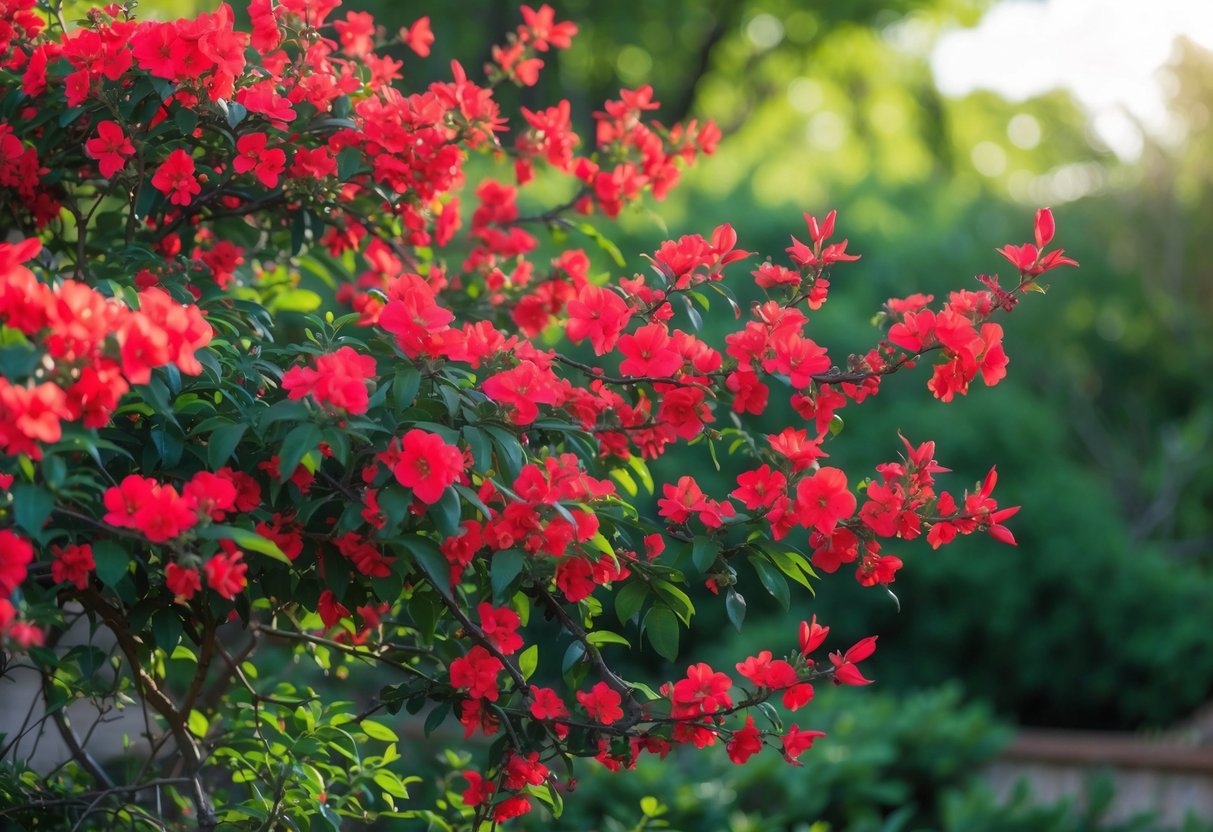
Texas Scarlet Flowering Quince is a sturdy shrub that lights up your garden with bold red blooms every spring. If you get the basics right—planting, watering, and pruning—you’ll enjoy healthy, flowering bushes for years.
Planting Instructions
Starting out with Texas Scarlet Quince isn’t hard, but choosing the right spot is key. Go for full sun if you want the most flowers, though a bit of shade is fine too.
It grows well in USDA zones 5–9 in the US, and in temperate or cooler subtropical areas in Australia.
For planting:
• Dig a hole as deep as the root ball and about twice as wide (12–18 inches/30–45 cm wide).
• Gently remove the plant from its pot. If the roots are tightly wound, tease them apart.
• Place the plant in the center, making sure the root flare sits just above ground level.
• Backfill with a mix of native soil and compost.
• Firm the soil with your hands and water well to settle roots.
Give each bush about 3–4 feet (90–120 cm) of space so the branches have room to spread. If you’re planting more than one, stagger them for a natural hedge effect.
The first time I planted one, I set it too close to a fence and had to move it the next year—don’t make my mistake!

Watering, Sunlight, and Soil Needs
Texas Scarlet Quince loves full sun—six hours or more is ideal. If your summers are brutal, a little afternoon shade won’t hurt.
For watering, keep it simple. During the first six weeks, water deeply every few days if there’s no rain.
Test the soil with your finger—if it’s dry two inches (5 cm) down, it’s time to water. Once the roots take hold, you can water weekly or just during dry spells.
This shrub isn’t picky about soil, but it does best in well-drained loam. If you’ve got heavy clay, mix in some sand and compost. Soggy ground is a no-go, since roots can rot.
The branches have thorns, so gloves are a smart idea when planting or watering up close. If soil stays wet too long, you might notice leaf spot or even defoliation.
Once established, Texas Scarlet is surprisingly drought-tolerant. If you forget to water for a week, it usually forgives you.
Pruning and Maintenance Tips
Pruning keeps your shrub neat and helps it bloom well. Only prune right after the flowers finish in spring—waiting too long risks cutting off next year’s buds.
Use sharp, clean pruners and definitely wear gloves—those thorns are not messing around!
Each year, remove:
• Dead, crossing, or damaged branches
• Suckers from the base
• Weak or thin stems to open up the center
If you spot fireblight (blackened tips), cut at least 8 inches (20 cm) below the damage. Disinfect your shears between cuts.
Scale insects sometimes appear—wash them off with a hose or use horticultural soap. Heavy pruning means fewer flowers next spring, so don’t get carried away.
The first year I tried to shape one, I got a little too enthusiastic and ended up with almost no blooms—a lesson learned. Less is more with this plant.
Uses and Benefits of Texas Scarlet Quince Plants
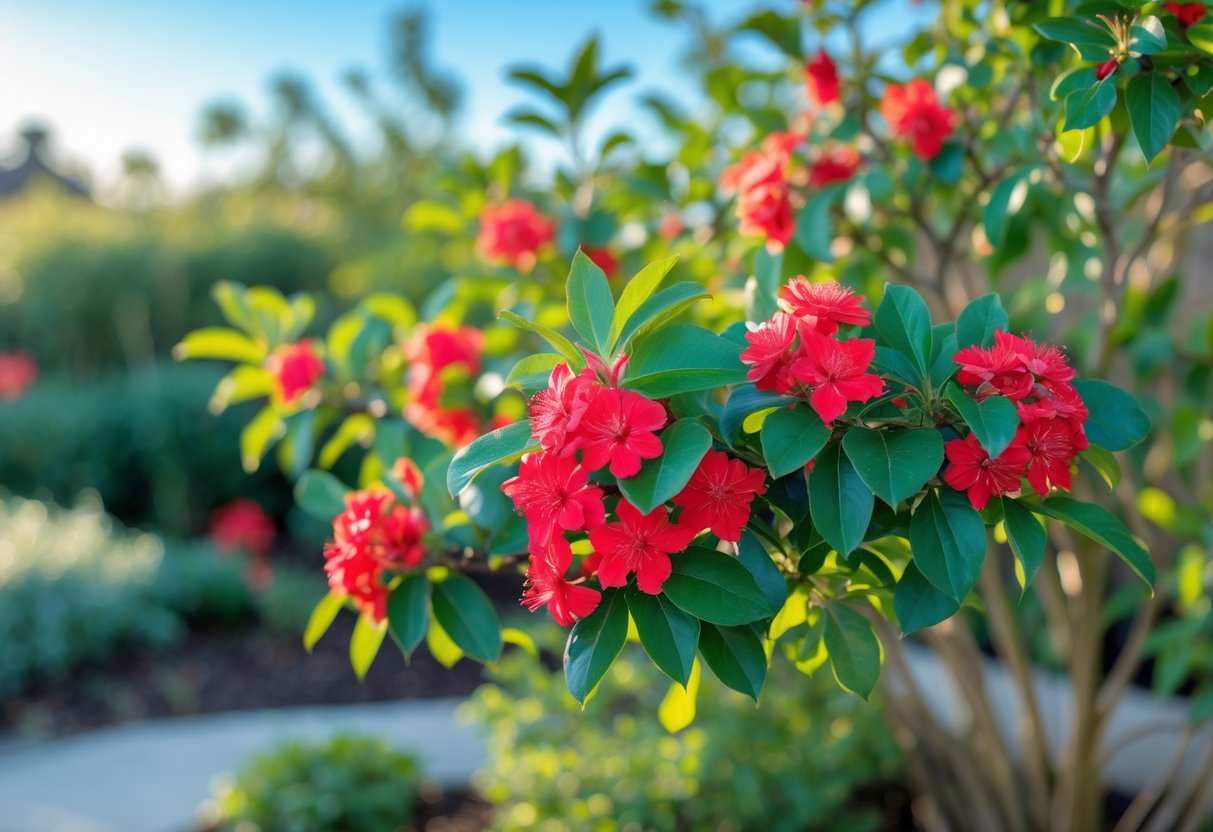
Texas Scarlet Quince isn’t just a show-off for spring. Its dense growth, early flowers, and quirky fruit offer plenty for gardeners, wildlife, and even your kitchen.
Landscaping Ideas
If you want color early in the year, Texas Scarlet Quince is a top pick. Those glowing red flowers show up before most other shrubs wake up.
Try them along a path for a bold border, or plant several as a thick hedge or barrier. They usually reach about 3–4 feet (90–120 cm) tall and spread out nicely, forming a low-maintenance screen.
Ever tried blocking a neighbor’s view without building a fence? These quince bushes can do the job, and their tangled, sometimes thorny branches help keep out unwanted visitors.
Pro tip: Leave about 4 feet (1.2 m) between shrubs. That way, they fill in but don’t crowd each other, which helps prevent disease and makes pruning easier.
They thrive in full sun and tolerate drought, making them a smart choice for dry parts of the US (USDA Zones 5–8) and temperate to warm temperate areas in Australia.
ALT text: Cheery Texas Scarlet Quince shrubs make a bright, welcoming border in a morning-lit garden; the red blooms stand out against fresh green foliage.
Attracting Wildlife and Pollinators
Those bright flowers in early spring are a magnet for bees and butterflies. If you’re hoping to help pollinators before other plants bloom, this shrub is a solid option.
The dense branches also give small birds and wildlife a place to hide. If you love seeing your garden wake up after winter, Texas Scarlet Quince can be a highlight.
The fruit isn’t always abundant, but some birds do go for it. You might spot finches or robins checking out your quince in autumn as the fruit ripens.
ALT text: Close-up of a few bees enjoying the red blossoms of Texas Scarlet Quince under soft, dewy morning light; it feels lively and fresh.
Edible and Ornamental Uses
Texas Scarlet Quince produces small, yellow-green fruits in late summer to autumn. They look like tiny apples but are usually too tart and hard to eat raw.
Don’t let that stop you—there’s a reason gardeners love them.
Fruit Uses Table
Here’s a quick look at how you can put the fruit to use:
| Use | What to Do | Notes |
|---|---|---|
| Preserves, Jellies | Cook fruit with sugar to make jams | Wait until after first frost for best flavor |
| Cooking with meats | Add diced fruit to roasts or braises | Use sparingly; fruit is tart |
| Decorative bowls | Display fresh fruit for scent/color | Safe if out of reach of children |
Handle quince seeds with care—like apple seeds, they shouldn’t be eaten.
Once you know that, these fruits are great for old-school preserves and jellies. Or just use them to scent a room—toss a few in a bowl on your kitchen table.
ALT text: Small bowl filled with homemade quince jelly, glowing gold in the midday sun, with a rustic backdrop evoking warmth and tradition.
If you’ve never tried making jelly, maybe this is the year. The process is fun and fills your home with a sweet, floral aroma.
Where to Buy Texas Scarlet Flowering Quince Plants
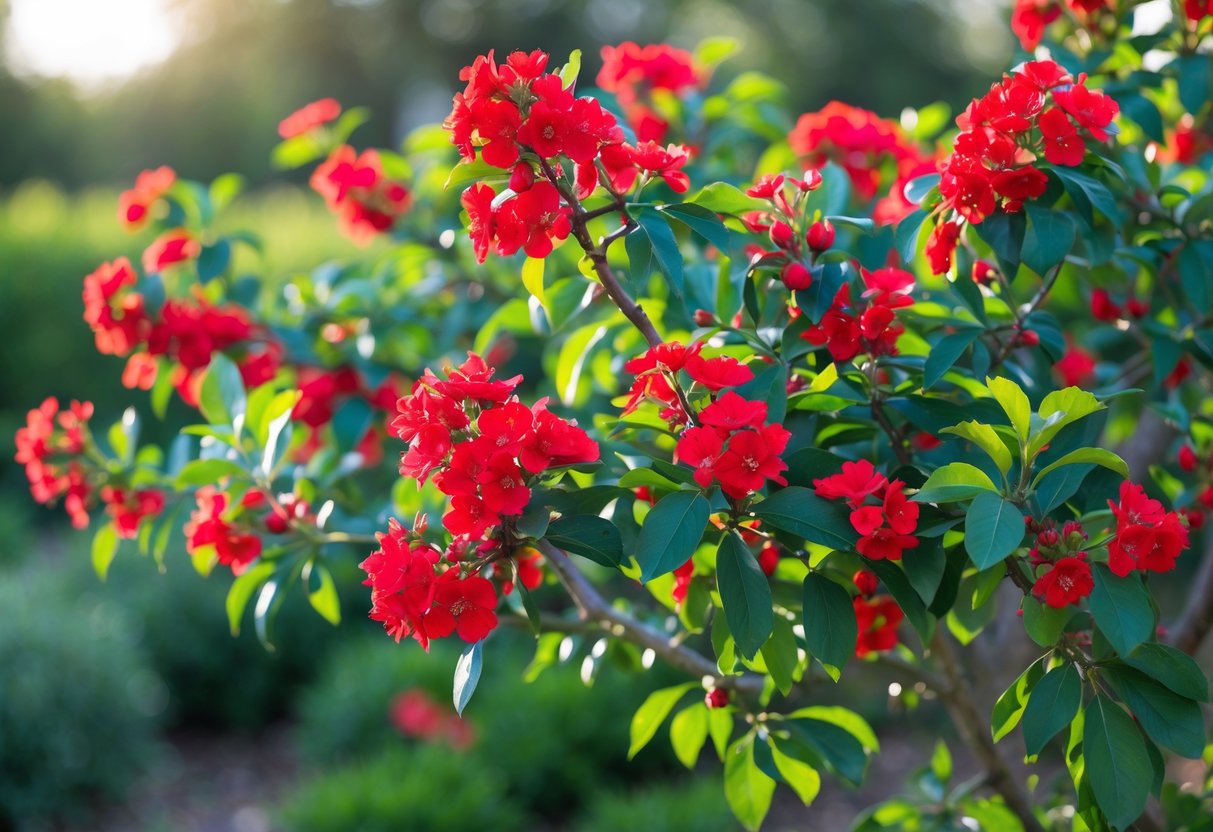
You’ve got a few good options for buying Texas Scarlet Flowering Quince—local nurseries or reliable online shops. Picking a healthy plant is pretty straightforward once you know what to look for.
Tips for Finding Texas Scarlet Flowering Quince for Sale
Try both local nurseries and online retailers. Many garden centers stock Chaenomeles ‘Texas Scarlet’ in spring, but it’s worth calling ahead.
Specialist nurseries, in person or online, are also a smart bet. Trusted sites like Nature Hills Nursery or local equivalents usually have them in 1–5 gallon (4–20 L) containers.
US gardeners can check Wilson Bros Gardens or Pixies Gardens. Australian gardeners should look for nurseries with plants for temperate or subtropical zones (Zones 4–9 USA, similar to most of southern Australia except the tropics).
• Check seller reviews if shopping online.
• Compare prices and sizes. Bigger pots cost more but the plants are more established.
• Ask about the best shipping times; early spring or autumn is usually best for planting.
• Personal anecdote placeholder: The first time I tried mail-order shrubs, I didn’t check shipping times and they arrived mid-summer—lesson learned!
Quick tip: If you can, buy in person. You get to inspect the shrub and skip shipping hassles.
![Image ALT: A bright, bustling nursery filled with potted flowering shrubs; sunlight streams through greenhouse windows. Mood is hopeful and inviting.]
What to Look for in a Healthy Plant or Shrub
Healthy Texas Scarlet Quince should have deep green leaves with no yellow or brown edges. Stems should feel sturdy, and the shape is usually bushy and compact—about 3–4 feet (90–120 cm) tall and wide for mature plants.
Check for:
• Pests—look under leaves for tiny webs or holes.
• Fungal spots or weird patches on leaves or stems.
• Roots that don’t circle the pot or poke out the bottom; that’s a sign the plant isn’t root-bound.
Surprising tip: Small thorns on older wood are normal for quince. Some types are nearly thornless, but ‘Texas Scarlet’ usually has sparse, spiny branches.
If you see small yellow-green fruits left from last season, that’s a good sign your shrub is maturing well. Steer clear of anything with limp growth, dry soil, or a wilted look.
![Image ALT: Close-up of a nursery worker gently holding a leafy, thorny shrub; they’re smiling in front of rows of healthy plants, giving a cozy sense of care.]
Frequently Asked Questions
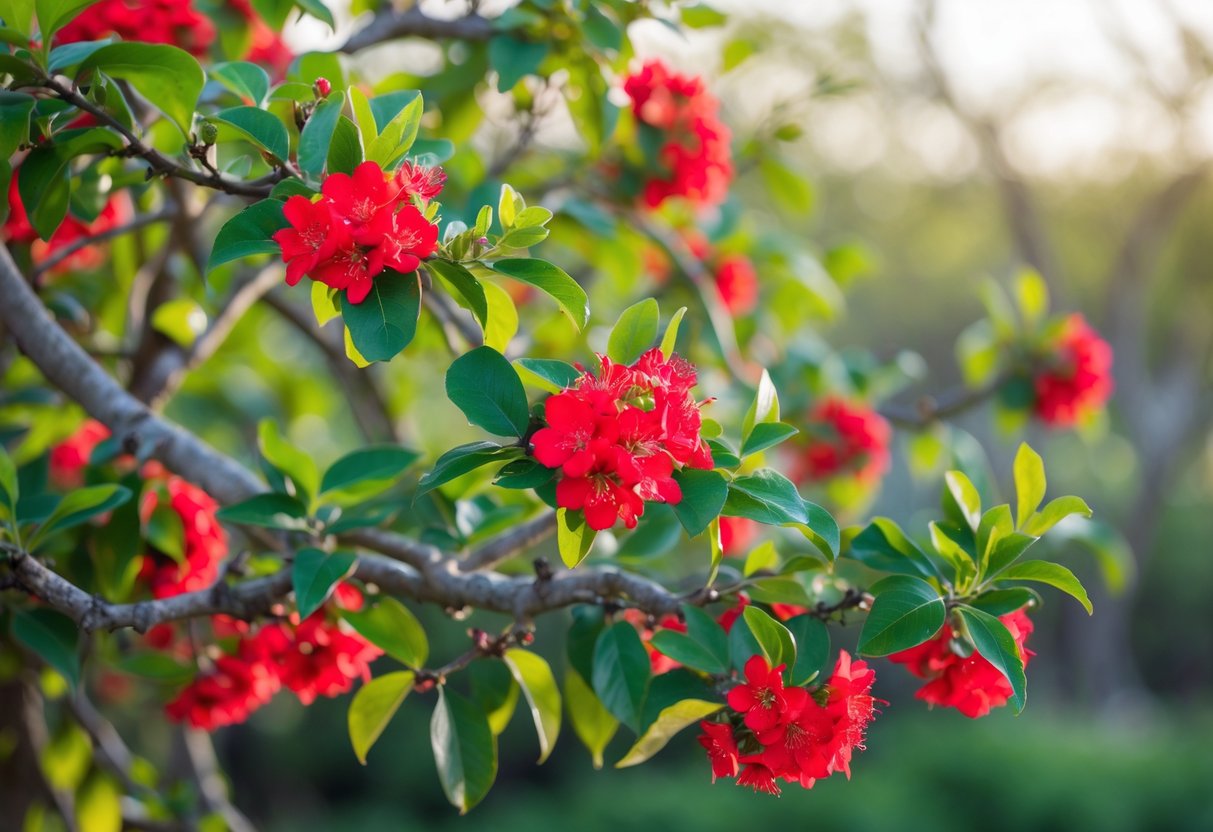
Growing Texas Scarlet Flowering Quince means paying attention to sunlight, spacing, and care. With some patience and the right pruning, you’ll get those classic red blooms—and maybe even try your hand at bonsai or hunting down the perfect shrub.
What tips can you follow to ensure your Texas Scarlet Flowering Quince thrives?
Your Texas Scarlet Flowering Quince is happiest in full sun. Aim for six hours or more each day.
Well-draining soil matters too. Sandy loam with a pH near 6.0 to 7.0 is just about perfect.
If you’re gardening in the US, look for USDA Zones 5–9. In Australia, most temperate regions will do.
Mulch keeps roots cool and helps block weeds. Water during dry spells, but don’t let the soil get soggy.
Honestly, I wish I’d checked soil with my finger before watering—makes it easy to avoid overdoing it.
Feed with a balanced 10-10-10 fertilizer in spring and midsummer. Don’t overdo it, but don’t skip it either.
ALT text: Sunlight shines on a bright Texas Scarlet Flowering Quince shrub with deep red blooms in a cheerful backyard garden setting.
How much space should you allocate in your garden when planting a Texas Scarlet Flowering Quince?
These shrubs are compact, but they need room to spread out. Plan for each bush to reach about 3–6 feet (1–2 meters) wide and tall.
Good air flow keeps them healthier and helps the flowers show off. If you’re thinking of a hedge, space them about 3 feet (1 meter) apart for a nice dense look.
ALT text: Small, bushy flowering quince plants spread out evenly in a home garden, surrounded by fresh mulch and a bright sky.
Where can you find a healthy Texas Scarlet Flowering Quince to purchase?
Most local garden centers and nurseries carry flowering quince, especially in early spring and fall. If you’re shopping online, go with a supplier that has solid reviews and clear info about plant health.
Look for plants with sturdy stems and healthy leaves—no weird spots or tangled roots. If you’re stuck, don’t be shy about asking staff for help. Everyone’s got a story about a plant they bought on impulse that didn’t work out!
ALT text: Smiling gardener holds a potted Texas Scarlet Flowering Quince in a sunlit greenhouse, vibrant plants behind her.
Is it possible to train a Texas Scarlet Flowering Quince into a bonsai, and if so, how?
It’s totally possible, though it takes some patience and a steady hand. Quince shrubs respond well to pruning and wiring, just like many classic bonsai.
Start with a young, healthy plant. Prune often to shape the branches and keep things tidy.
For beginners:
- Prune new shoots after flowering to control the size.
- Wire branches gently in late winter to set the structure.
- Repot every 2–3 years, trimming roots to keep the plant compact.
If there’s one thing I wish I’d known before my first bonsai: don’t rush—less is usually more.
Bonsai does best outdoors in bright light, with careful watering and feeding. It’s a slow art, but worth it.
ALT text: A tiny Texas Scarlet Flowering Quince bonsai sits on a wooden table with vivid red blooms and twisted branches, sunlight streaming through a window.
When is the right time to prune your Texas Scarlet Flowering Quince for the best blooms?
Prune in late winter or early spring, before new growth shows up. That’s when you’ll get the best blooms and shape the plant while it’s still bare.
Cut away old, tangled, or dead branches. After flowering, you can trim lightly to tidy up, but save heavy pruning for when it’s dormant.
Honestly, if you forget a year, don’t stress—quince are pretty forgiving.
ALT text: Close-up of gardener’s hands pruning thorny branches from a bare shrub in early spring, with scattered red buds and crisp air.
How fast can you expect your Texas Scarlet Flowering Quince to grow, and what influences its growth rate?
With the right conditions, these plants take off pretty quickly in the first couple of years. They’ll usually hit their full height—up to 6 feet (about 2 meters)—in three to five years.
Growth really speeds up if you give them bright sunlight and keep the soil healthy. Regular watering helps too, though you don’t want to drown them.
If you’re dealing with drought or rough soil, expect things to slow down. Shade doesn’t do them any favors either—blooms drop off, and branches get leggy.
If your quince just isn’t thriving, it might be root crowding or even pests. Sometimes you just have to poke around and see what’s going on down there.
ALT text: Fast-growing quince stems reach for the sky, dotted with bright green leaves under a warm sun and blue sky.