

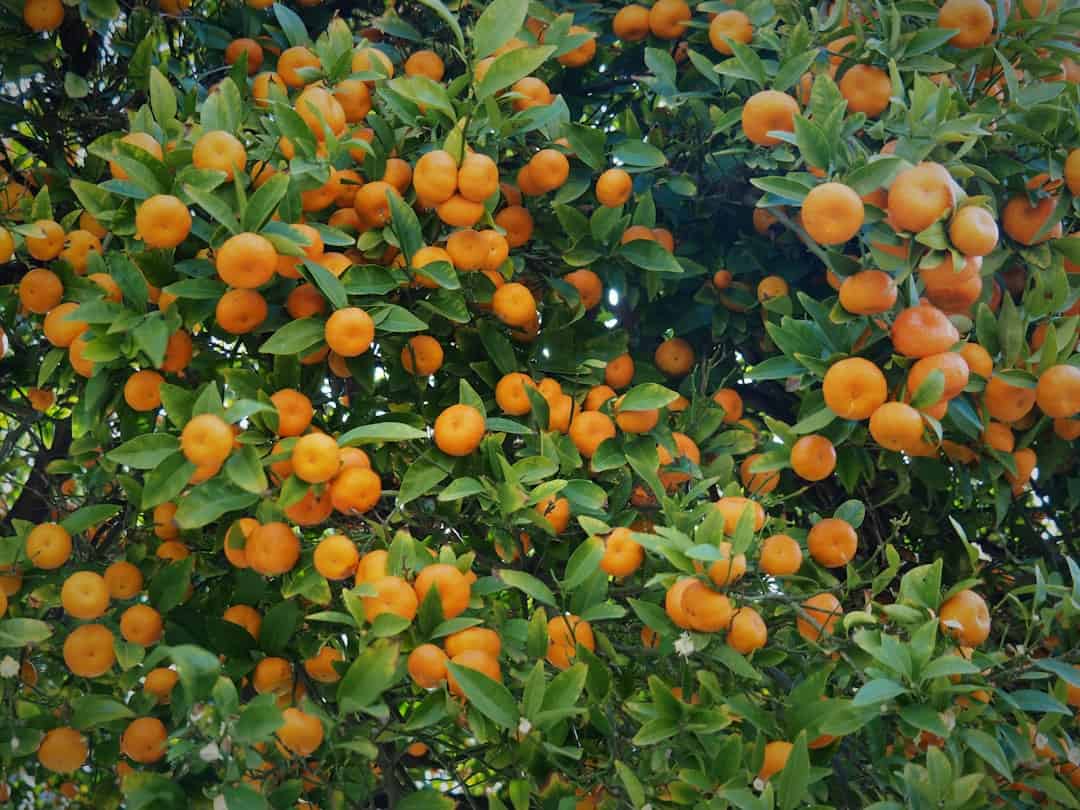
Mandarins make a tasty snack, add a pop of flavor to salads, and work in all sorts of recipes. If you enjoy cooking or want to dip your toes into growing your own food, this is a solid starting point.
Let’s dive into the main steps and a few handy tips for growing a healthy mandarin tree—plus a couple of tricks you might not hear from most beginners.

Ever thought about picking fresh, sweet mandarins right off your own tree? Mandarins are probably one of the easiest citrus fruits you can grow at home, as long as you give them lots of sunlight, well-draining soil, and some regular care.
Whether you’re just getting started with gardening or want a fun project to try with the kids, growing mandarins can fit into almost any space—even if all you have is a big pot on your balcony.
Quick Tips for Mandarins
Best Time To Plant
Late winter to early spring (after last frost); avoid planting in high summer heat
Sun / Lighting
8–12 hours daily, full sun preferred
Spacing
8–10 ft (2.5–3 m) between trees; in pots: one plant per large container
Soil Type / PH
Well-drained, sandy or loamy soil; pH 5.5–6.5
Container Info
Use 18–24 inch (45–60 cm) pot, at least 15–20 gallons (60–75 L); raised drainage, wheels help
Propagation
Grafted seedlings preferred for reliable fruit, but seeds can be grown (won’t be true to type)
The first time I tried growing a mandarin tree in a pot, I was honestly surprised by how quickly it filled out with glossy leaves. By its second year, it started flowering.
Harvesting that first ripe fruit felt like a small but real win as a gardener!
About Mandarins
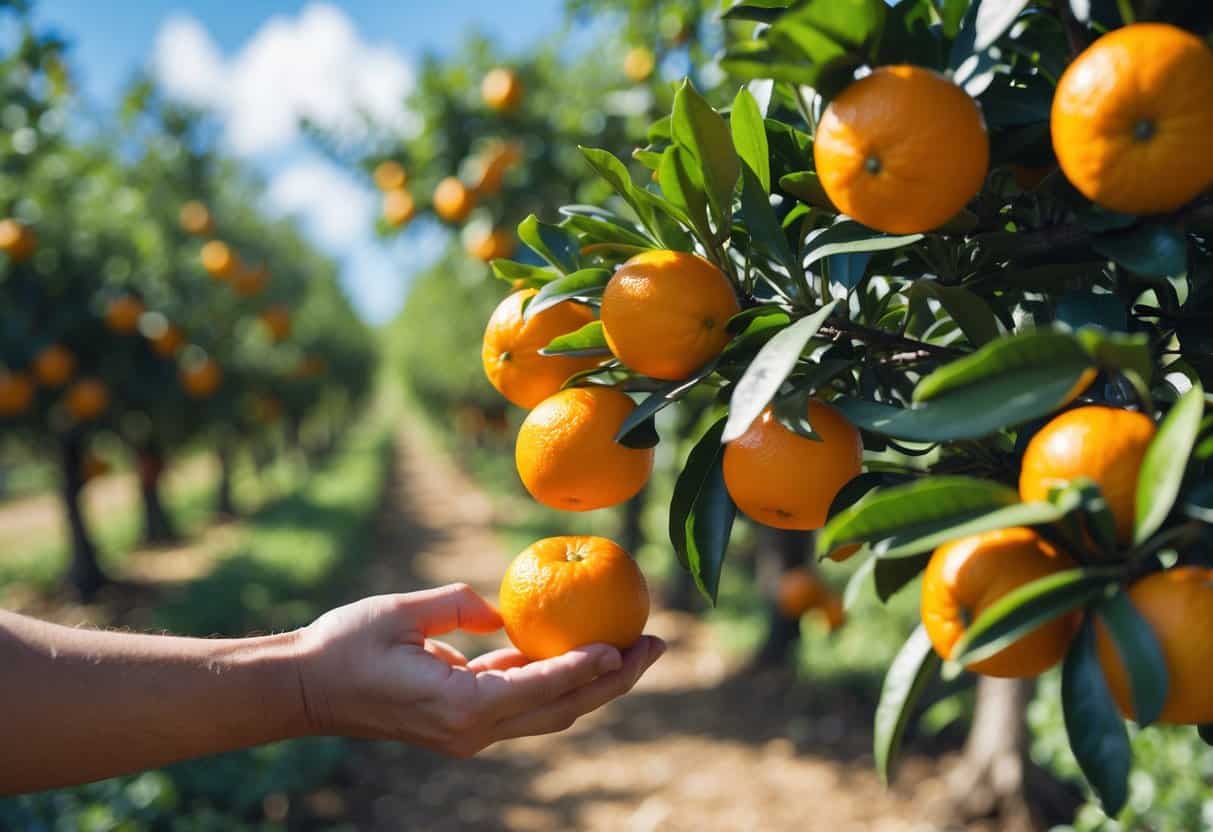
Mandarins are small citrus fruits with sweet, bright flavor and skin that peels off easily. They're a favorite in home gardens and kitchens for snacking, salads, or desserts.
Mandarins Growth Habits
Mandarin trees are evergreen and tend to grow as small, bushy trees with shiny green leaves. In spring, they put out fragrant white flowers that turn into fruit by late fall or winter, depending on where you live.
They really love full sun and soil that drains fast. While they can handle a little frost, they do best in places with mild weather—warm days, cool nights.
If you’re in a cooler spot, you can still grow mandarins in big pots and move them inside when it gets cold.
Their roots grow both deep and shallow, so steady watering is important, especially for young trees. Once they’re established, you only need one tree to get fruit—they’re self-fertile.
If you keep up with regular care, your tree will reward you with fruit year after year.
Growing Zones for Mandarins
USA:
- Zones 9–11 as perennials, Zones 7–8 as annuals
- In cooler regions, grow mandarins in containers and move indoors in winter. In warm regions, provide afternoon shade if temperatures consistently exceed 100°F (38°C).
Australia:
- Subtropical, Warm Temperate, Tropical
- In cooler or temperate zones, use pots and bring trees indoors during frost. In hot/dry regions, mulch well and water deeply during extended heat.
Varieties Of Mandarin

There are a bunch of mandarin types, each with its own look and taste. Choosing the right one makes a big difference—especially if you want fruit that matches your climate or your favorite recipes.
Satsuma (Citrus unshiu)
Appearance: Small and round, with thin, loose skin that’s super easy to peel.
Flavor: Sweet, mild, and really juicy.
Best Use: Great for eating fresh, tossing in salads, or packing in lunchboxes
Murcott / Honey Mandarin
Appearance: Medium-sized, deep orange skin, usually has a few seeds.
Flavor: Very sweet, almost honey-like.
Best Use: Perfect for snacking, desserts, or juicing.
Dancy
Appearance: Bright orange-red, small to medium, skin is thin but a bit tighter.
Flavor: Rich, tangy flavor—more intense than most.
Best Use: Nice for eating fresh, making marmalade, or holiday treats.
Emperor Mandarin
Appearance: Medium to large fruit with puffy, pale orange skin that separates easily from the flesh.
Flavor: Rich, sweet, and juicy with a few seeds; slightly stronger flavor than Imperial.
Best Use: Great for eating fresh, juicing, or adding to fruit salads—also a good late-season option.
Imperial Mandarin (my favorite)
Appearance: Small to medium-sized fruit with smooth, glossy, pale orange skin that’s easy to peel.
Flavor: Sweet, mild, and juicy with very few seeds—classic mandarin taste that’s not too tangy.
Best Use: Perfect for snacking, lunchboxes, salads, or simply enjoying fresh out of hand.
Kumquats are in the same citrus family and sometimes called "mini mandarins." You can eat them whole, skin and all, but they aren’t true mandarins.
When you’re picking a variety, think about your space, climate, and how you want to use the fruit. Some types need warmer weather, while others—like Satsuma—can handle a bit of winter chill.
Quick Tips for Picking a Variety
Go for cold-hardy types if you get mild frosts.
For the sweetest fruit, try “Honey” or “Kishu.”
Want easy snacks for kids? Pick easy-peel types.
Only use Poncirus trifoliata if you’re into citrus grafting or want something unusual.


Planting Mandarins
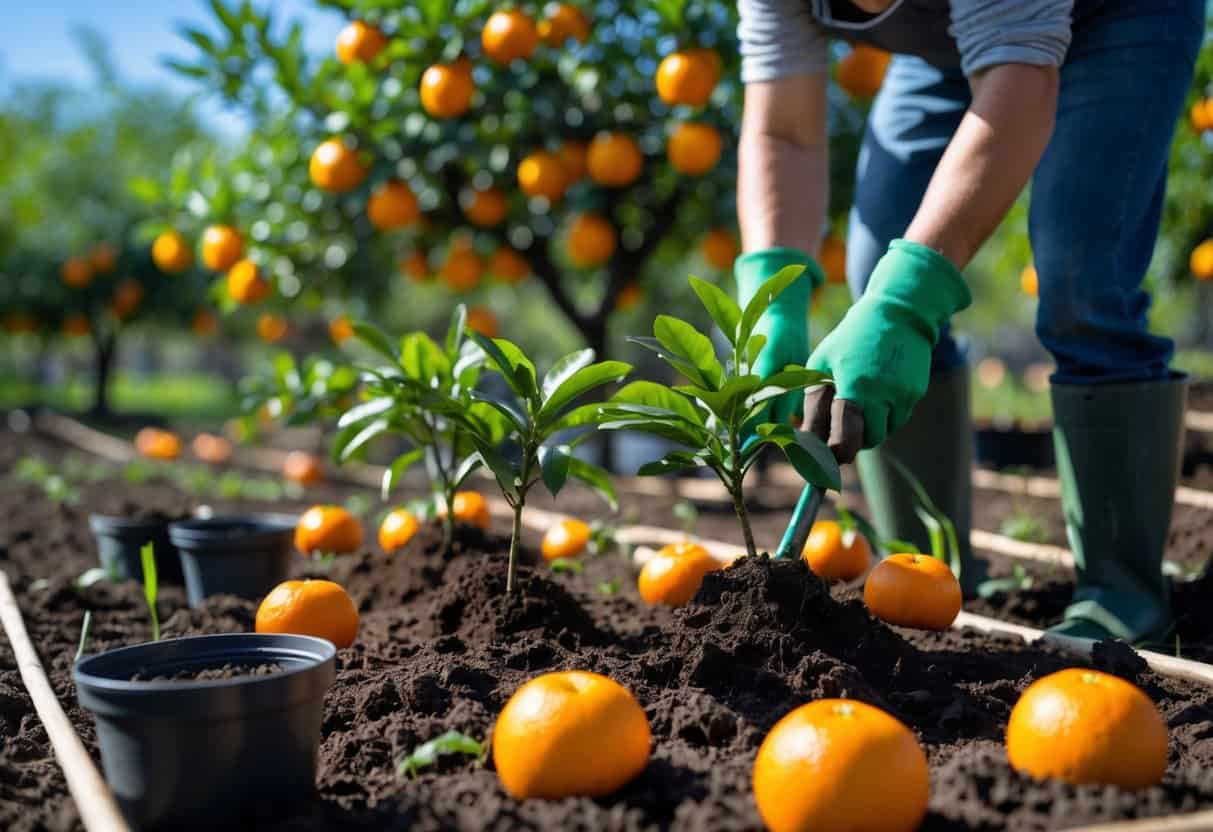
Mandarin trees need warmth, lots of sun, and soil that drains well. Picking the right time and spot really helps them settle in—whether you’re planting in the ground or using a big pot.
When To Plant
For the best results, plant mandarins in early spring when the soil starts to warm up and there’s no more frost. If you live somewhere with mild winters, planting in late fall can work too, as long as the young tree gets a few months of gentle weather to get established.
Skip planting during extreme heat—if it’s over 100°F (38°C), young trees will struggle.
If you want to grow from seed indoors, you can start anytime, but only move plants outside after the last frost. Seedlings or nursery trees should spend at least a week getting used to outdoor conditions before you plant them out.
Directly sowing seeds outside isn’t common—germination is slow, and baby seedlings are pretty delicate.
Where To Plant
Find the sunniest spot you can—mandarins need at least 8–12 hours of direct sun every day to make good fruit. Try to pick a place that’s sheltered from strong winds, like along a sunny fence or by a south-facing wall.
Soil needs to drain well. Heavy clay is a no-go for mandarins because it can cause root rot. If your soil is heavy, mix in some compost to loosen it up.
If your yard gets puddles after rain, plant on a raised mound or in a garden bed. Mandarins hate wet feet.
Don’t crowd your trees—leave at least 10–15 feet (3–4.5 m) between them, or check your variety’s spacing needs. Keep them away from big trees that could block sunlight or steal nutrients.
Container/Small-Space Growing
Mandarins actually do really well in large pots, especially if you’re short on space or have cold winters. Pick a sturdy pot that’s at least 18–24 inches (45–60 cm) wide and deep.
Make sure it has drainage holes—roots sitting in water are a recipe for disaster.
Use a citrus potting mix or a loamy, well-draining blend. Putting the pot on wheels or a trolley makes it easier to move around for sun or shelter.
Potted trees need more frequent watering than those in the ground, but don’t let them get soggy.
Container-grown mandarins stay smaller but can still produce a good crop. Repot every 2–3 years, or when the roots fill the pot.
Give them a light prune in late winter to keep them tidy and let air move through the branches.
How To Plant
If you’re planting a nursery-grown tree, dig a hole twice as wide as the root ball, but only as deep. Gently loosen any roots circling the bottom.
Set the tree so the top of its root ball is level with the ground.
Fill in with soil, pressing gently to get rid of air pockets. Water well to settle everything in.
Add a ring of mulch around the tree, but keep it a few inches away from the trunk to avoid rot.
If you’re starting from seeds, plant them about ½ inch (1 cm) deep in a pot of moist, loose mix. Keep them warm (around 70°F/21°C) and just slightly moist.
Germination can take 3–4 weeks or more. Seed-grown trees take longer to fruit and might not be exactly like the parent, but it’s a fun experiment.
Propagation
Most people grow mandarins from grafted nursery trees. This gives you reliable fruit and a faster harvest.
The top of the tree (the scion) is joined to a tough, disease-resistant rootstock. If you want fruit sooner and know what you’re getting, this is the way to go.
You can grow mandarins from seeds, but the fruit might not match the parent, and it can take 5–7 years to see any fruit at all.
Growing from cuttings is less common but doable—semi-hardwood cuttings about 6 inches (15 cm) long root best if you use a bit of rooting hormone and keep things warm and humid.
Layering (bending a branch to the ground and covering it with soil) sometimes works, but it’s pretty slow.
If you just want to experiment, growing from seed is fine. For a reliable harvest, stick with healthy, labeled grafted trees from a good nursery.
Care And Maintenance Of Mandarins
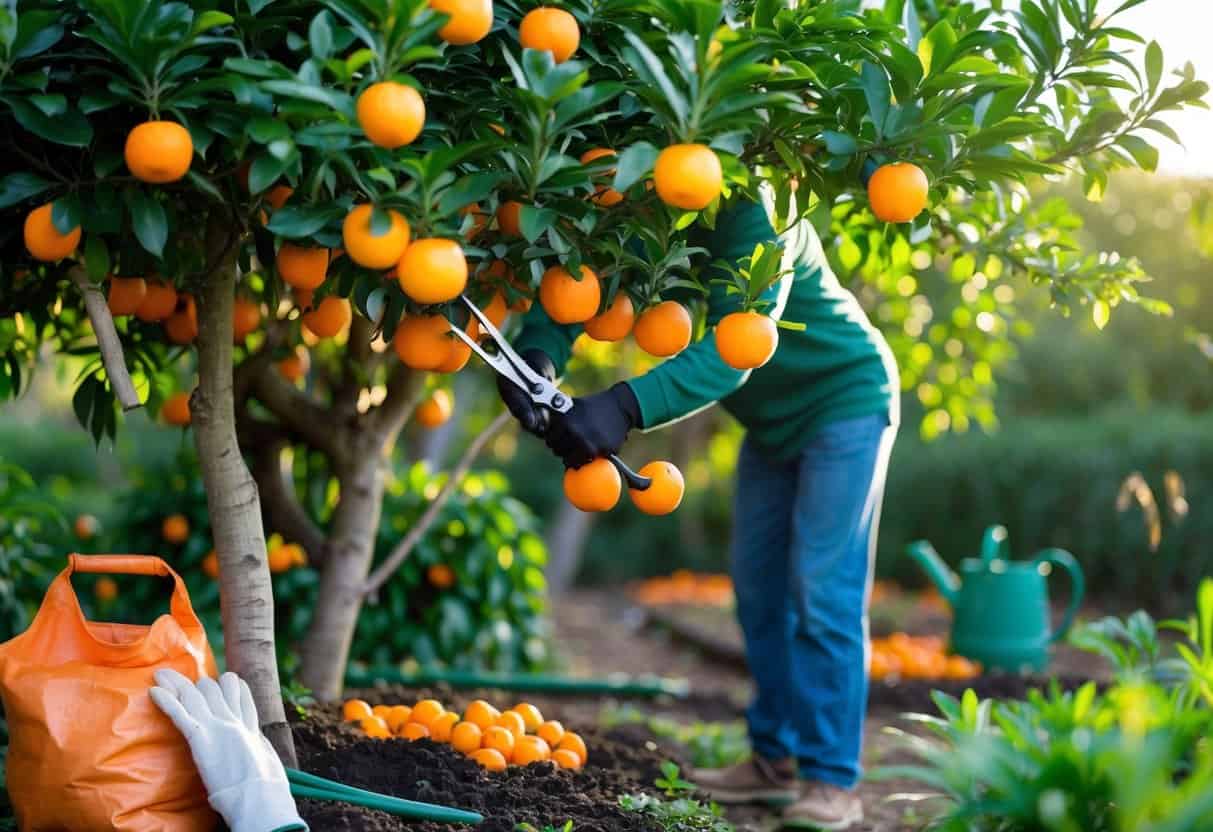
Mandarin trees do best with regular care. The three big things: get watering right, feed them steadily, and prune carefully.
These routines help your tree stay healthy, set fruit, and handle pests or rough weather.
Watering Needs
Mandarin trees like steady moisture, especially when they’re young or setting fruit. Don’t let the roots stay soggy, but avoid letting the soil dry out completely.
Let the top couple of inches (about 2–3 in / 5–7 cm) of soil dry before watering again.
You can check by poking your finger into the soil near the tree. If it still feels damp, hold off.
Most places, watering once a week is enough, but you’ll need to adjust if you get a lot of rain or have scorching summers.
Drip irrigation or slow watering at the base is best. It gets water down to the roots without wasting it.
Fertilizer
Feed your mandarin tree to encourage steady growth and good fruit. Organic citrus fertilizers are a good bet—they feed the soil and release nutrients slowly.
Use a balanced, organic citrus fertilizer with an NPK like 6-4-6. Feed in early spring before new growth, and again after fruit sets.
Pruning
When it comes to pruning your mandarin tree, the goal is to get rid of dead or damaged wood, improve airflow, and shape it so you can pick fruit more easily. Most of the pruning really should happen at the end of winter or right at the start of spring, before the tree wakes up and pushes new growth.
Don’t go overboard with pruning; mandarins do best with just a light touch. Here’s what to focus on:
Quick tip: Always use clean, sharp pruners to help stop the spread of disease. Make your cuts just above a leaf node or bud—trees heal faster that way.
Mandarin Problems And How To Fix Them
Mandarin trees are fun to grow, but sometimes things go sideways—pests, diseases, or just weird growing conditions can mess with your harvest. If you catch problems early and act quickly, your tree stands a much better chance of staying healthy.
Pests
Mandarin trees can attract a bunch of pests that chew on leaves, suck sap, or go after the fruit. In the US and Australia, it’s usually the bugs, not animals, that cause headaches.
Aphids
Symptoms: Sticky leaves, curled or twisted new growth
Solution: Blast them off with a strong spray of water or try insecticidal soap. Ladybugs help too.
Spider Mites
Symptoms: Fine webbing and little yellow dots on the leaves
Solution: Mist the leaves to bump up humidity, or spray with horticultural oil.
Citrus Leaf Miner
Symptoms: Silvery squiggles and twisted baby leaves
Solution: Pick off affected leaves and use pheromone traps. Go easy on the pruning.
Scale Insects
Symptoms: Tiny dome-shaped bumps on stems or leaves
Solution: Scrape them off by hand or treat with horticultural oil.
Honestly, squirrels, birds, and possums don’t usually bother mandarins much in home gardens in the US or Australia.
Diseases
Diseases on mandarins can show up as spots, rotten fruit, or just sad-looking growth. Good hygiene and quick action matter here.
Citrus Canker
Symptoms: Raised, corky spots on leaves and fruit
Solution: Cut off and destroy affected parts. Clean your tools. Skip overhead watering.
Root Rot (Phytophthora)
Symptoms: Wilted, yellow leaves, stunted growth, mushy roots
Solution: Fix drainage, don’t overwater, and use copper fungicide if things get bad.
Greasy Spot
Symptoms: Dark, oily-looking spots on leaves
Solution: Rake up and toss fallen leaves. Use copper spray in late spring.
Sooty Mold
Symptoms: Black, powdery coating on leaves and branches
Solution: Deal with the pest (like aphids or scale) making honeydew, and wash leaves with soapy water.
Growing Problems
Sometimes it’s not bugs or diseases—it’s water, nutrients, or even the weather. Keep an eye out for changes in leaf color or weird growth.
Yellow Leaves
Symptoms: Leaves turn pale or yellow, sometimes with green veins
Solution: Use a citrus fertilizer and check that the soil drains well.
Leaf Curling or Wilting
Symptoms: Leaves curling upward or wilting, especially if it’s hot
Solution: Water regularly, but don’t drown the roots. Shade the tree during brutal heat.
Fruit Drop
Symptoms: Young fruit falls off before it’s ripe
Solution: Don’t let the soil dry out, and go easy on the fertilizer. Sudden weather swings can also do this.
Slow Growth
Symptoms: Small leaves, thin branches, barely any new growth
Solution: Feed with balanced fertilizer and make sure the tree gets at least six hours of sun.
If your tree is acting up, check for more than one cause. Sometimes it’s a mix of things, and catching issues early really helps.
Harvesting [Plant]

Picking mandarins at just the right time makes a huge difference in flavor. For the sweetest, juiciest fruit, handle them gently and follow a few simple steps.
When To Harvest
Mandarins are ready when their skin turns fully orange and the fruit feels a bit soft when you squeeze it. This usually happens from late fall through winter, but it depends on your location and the variety you’re growing.
Early types need to be picked as soon as the outside color changes. If you grow late-season mandarins, you can leave them on the tree for up to six weeks after they color up.
Don’t wait forever, though—if fruit stays on the tree too long, it can lose flavor or just drop. Taste one before picking a bunch to make sure they’re sweet enough.
Harvest on cool, dry days if you can, since wet fruit doesn’t store well. If you notice fruit dropping on its own, it’s time to pick the rest.
How To Harvest
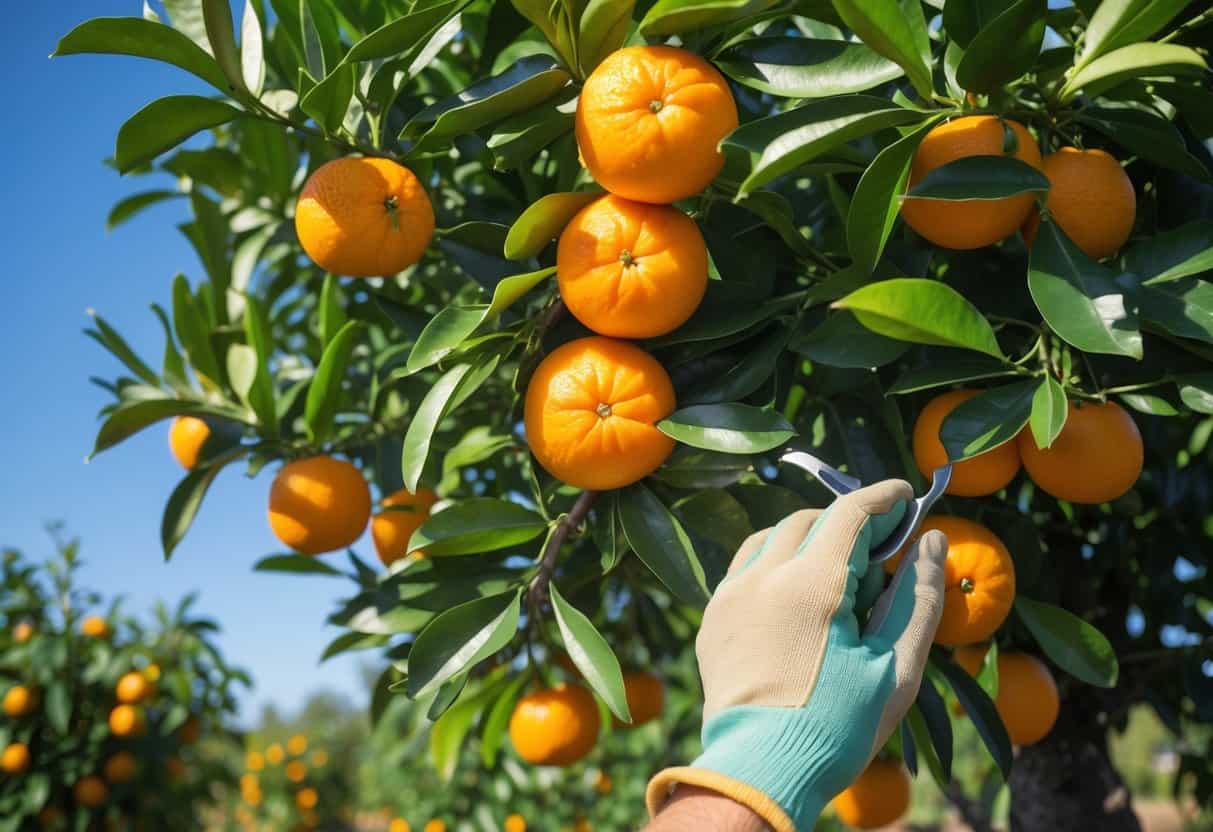
Use sharp, clean garden shears or scissors to snip mandarins from the tree. Leave a little stem on each fruit.
If possible, harvest in the morning when the fruit is cool for better flavor and longer storage.
Don’t pull fruit off by hand—it can tear the skin and lead to rot. Here’s a quick rundown:
How you store mandarins after picking makes a big difference in how long they stay fresh.
Storing Mandarins

Room Temperature Storage
Duration: About 1 week
Best For: Eating soon, or if you don’t have a ton to store
Spread mandarins out in a single layer in a cool, dark, well-ventilated spot. Don’t stack them or they’ll bruise.
Refrigerator Storage
Duration: Up to 2 weeks
Best For: Keeping a big harvest fresh a bit longer
Put unpeeled mandarins in the fruit drawer, not in sealed bags. Let them breathe, and check every so often for any going bad.
Paper Bag Storage
Duration: About 1 week
Best For: Quick and tidy storage in a busy kitchen
A paper bag slows down moisture loss without making the fruit soggy.
If your mandarins start to soften, use them soon for juice or cooking. Wash dirty fruit before storing, but let them dry completely to avoid mold.
Preservation Tips
Peel and section mandarins, freeze them on a tray, then move to freezer bags.
Duration: Up to 6 months
Best For: Smoothies, baking, or out-of-season snacks
Benefits and Uses of Mandarins
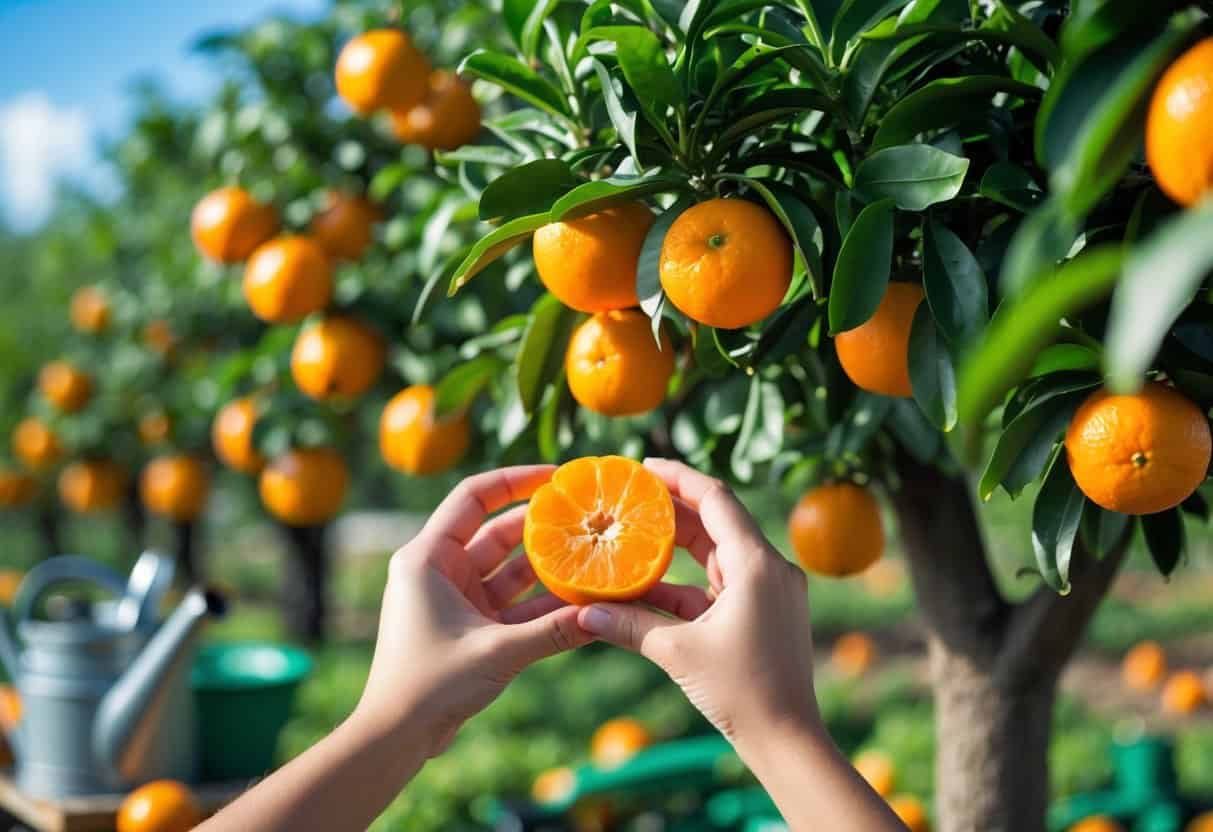
Mandarins aren’t just for snacking. They bring bright flavor to all sorts of dishes, pack a health punch, and sometimes even become part of family traditions in the kitchen.
Cooking With Mandarins
Mandarins are naturally sweet and tangy, making them super versatile. Since they’re easy to peel and usually seedless, they’re perfect for snacks and fresh salads.
Try tossing segments into green salads, grilled chicken, or fish for a fresh twist. Mandarin juice is great in marinades or salad dressings if you want a mild citrus kick.
They bake well in cakes or muffins and are delicious in fruit sorbets. The zest adds a pop of flavor to desserts and sauces—just be sure to wash the peel first.
Store fresh mandarins in the fridge for up to two weeks, or freeze the segments for smoothies. You can also dry the peel for a fragrant spice in teas or baked treats.
Family Recipes
Lots of families have go-to recipes that feature mandarins, whether they’re the star or just a finishing touch. These work for breakfast, snacks, or even gifts.
Mandarin Orange Marmalade
Bright and a little tart, perfect on toast or as a glaze for meats.
Mandarin and Avocado Salad
Juicy mandarin wedges, creamy avocado, spinach, and a simple vinaigrette.
Mandarin Sorbet
Pureed mandarins with sugar and lemon, frozen for a refreshing treat.
Mandarin Upside Down Cake
Uses fresh slices for a moist, colorful dessert that’s easy to share.
Mandarin Chutney
Cooked with onions and spices, this chutney goes well with roast meats.
Give this a try: Make candied mandarin peel for a homemade treat or edible gift—just simmer peel in syrup and roll in sugar.
Frequently Asked Questions
Mandarin trees are a favorite in home gardens because they’re simple to care for and produce sweet fruit.
Growing them takes a bit of patience, some attention to soil and temperature, and careful watering.
How can you successfully grow mandarins in pots?
Go for a large pot—at least 12–16 inches (30–40 cm) across and deep. Make sure it has drainage holes and use a good-quality potting mix made for citrus or fruit trees.
Water deeply but don’t let the soil stay soggy. Place the pot where it gets direct sun for part of the day. If you live somewhere cold, bring pots indoors before frost hits.
What is the expected growth rate of a mandarin tree?
Mandarin trees grow slowly at first, especially if you start from seed. Expect just a few inches (a few centimeters) of growth in the first season.
Once they’re established, healthy trees can put on about 12–24 inches (30–60 cm) per year if conditions are good. Indoor or potted trees usually grow a bit slower than those in the ground.
After planting, how long does it typically take for a mandarin tree to bear fruit?
If you plant a grafted tree from a nursery, mandarins usually take three to five years to produce fruit. Seed-grown trees can take even longer—sometimes up to seven years.
For very young trees, it’s smart to pick off any fruit in the first three years so the tree can focus on growing roots and branches.
Which climates are most suitable for growing mandarin trees?
Mandarin trees really thrive in warm, mild climates where frost is rare. They like hot summers but can handle winters as long as it doesn't get too cold.
You'll see them growing outdoors in spots like southern California, Florida, and some coastal parts of Australia. If you live somewhere chillier, it's probably best to keep your mandarin trees in pots and bring them inside once winter rolls around.