

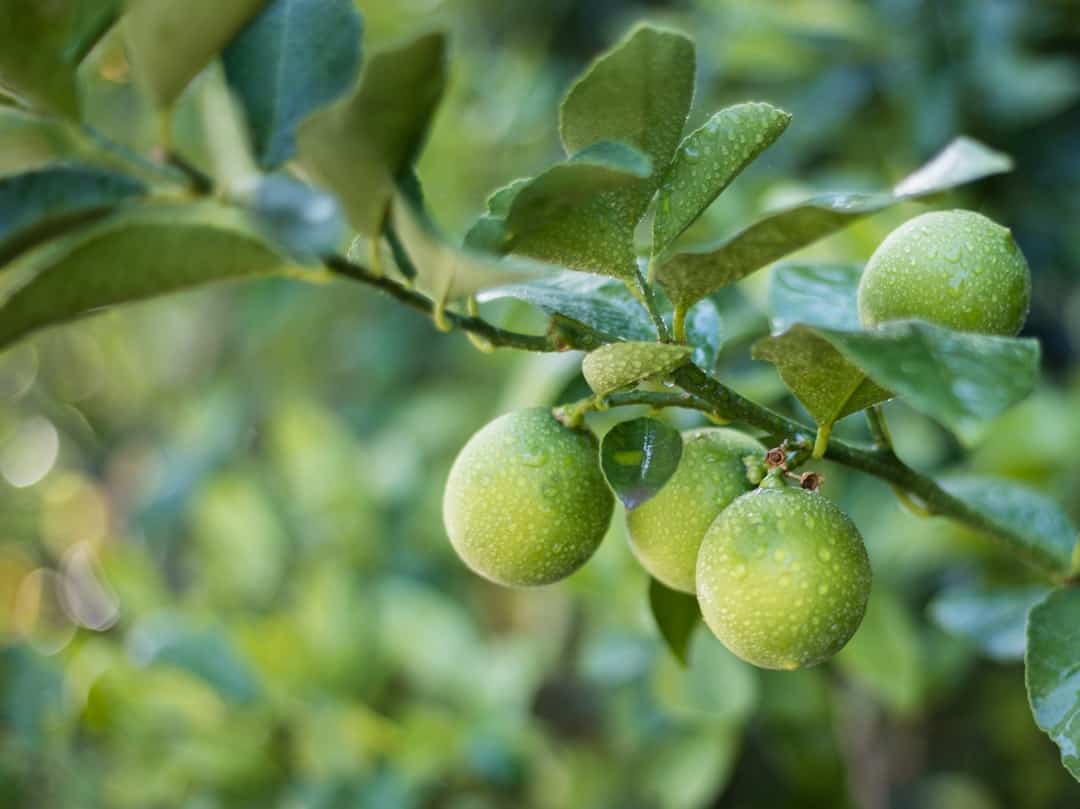
If you love adding fresh flavor to your meals or just want to try growing your own fruit, limes are a fun place to start. Lime trees are surprisingly easy to keep happy at home if you give them plenty of sun, decent soil, and a little regular attention.
Even if you don’t have a huge yard, limes can do really well in pots on a sunny patio or balcony.
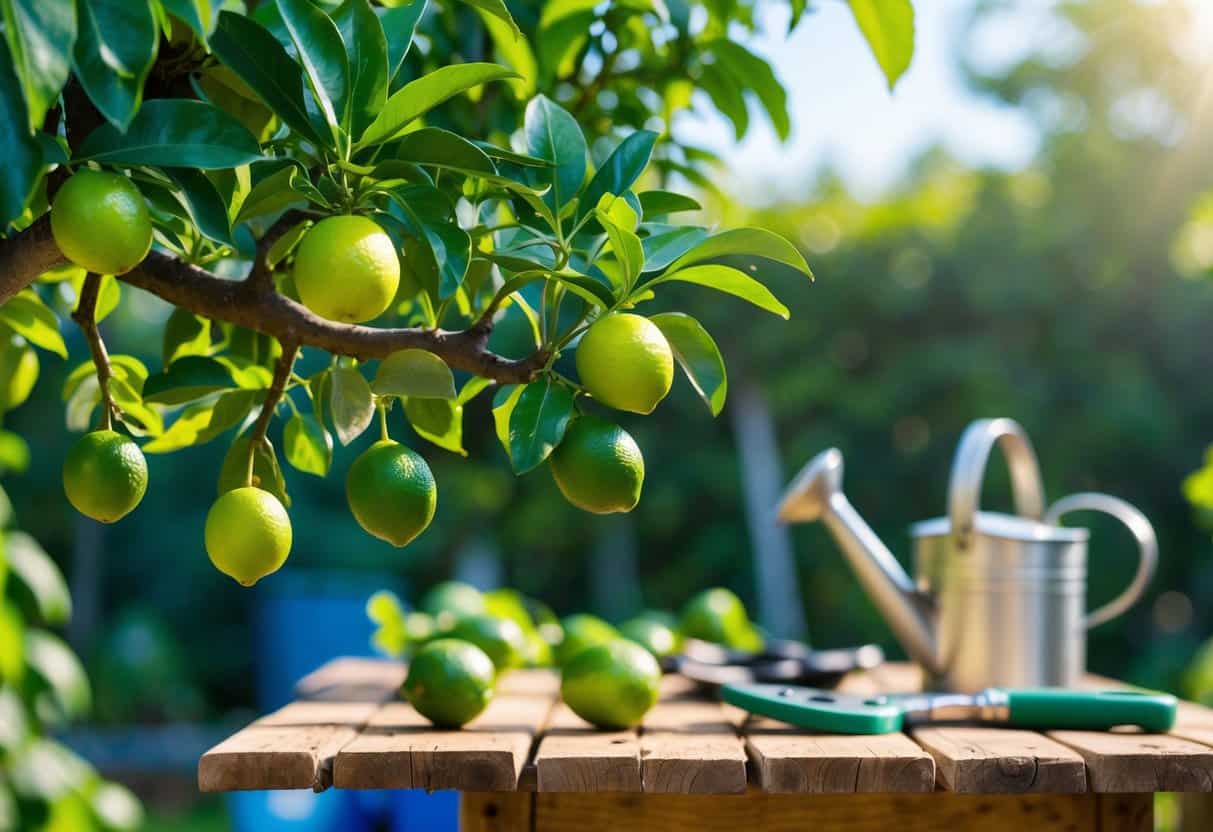
Growing your own limes means you’ll always have that tart citrus on hand for cooking, drinks, or desserts. Watching a small seed or sapling turn into a leafy tree loaded with fruit is pretty rewarding, no matter your gardening experience.
Quick Tips for Limes
Best Time To Plant
Spring or early summer (after last frost for your area)
Sun / Lighting
6–8 hours of full, direct sunlight daily
Spacing
6–10 ft (1.8–3 m) between trees in ground
Soil Type / PH
Well-draining loam or sandy soil, pH 6.0–7.0
Container Info
16–24 in (40–60 cm) wide pots, 10–20 gal (40–75 L); use quality citrus potting mix, with holes
Propagation
Grafted young trees for best fruit; seeds can be started but may not produce true-to-type
I once tried growing a small lime tree in a big pot by a sunny ground floor balcony. The scent of the blossoms in spring was almost as good as the fresh limes that showed up later that summer.
Each lime felt like a tiny reward for all the care I put in!
About Limes
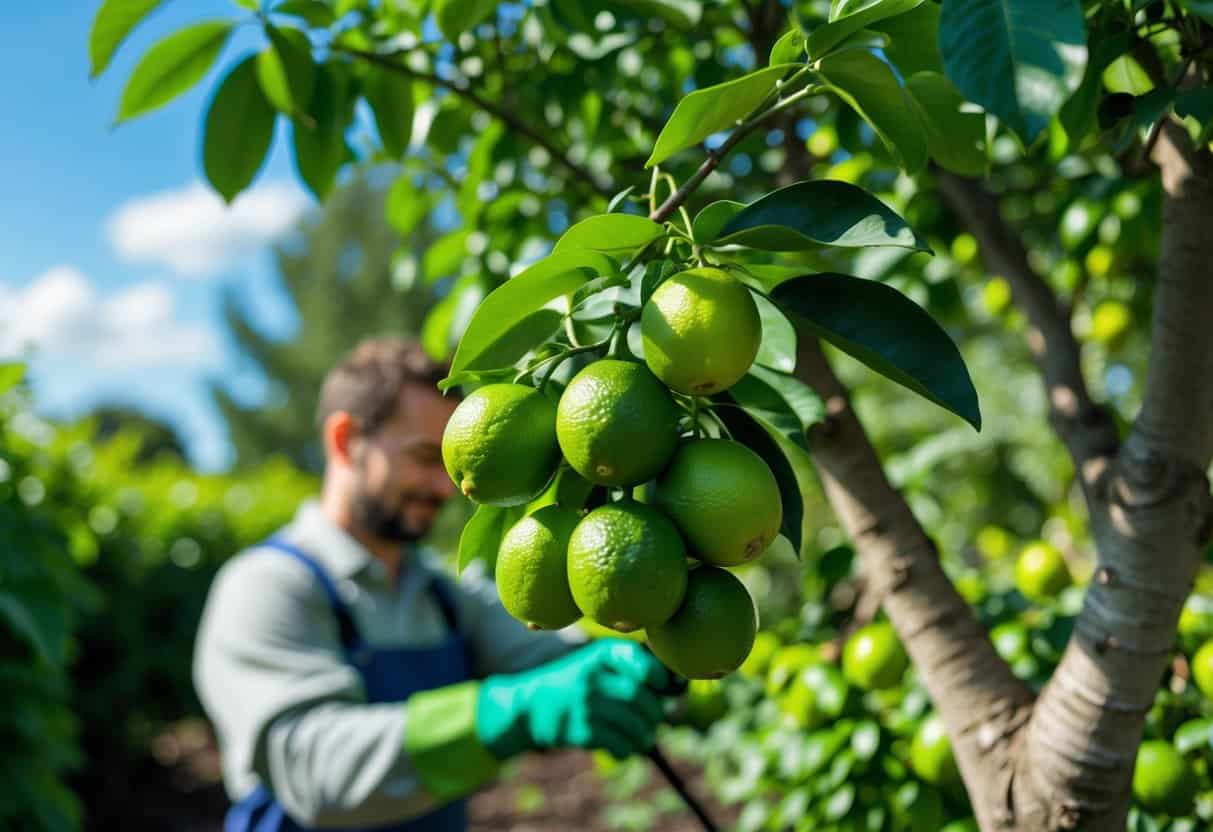
Limes are small citrus fruits with a tart flavor and a bright, zesty aroma. Lime trees are popular in home gardens for their year-round green leaves and reliable fruit if you give them the right conditions.
Lime Growth Habits
Lime trees are evergreen citrus, so they keep their leaves all year. They’re a bit unusual since they can have blossoms and fruit at the same time, though the main crop usually ripens in late spring or summer.
They really love warm, sunny spots and need at least 6 to 8 hours of direct sunlight daily for good fruit. Limes like soil that drains well—roots don’t like sitting in water.
Lime trees have shallow roots that spread out wide but not very deep. So, keep the soil moist but not soggy, especially during spring and summer when they’re growing fast.
Regular, light watering works better than dumping a ton of water at once.
Most lime trees grow new shoots and flower in quick bursts, setting fruit just a few months after blooming. Citrus trees don’t go fully dormant like some other fruit trees, but they do slow down when it’s cold.
Tip: Protect young lime trees from cold winds or frost by covering them or planting in a sheltered spot.
Growing Zones for Limes
USA:
- Zones 9–11 as perennials, Zones 7–8 as annuals/indoors
- In cooler zones, grow limes in containers and move indoors before frost.
Australia:
- Tropical, Subtropical, Temperate (frost-free areas only)
- In temperate or cooler climates, choose a sunny, frost-protected spot.
Varieties Of Limes
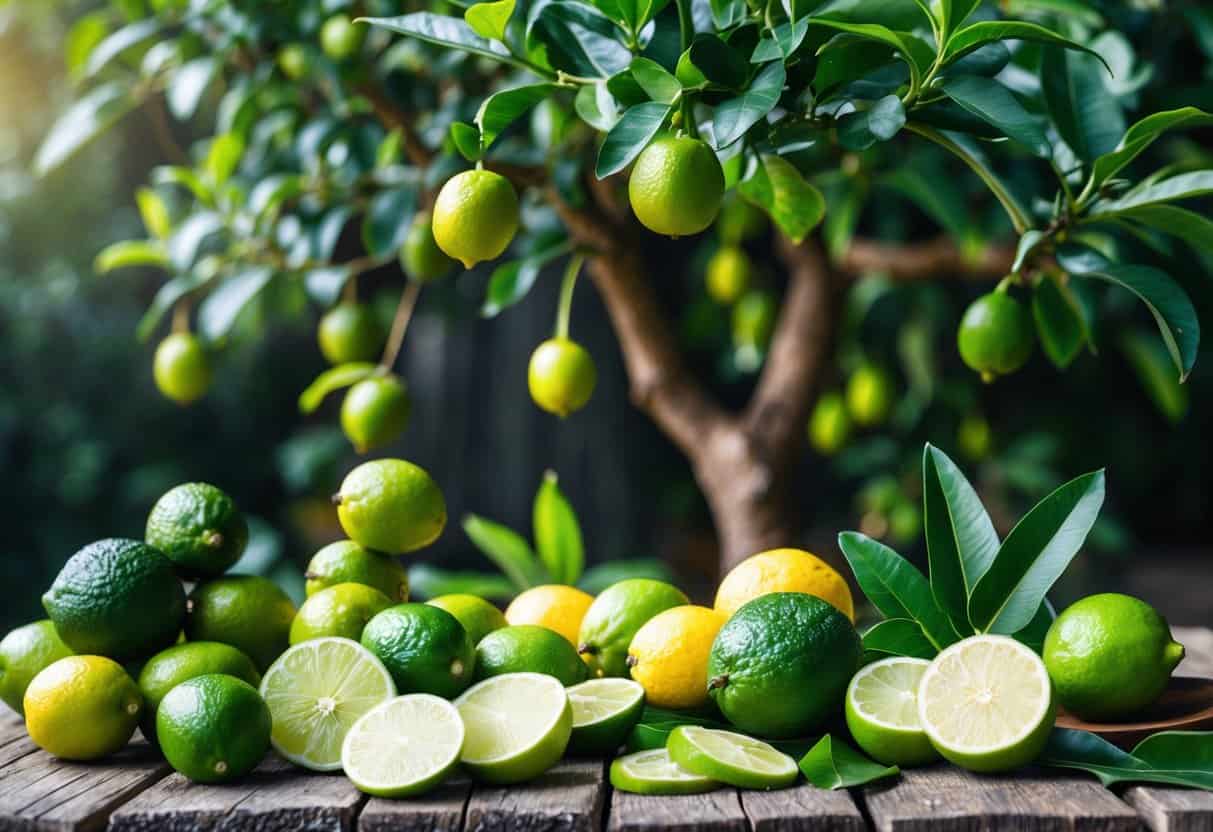
There are a handful of lime varieties you’ll spot at nurseries or the market. Each one looks and tastes a bit different, and they all have their own best uses in the kitchen or garden.
Key Lime (Mexican Lime)
Appearance: Small, round, with thin yellow-green skin.
Flavor: Tart, aromatic, and just a little floral.
Best Use: Pies, cocktails (like margaritas), and limeade.
Persian Lime (Bearss or Tahiti Lime)
Appearance: Medium, oval, bright green, and usually seedless.
Flavor: Milder and less acidic than Key lime.
Best Use: Everyday cooking, drinks, and garnishes.
Kaffir Lime
Appearance: Small, bumpy, dark green fruit with double leaves.
Flavor: Rind is strong and floral; leaves are super aromatic.
Best Use: Southeast Asian dishes, soups, and curries.
Finger Lime (Australian native)
Appearance: Medium, round or heart-shaped fruits; orange to deep reddish
Flavor: Sweet and mild, especially Fuyu and Jiro types; some are astringent if picked too early.
Best Use: Fresh eating, salads, baking.
Meyer lemons aren’t actually limes, but some folks grow them with limes because they’re sweet, thin-skinned, and need similar care.
If you’re in a cooler climate, dwarf or container-grown Persian limes or Key limes usually do best indoors. Kaffir limes are kind of cool as edible-ornamental plants.
Tips For Picking The Right Variety
Persian or Key lime are great for most recipes and easy to grow.
Kaffir is a must if you love Asian cooking.
Try Finger lime if you want something different and kind of fun.
Dwarf types are perfect for small spaces or pots.
Always check your climate and available space before picking a variety.


Planting Limes
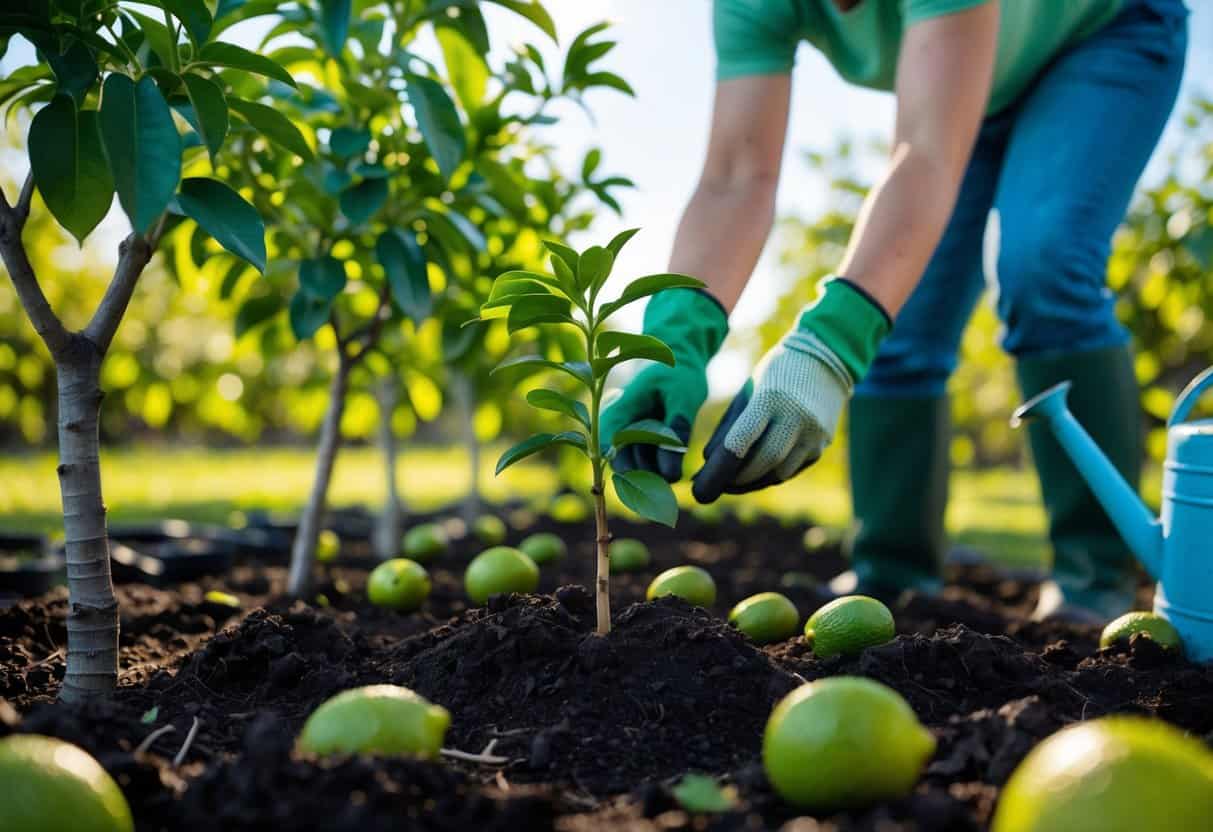
Lime trees need a warm spot, lots of sun, and soil that drains well. How you plant your lime tree really sets the stage for a healthy, productive plant—whether it’s in the ground or in a pot.
When To Plant
The best time to plant lime trees is late winter or early spring, after the last frost. Young lime trees are sensitive to cold, so wait until daytime temps stay above 60°F (16°C).
In tropical or subtropical places, you can plant most of the year, but spring is still best for root growth.
Starting from seed? Sow indoors about 6–8 weeks before your last frost date. Transplant seedlings outside only when it’s reliably warm. Remember results may be unreliable.
If you’re using nursery trees, plant them as soon as you get home and the weather is right.
Skip planting in fall unless your winters are very mild.
Where To Plant
Limes need lots of sun to grow and fruit well. Pick a spot that gets at least 6 to 8 hours of direct sunlight every day.
Lime trees hate soggy roots, so drainage is key. Avoid low spots where water pools after rain.
If you’re planting in the ground, look for sandy or loamy soil that drains well. You can mix in compost or coarse sand if your soil is heavy clay.
Short on space? Limes do great in big pots or raised beds, just use a rich, well-draining potting mix.
Keep your lime tree away from frosty corners, and give it room to grow. If you’re planting more than one, space them about 8–10 feet (2.4–3 m) apart so they get enough light and air.
Container/Small-Space Growing
Lime trees actually thrive in containers, so they’re perfect for patios or small gardens. Pick a pot that’s at least 18 inches (45 cm) wide and deep, with good drainage holes.
Use a lightweight potting mix made for citrus or fruit trees to keep roots happy.
Set your potted lime in the sunniest spot you have—balconies or near south-facing windows are ideal. Limes in pots dry out faster, so check the soil often and water when the top inch (2–3 cm) feels dry.
Every couple of years, refresh the top layer of potting mix or repot into a slightly bigger container. Use a slow-release fertilizer or citrus food when needed.
If winter temps drop below 50°F (10°C), move pots indoors or wrap them to keep roots from freezing.
How To Plant
For in-ground trees, dig a hole twice as wide and just as deep as the root ball. Loosen the soil at the bottom and toss in some compost for extra nutrients.
Gently slide the lime tree from its pot, keeping roots as undisturbed as possible. Set it so the top of the root ball is level with the ground.
Backfill with your improved soil and press it down lightly to get rid of air pockets. Water deeply right after planting.
Add mulch around the tree, but keep it a few inches from the trunk to avoid rot.
For pots, fill with citrus-friendly mix, set the tree at the same depth as in its nursery pot, and water well. Don’t plant too deep—buried stems can rot. If your tree is tall or you get a lot of wind, staking helps.
Propagation
You can grow limes from seed, cuttings, or by grafting. Seeds from store-bought limes might not sprout, and even if they do, the fruit may not match the parent.
If you want a tree just like the original, use cuttings or buy a grafted young tree.
To start from seed, clean seeds from fresh, ripe fruit and plant in moist seed-starting mix. Keep the container warm and cover with plastic to hold in humidity.
Seedlings can take weeks to sprout and might need years before they fruit.
Cuttings are more reliable if you want consistent fruit. Take a 6-inch (15 cm) stem from healthy growth, remove lower leaves, dip in rooting hormone, and stick it in damp potting mix.
Keep it warm and moist until roots form.
Grafting is usually done by nurseries, since it takes some skill and special rootstock. Most home gardeners just buy grafted trees rather than trying it themselves.
Care And Maintenance Of Limes
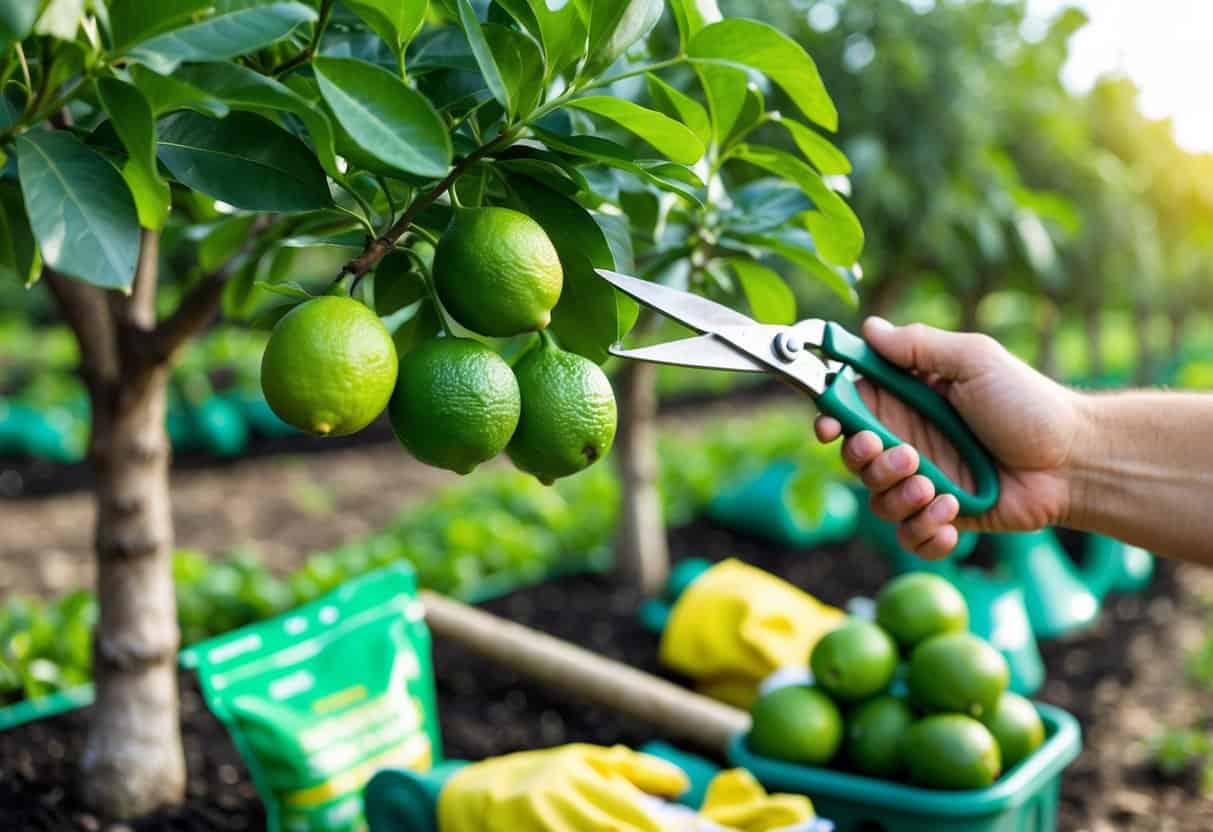
Lime trees do best with regular, simple care—mainly water, nutrients, and a little pruning. Keeping up with these basics really helps your tree stay healthy and productive.
Watering Needs
Limes like soil that’s moist but never soggy. Young trees need extra attention, so water deeply about once or twice a week during their first year.
Check the top 2 inches (5 cm) of soil—if it’s dry, go ahead and water.
Once your tree is established, water deeply but less often. In hot or dry weather, check more often, especially for potted trees.
Try to avoid getting leaves wet to help prevent disease.
Add 2–3 inches (5–7 cm) of organic mulch around the base, but keep it a few inches from the trunk. Mulch helps keep soil moist, stops weeds, and keeps roots cool.
Tip: If you see leaves curling or dropping, it’s usually a sign the soil is too dry or too wet. Just adjust your watering routine—honestly, your finger is the best moisture gauge.
Fertilizer
Lime trees are pretty hungry, especially in spring and summer when they’re growing and flowering. Pick an organic citrus fertilizer with an NPK ratio around 6-3-3 or 8-3-9.
This gives them the nitrogen for leafy growth and enough phosphorus and potassium for flowers and fruit.
Feed your tree every 4–6 weeks from early spring through late summer. Sprinkle granules over the root zone, then water well.
For potted limes, use a liquid organic feed every 2–4 weeks during the growing season.
Composted manure or fish emulsion are good organic options that feed your tree and improve the soil.
Don’t fertilize in late fall or winter—let the tree rest.
Pruning
Lime trees don’t need much pruning—just a light trim each year. Do this in late winter or early spring, before new growth gets going.
Start by snipping off any dead, damaged, or crossing branches. Then thin out crowded spots so light and air can reach the tree’s center.
Cut away any shoots sprouting from below the graft or at the base. Those suckers just drain energy and won’t give you fruit.
If you want to keep your tree neat, shorten any branches that are getting too long or leggy. This helps keep everything balanced and compact.
Lime Problems And How To Fix Them
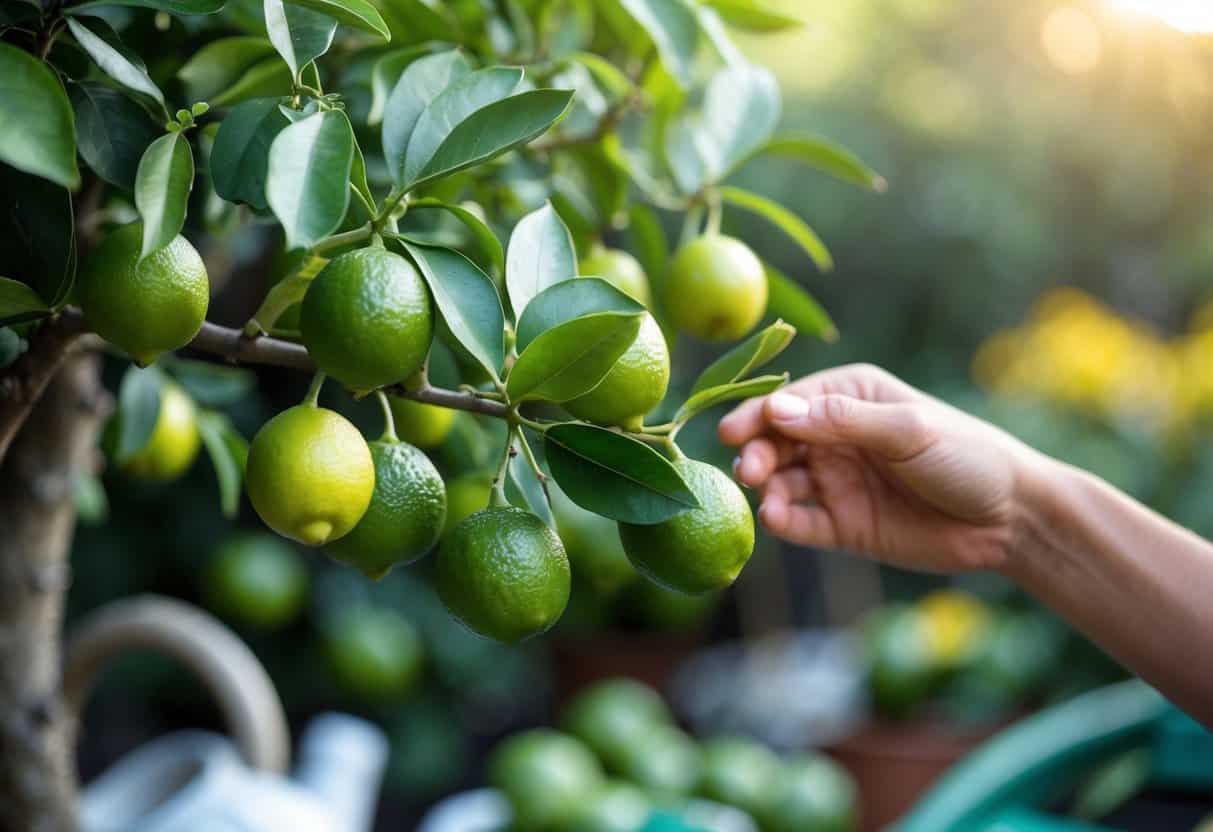
Lime trees can run into trouble with pests, diseases, or just plain poor growth. Spotting the symptoms early makes it easier to keep your tree healthy and your harvest going.
Pests
Lime trees seem to attract their fair share of bugs.
The main culprits are aphids, scale insects, leaf miners, and citrus mites. These guys can mess with your leaves, cause yellowing, or slow things down.
Most critters like deer, rabbits, or possums usually leave limes alone, whether you’re in the US or Australia. Birds might peck at a few young fruits, but honestly, it’s not common.
Aphids
Symptoms: Little green or black bugs cluster on new growth; leaves curl up; you’ll notice sticky stuff on leaves.
Solution: Blast them off with a strong spray of water, or use insecticidal soap.
Scale Insects
Symptoms: Hard, bumpy spots on stems and leaves; yellowing leaves.
Solution: Cut off badly infested branches; try spraying with horticultural oil.
Leaf Miners
Symptoms: Wavy white lines inside leaves; leaves grow slowly.
Solution: Remove and toss affected leaves; let natural predators like lacewings help out.
Citrus Mites
Symptoms: Leaves get speckled; fruit quality drops.
Solution: Use horticultural oil and make sure air can move freely around the tree.
Diseases
Diseases show up as spots, root problems, or weird-looking fruit.
Root rot is the big one, usually from soggy soil. Lime blotch and oil spotting can happen too, especially if your tree isn’t in tip-top shape.
Root Rot
Symptoms: Wilting, dropping leaves, yellowing, and mushy roots.
Solution: Make sure the soil drains well; don’t let roots sit in water. If it’s really bad, you might have to remove the plant.
Lime Blotch Disease
Symptoms: Leaves get spots or blotches; fruit has odd marks.
Solution: Prune off the affected parts; pick disease-resistant trees if you can.
Oil Spotting
Symptoms: Dark, oily-looking spots on the fruit.
Solution: Water carefully; try not to splash the leaves.
Growing Problems
Sometimes it’s not bugs or disease—it’s the weather, water, or missing nutrients.
Lime trees really don’t like the cold. They’re more sensitive to frost than lemons or oranges.
Frost Damage
Symptoms: Branches turn black, leaves wilt or fall off.
Solution: Cover trees with frost cloth at night, or bring potted trees indoors if a freeze is coming.
Yellow Leaves
Symptoms: Leaves turn pale, yellow, or patchy.
Solution: Check for root rot or missing nutrients. Use a citrus fertilizer with iron and magnesium in spring and summer.
Poor Fruit Growth
Symptoms: Flowers drop off, fruit doesn’t develop.
Solution: Water deeply but not too often; don’t overdo the fertilizer. Citrus spikes can burn roots, so skip those.
Slow or Stunted Growth
Symptoms: Small leaves, not much new growth.
Solution: Re-pot if the roots are crowded. Look for pests and feed with a gentle, balanced fertilizer.
If your lime tree just isn’t happy, double-check your watering, sunlight, and drainage. Those three are usually the troublemakers!
Harvesting Limes
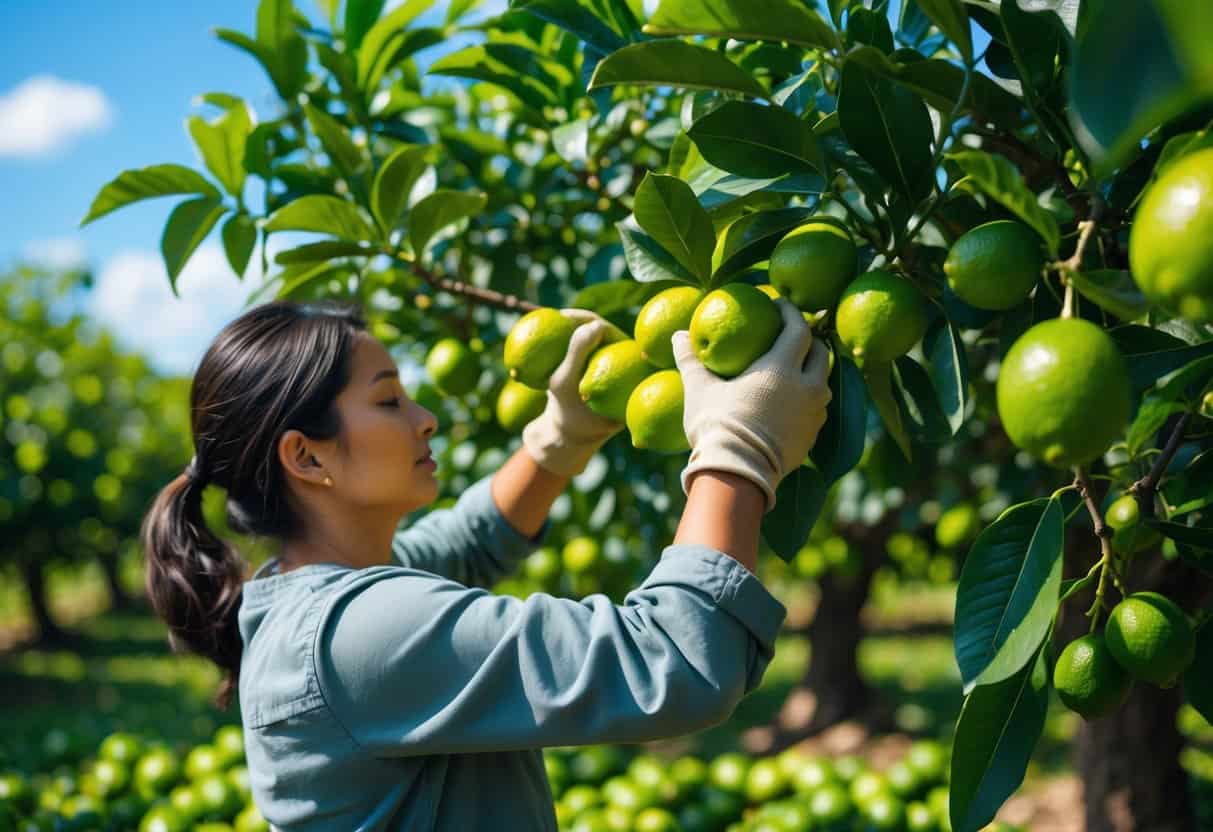
Picking limes at the right time really matters. Too green or overripe, and the taste isn’t great. Spotting the right signs and being gentle with your harvest helps you get the best limes.
When To Harvest
Most limes are ready in summer, about 3–4 months after the flowers appear. They don’t always change color when ripe—some stay green, others get a hint of yellow, depending on the variety and weather.
A ripe lime feels heavy for its size and has shiny, thin skin. If you give it a gentle squeeze, it should give just a bit but still feel firm.
Flavor is the best clue: ripe limes taste juicy and less sour than unripe ones.
Look for these signs:
- Color: Bright green or green-yellow. Don’t wait for them to turn fully yellow; they can get bitter if left too long.
- Touch: Slightly soft, but not squishy. If they’re really firm, give them more time.
- Time: Usually late spring through summer, but check your tree often for changes.
How To Harvest
Pick limes with care so you don’t hurt the fruit or the tree.
You can twist the lime gently until it pops off, or just use clean, sharp pruners to snip it near the stem.
Here’s what works best:
Storing Limes
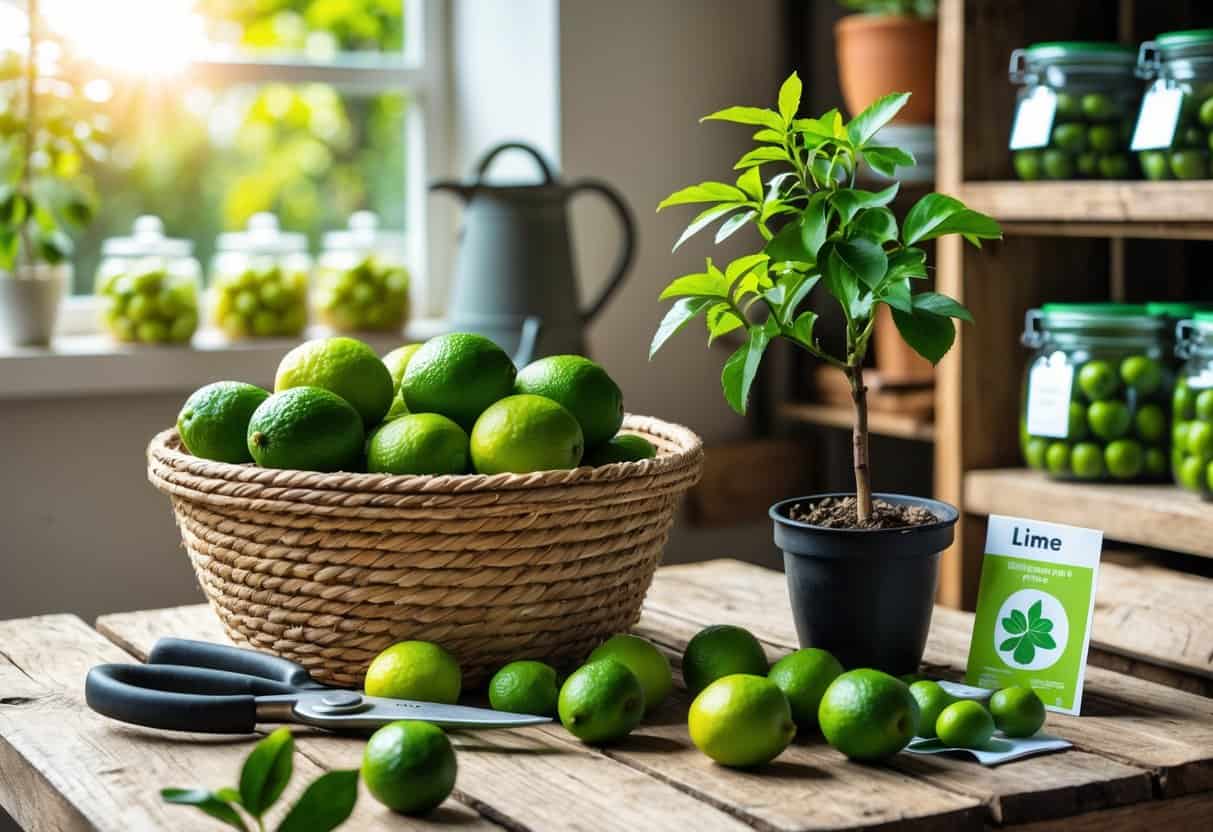
Storing limes the right way helps them stay fresh and tasty. Whether you’ve got a basketful from your own tree or just a few from the store, there are easy ways to keep them at their best.
Room Temperature Storage
Duration: 3–5 days
Best For: Quick use (juicing, zesting, fresh eating)
Leave limes out on the counter if you’ll use them soon. A fruit bowl away from sunlight works, but they’ll start to dry out after a few days.
Refrigerator Storage
Duration: Up to 3 weeks
Best For: Keeping limes firm, longer shelf life
Pop whole limes in a plastic bag or airtight container in the fridge. This keeps them from drying out and going bad too quickly.
Water Jar Technique
Duration: 1–2 months
Best For: Maximum longevity for whole limes.
Put limes in a glass jar, cover with water, and seal tight before storing in the fridge. Change the water every week to keep things fresh and mold-free.
Freezing
Duration: 6 months or more
Best For: Long-term storage, use in drinks or recipes
Freeze limes whole, sliced, or just the juice. For best results, freeze slices or juice in bags or ice cube trays.
Preservation Tips
Only pick what you’ll use soon—limes last longer on the tree than off
Wash and dry fruit before storing to stop mold
Keep limes in a cool spot for best flavor and shelf life
Juice extra limes and freeze the juice in ice cube trays. You’ll always have fresh lime flavor ready for recipes or drinks.
Benefits and Uses of Limes
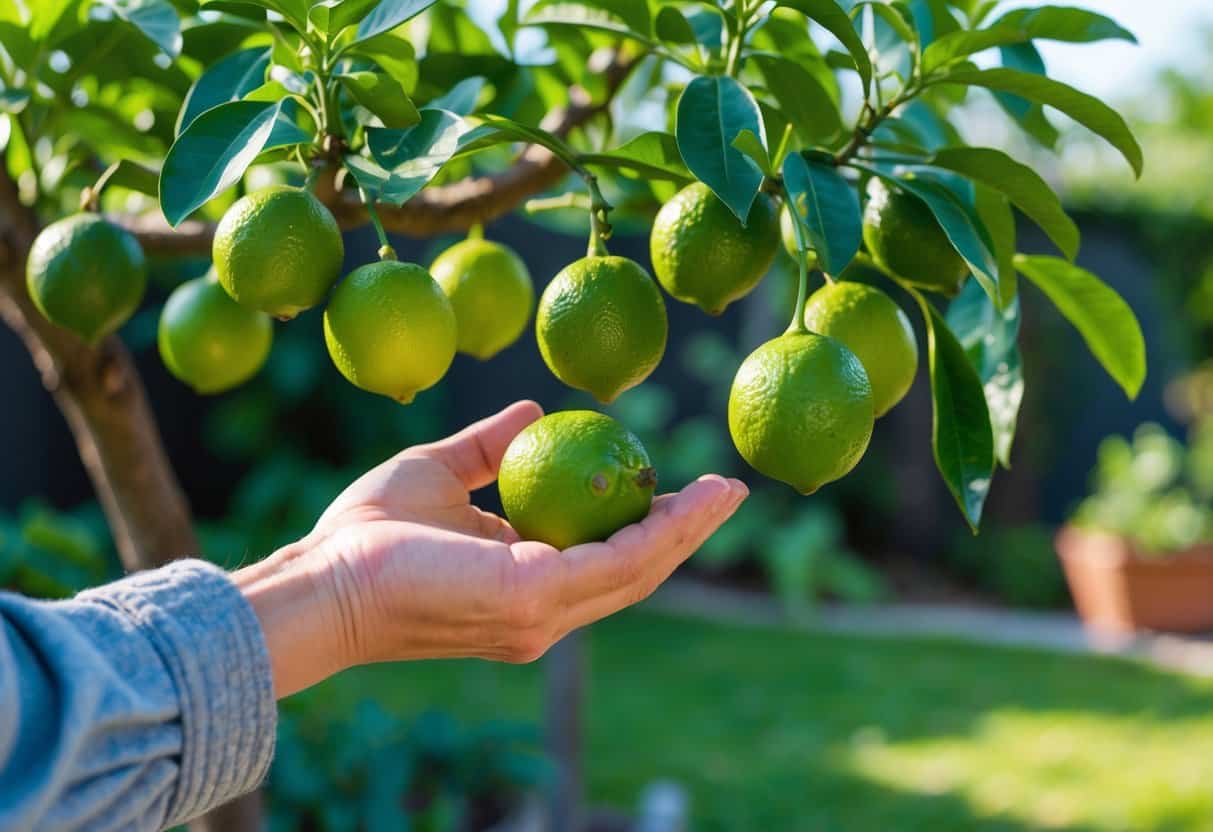
Limes bring a punch of flavor and some handy nutrients to your kitchen. You can use them in all sorts of recipes, and both their juice and zest come in handy for drinks, food, and even cleaning.
Cooking With Limes
Limes add a sharp, tangy kick to food and drinks. Their juice is perfect in salsa, guacamole, or ceviche. Squeeze a bit over grilled meat, seafood, or veggies for a fresh boost.
Lime zest brightens up cakes and cookies. It’s also great in jams and curds. If you like drinks, try limeade, iced tea, or mocktails—just mix lime juice with water or soda.
Limes pair well with chili, coconut, garlic, fresh herbs, and honey.
To keep limes fresh, store them in the fridge for up to two weeks. You can also freeze juice in ice cube trays for later.
Family Recipes
Here are some favorite lime recipes from both US and Australian kitchens:
Key Lime Pie
A classic American dessert with a sweet, tart filling and crumbly crust.
Thai Lime and Lemongrass Chicken
Chicken marinated with lime juice, lemongrass, and garlic—super fresh and zesty.
Aussie Lime and Coconut Slice
No-bake bars with lime zest, coconut, and sweetened condensed milk.
Tex-Mex Lime Salsa
Chopped tomatoes, onion, cilantro, and plenty of fresh lime juice.
Lime Cordial (Homemade Lime Syrup)
Simmer sugar, water, and lime juice into a tangy syrup—very popular in Australia.
Try This:
Add a squeeze of lime juice to soups or stews right before serving for a bright, fresh finish.
Frequently Asked Questions
Growing lime trees can actually be pretty rewarding if you stick to a few basics—good planting, regular care, and keeping an eye out for pests. If you’re growing indoors or want to troubleshoot, these answers might help.
How can you care for a lime tree indoors for healthy fruit production?
Put your tree in the sunniest window you’ve got, or use a grow light if you have to. Lime trees need at least 6 hours of direct light to make fruit.
Keep the soil moist but not soggy, and turn the pot every week so all sides get light. Feed your tree with citrus fertilizer every few months in spring and summer.
What are some effective ways to propagate lime trees without using seeds?
Start by taking cuttings from a healthy lime tree, usually in spring or summer. Snip off the lower leaves and dip the fresh cut end into rooting hormone.
Stick the cutting into some moist, well-draining soil. Cover it loosely with clear plastic—this helps keep the humidity up, which the cutting will appreciate.
Another method? Try grafting lime branches, or scions, onto a sturdy citrus rootstock. This approach is handy if you want a tougher tree or maybe just a particular variety that’s hard to find.
How can you prevent common pests and diseases when growing lime trees?
Keep an eye out for pests like scale, aphids, or spider mites. It's a good idea to check under the leaves and along the stems every so often.
If you spot any bugs, try blasting them off with some water. Sometimes, a bit of mild insecticidal soap does the trick too.
To help prevent diseases, always clean your tools before using them. Don’t over-water—lime trees really don’t like soggy roots.
Pick up any dropped leaves or fruit around your tree. That simple step can help stop fungus or rot from getting started.