

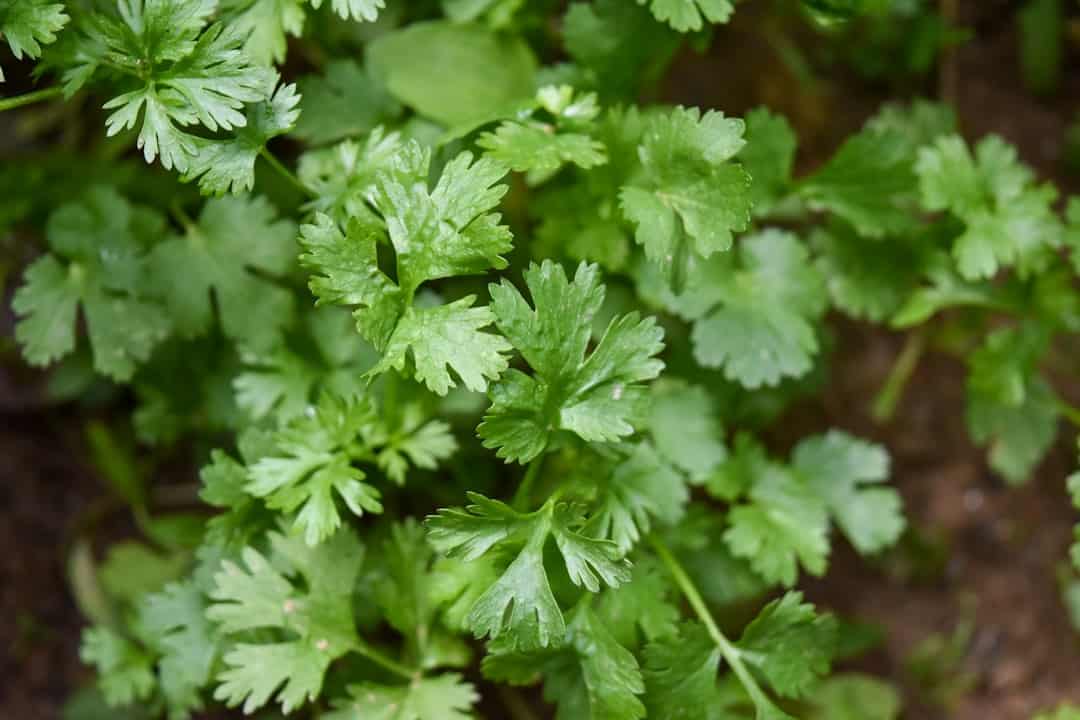
If you want a fresh, fragrant herb at your fingertips, cilantro—also called coriander—is a fantastic choice for your garden or even just a kitchen windowsill.
Cilantro is easy to grow in pots or garden beds and gives you bright green leaves for salsas, curries, and salads in just a few weeks.
All it takes is a little sunlight and some basic care. You really don’t need much space to get started.
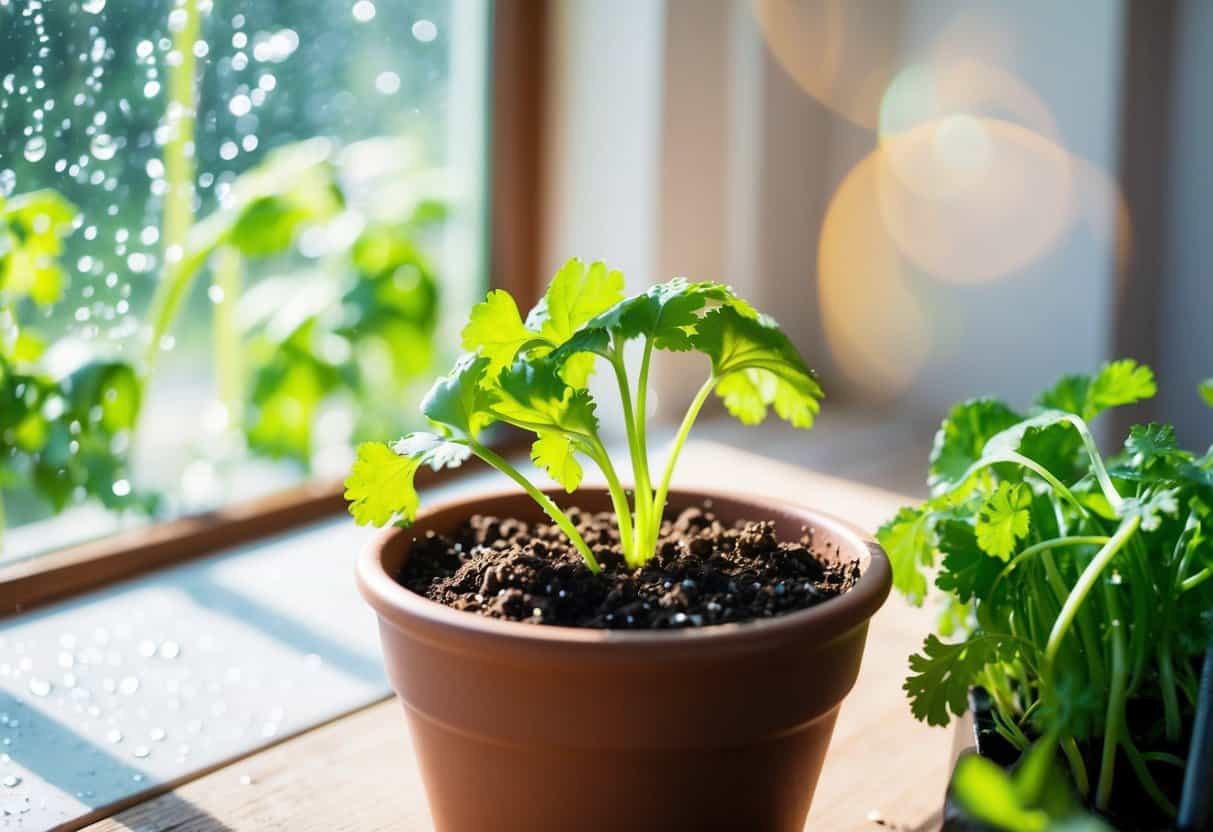
You don’t need fancy tools or a pile of gardening experience. Cilantro actually prefers cooler weather, and it’s fine with a little shade, so it’s made for spring and fall planting.
If you’re a beginner gardener or a home cook looking to add fresh flavor to your meals, this guide will make growing cilantro simple—and honestly, kind of fun.
Quick Tips for Cilantro
Best Time To Plant
Early spring or fall (autumn); after last frost and before hot weather
Sun / Lighting
4–6 hours of sunlight; part shade in hot regions
Spacing
2–4 in (5–10 cm) between plants
Soil Type / PH
Loose, well-draining soil; pH 6.2–6.8
Container Info
At least 8 in (20 cm) deep; wide pots preferred
Propagation
Direct sowing from seed works best
The first time I tried growing cilantro, I was excited to pick handfuls for taco night. I quickly learned that it loves cool weather and grows even better when I scatter seeds in small batches every few weeks.
About Cilantro (Coriander)
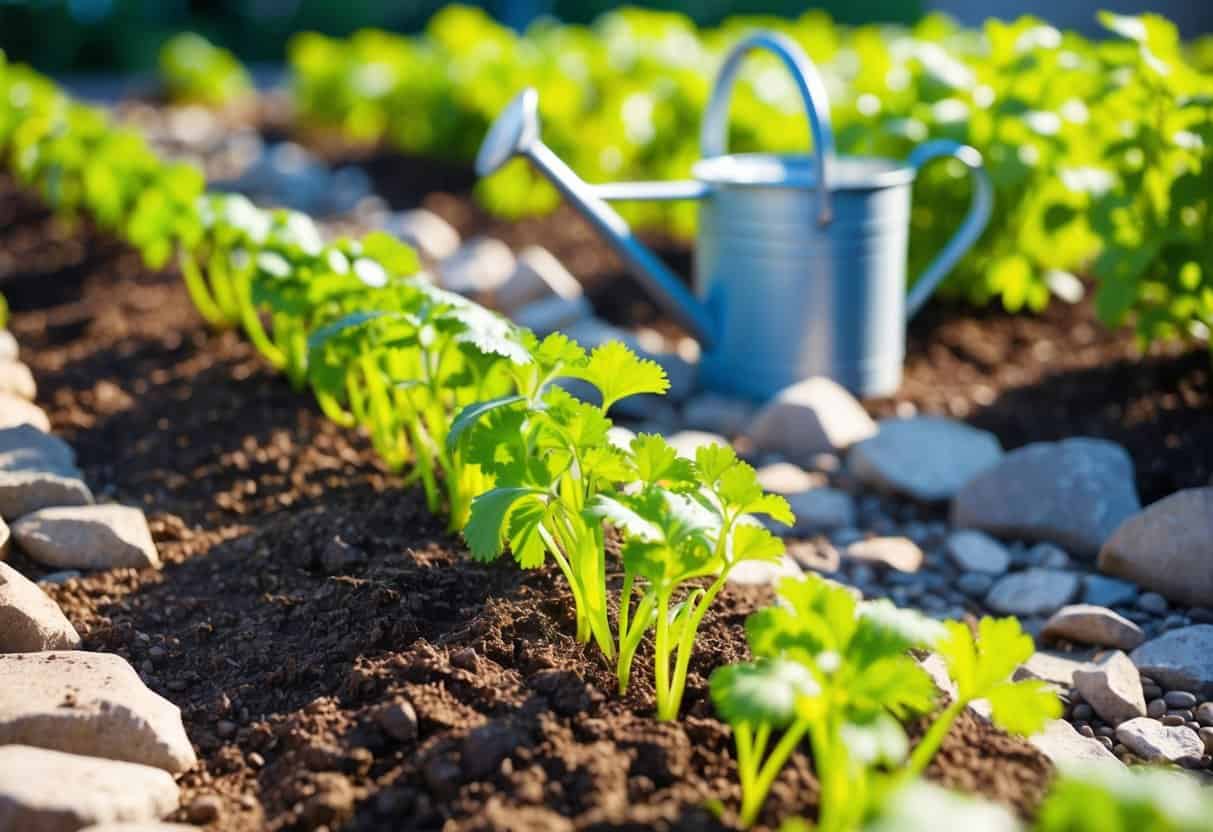
Cilantro and coriander are just two names for the same plant, but folks use the leaves and seeds differently. This herb is known for its bright, citrusy flavor and shows up in dishes all over the world.
Cilantro (Coriander) Growth Habits
Cilantro is a fast-growing annual and honestly, it’s happiest in cooler weather. It starts from seeds and quickly grows clusters of delicate, bright green leaves.
As it gets older, you’ll notice tall stems and little white or pinkish flowers popping up. In hot weather, cilantro bolts—meaning it shoots up flowers and seeds in a hurry.
You can slow down bolting by keeping it cool and giving it some shade during the hottest hours. Cilantro isn’t super picky about sunlight either; 4–6 hours a day is plenty.
It likes loose, well-drained soil and regular watering. Both the leaves (cilantro) and the dried seeds (coriander) are useful, so it’s a two-for-one plant.
Growing Zones for Cilantro
USA:
- Zones 2–11, cool to warm climates
- Best grown in spring and fall in most regions; bolts quickly in hot weather. In hot areas (zones 9–11), plant in fall or winter.
Australia:
- Temperate, Mediterranean, and subtropical
- Prefers cooler months; sow in autumn or early spring. Provide afternoon shade in hot regions to prevent bolting.
Varieties of Cilantro (Coriander)
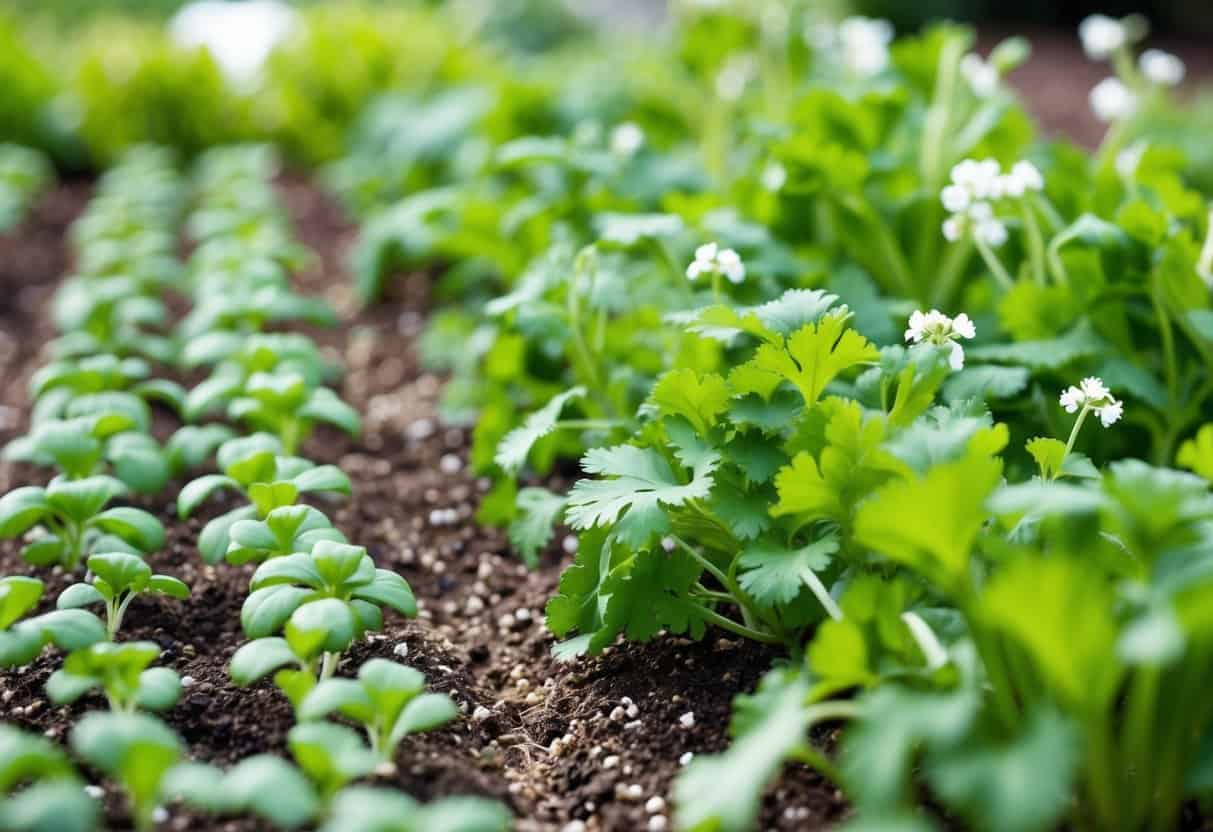
Cilantro comes in a handful of varieties, each with its own vibe and flavor. Picking the right one can really make a difference in your garden and your cooking.
Some types are bred to resist bolting, while others stand out for their leaf size or taste. Here are a few you’ll probably run into:
Calypso
Appearance: Bright green, long, frilly leaves
Flavor: Classic, mild cilantro taste
Best Use: Fresh salsa, salads, and garnishes—great for those who need a steady supply
Santo
Appearance: Compact plant with broad, flat leaves
Flavor: Stronger, more robust cilantro flavor
Best Use: Tacos, curries, and soups where deeper flavor shines
Slow Bolt
Appearance: Deep green, finely cut leaves
Flavor: Standard cilantro flavor; less bitter when mature
Best Use: Hot weather growing—ideal if your springs and summers warm up fast
Delfino
Appearance: Fine, fern-like leaves, more delicate than standard types
Flavor: Lighter, almost citrusy, with a hint of sweetness
Best Use: Garnishing and dishes where looks matter, like fancy salads or light seafood
Vietnamese Coriander (Persicaria odorata)
Appearance: Long, narrow leaves, not true cilantro but similar in taste
Flavor: Peppery and lemony, sharper than regular cilantro
Best Use: Vietnamese and Southeast Asian recipes, especially salads and soups
Quick Tips: Picking a Cilantro Variety
For hot summers, choose slow-bolting types
For garnish, try "Delfino" for fine, fancy leaves
For bold flavor, "Santo" or Vietnamese coriander work well
Grow more than one type if you use cilantro often
Check seed packets for notes about heat tolerance and growth speed


Planting Cilantro (Coriander)
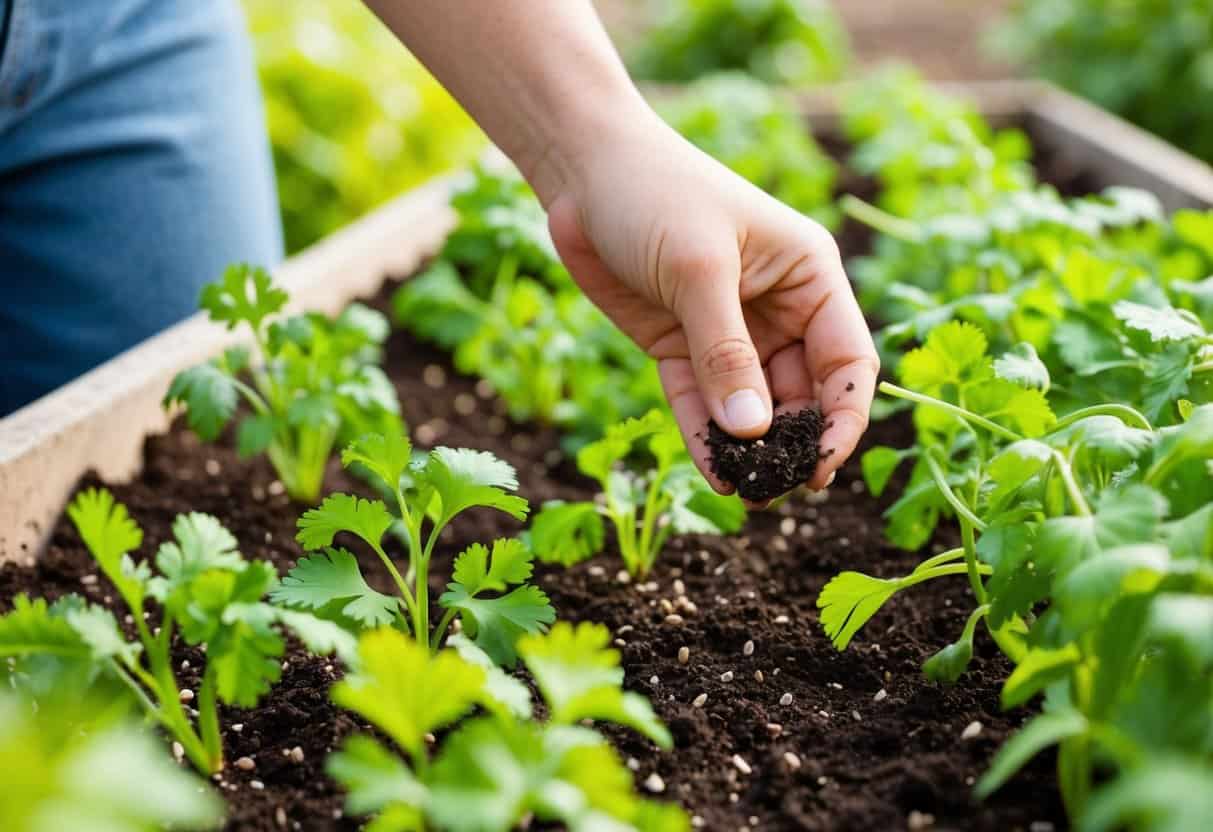
Cilantro grows best from seed and likes cool, mild weather. Where and how you plant—and how you treat the seeds—really matters for healthy plants.
When To Plant
Cilantro does best in cool temps. In most places, plant cilantro seeds outdoors in early spring, as soon as the soil isn’t frozen and after the last heavy frost.
If you’re somewhere mild or frost-free, you can also plant in fall for a late or winter harvest.
Hot summers? Skip planting in late spring or summer, since heat makes cilantro bolt and the leaves turn bitter.
To keep the harvest going, plant more seeds every 2–3 weeks through spring and early fall. If you want to start seeds inside, sow them 2–3 weeks before your last frost date.
Transplant seedlings outdoors once they have a couple of true leaves and the frost risk is gone.
Key Points for Timing:
- Plant when daytime temps are 50–75°F (10–24°C)
- Early spring or fall is best in warm places
- Succession sow for a steady harvest
Where To Plant
Cilantro needs full sun in cooler climates. In hot regions, a little afternoon shade goes a long way.
Don’t pick a spot where water pools after rain, or where the soil is heavy and clay-like. Add compost or organic matter to loosen things up if needed.
The ideal pH is 6.2 to 6.8, but honestly, cilantro isn’t super fussy if the soil is generally healthy.
Aim for 4–6 hours of sunlight daily, and don’t plant near heavy feeders.
Container/Small-Space Growing
Cilantro is perfect for pots, window boxes, or raised beds if you’re short on space. Pick a container at least 8 inches (20 cm) deep so roots have room.
Wide pots are better than narrow ones—you’ll get more leaves. Use a good, peat-free potting mix and make sure your container drains well.
Container cilantro dries out fast, so check soil moisture often and water when the top inch feels dry.
Place your pots where they catch morning sun and a bit of afternoon shade in summer.
If you’ve got a balcony or patio, group pots together. It helps keep them cool and makes watering easier.
How To Plant
Cilantro grows best from seed—transplanting isn’t its favorite, since the roots are touchy.
If you do use starts, pick young ones and be gentle.
For direct sowing outdoors:
- Rake and loosen soil to at least 8 inches (20 cm)
- Sow seeds ¼–½ inch (0.5–1 cm) deep
- Space seeds 1–2 inches (2.5–5 cm) apart; thin later
- Cover lightly and press down gently
- Keep soil evenly moist until seeds sprout
Seeds usually pop up in 7–14 days, depending on temperature.
In containers, you can scatter seeds for a denser crop, then thin to 3–4 inches (8–10 cm) apart once they’re up.
Mulch lightly to keep soil cool and moist.
Direct Sowing vs. Starts:
- Direct sowing is easiest and less stressful for cilantro
- Only use starts if they’re very young—older transplants may bolt early
Propagation
The usual way to grow cilantro is by sowing coriander seeds directly into soil or containers. The stuff from the spice aisle usually won’t sprout—get fresh seed from a garden center.
If you want, soak seeds overnight in lukewarm water before planting. It might help them sprout faster, but it’s not absolutely necessary.
For better germination, gently crush the outer seed husks—each pod has two seeds inside. Cilantro doesn’t root well from cuttings or divisions, so don’t bother with those methods.
Let a few plants flower and dry out if you want to save your own seeds for next year. Just snip the brown, dry seed heads and store them somewhere dry.
Care And Maintenance Of Cilantro
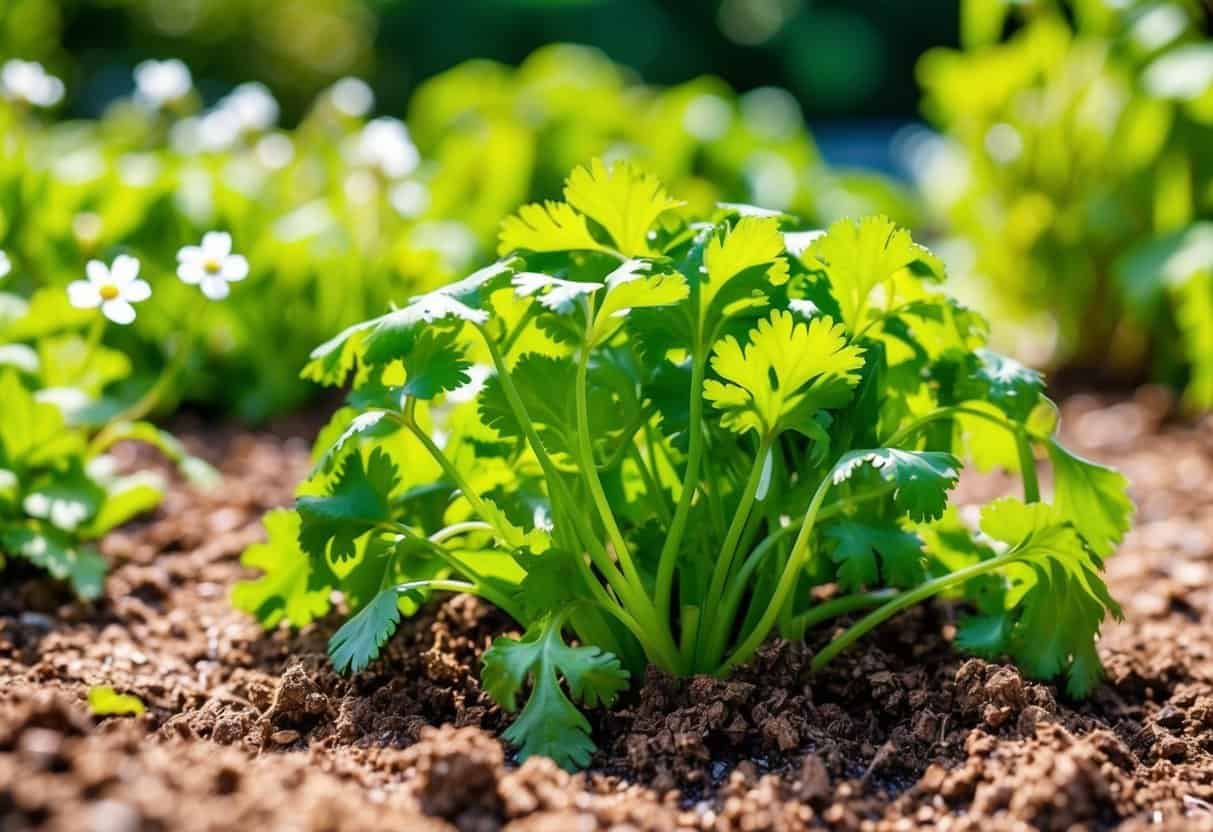
Cilantro plants grow pretty fast, but they do need some attention if you want a steady supply of fresh leaves. Watering, feeding, and a bit of trimming make a big difference.
Watering Needs
Cilantro likes its soil to stay evenly moist, especially when it’s warm out. Water the plants when the top inch (about 2.5 cm) feels dry to the touch.
Use a gentle stream so you don’t disturb the roots. Early morning works best for watering, since it keeps mildew down and the leaves perk up.
Tip: Water at the base, not on the leaves, to keep fungal problems away.
Fertilizer
Cilantro likes steady nutrients, but too much fertilizer isn’t good. Overfeeding can make the leaves lose flavor.
Fertilize after watering so you don’t risk burning the roots.
Pruning
Pruning keeps cilantro leafy and delays it from going to seed.
Cilantro Problems And How To Fix Them
Cilantro can run into trouble with pests, diseases, and other random issues. Acting quickly helps keep your plants in good shape, especially if it’s hot or humid.
Pests
Cilantro is usually not heavily affected by pests, but a few common garden insects can still cause trouble.
Aphids
Symptoms: Clusters of tiny green, black, or white insects on stems and leaves; sticky residue or curled leaves.
Solution: Spray with a strong jet of water or use insecticidal soap. Encourage beneficial insects like ladybugs.
Leaf Miners
Symptoms: Winding, pale trails inside leaves; leaves may look thin or distorted.
Solution: Remove and destroy affected leaves. Use row covers to protect young plants.
Cutworms
Symptoms: Seedlings cut off at the soil line, especially at night.
Solution: Place collars around seedlings and keep the garden area free of plant debris.
Check cilantro regularly, especially on new growth and the undersides of leaves.
Diseases
Most cilantro diseases are caused by excess moisture or poor air circulation.
Powdery Mildew
Symptoms: White, powdery coating on leaves and stems.
Solution: Improve air circulation, avoid overhead watering, and remove infected leaves.
Damping Off
Symptoms: Seedlings collapse and rot at the base, often soon after sprouting.
Solution: Use sterile seed-starting mix, avoid overwatering, and provide good airflow.
Bacterial Leaf Spot
Symptoms: Small, water-soaked spots on leaves that turn brown or black.
Solution: Remove affected leaves, water at the base, and avoid wetting foliage.
Water cilantro at the base and give plants plenty of space to prevent most fungal issues.
Spot & Fix Cilantro Problems
Give your plants a good look every week for bugs, yellow leaves, or mildew.
Remove any problem leaves or plants right away so things don’t spread.
If bolting happens, pick what you can and start a new batch when it’s cooler.
Growing Problems
Cilantro can be a bit fussy, especially in hot weather.
Bolting (Going to Seed Too Soon)
Symptoms: Plant sends up a tall flower stalk and leaves become sparse or bitter.
Solution: Sow cilantro in cool weather, provide afternoon shade in hot climates, and harvest leaves regularly.
Yellow Leaves
Symptoms: Lower leaves turn yellow or drop off.
Solution: Check for overwatering, poor drainage, or nutrient deficiency. Feed with a balanced fertilizer if needed.
Slow or Patchy Germination
Symptoms: Seeds take a long time to sprout, or only a few come up.
Solution: Soak seeds before planting, keep soil moist (not soggy), and thin seedlings to avoid crowding.
For the healthiest cilantro, give it cool weather, well-drained soil, and regular harvesting to keep plants productive.
Harvesting Cilantro
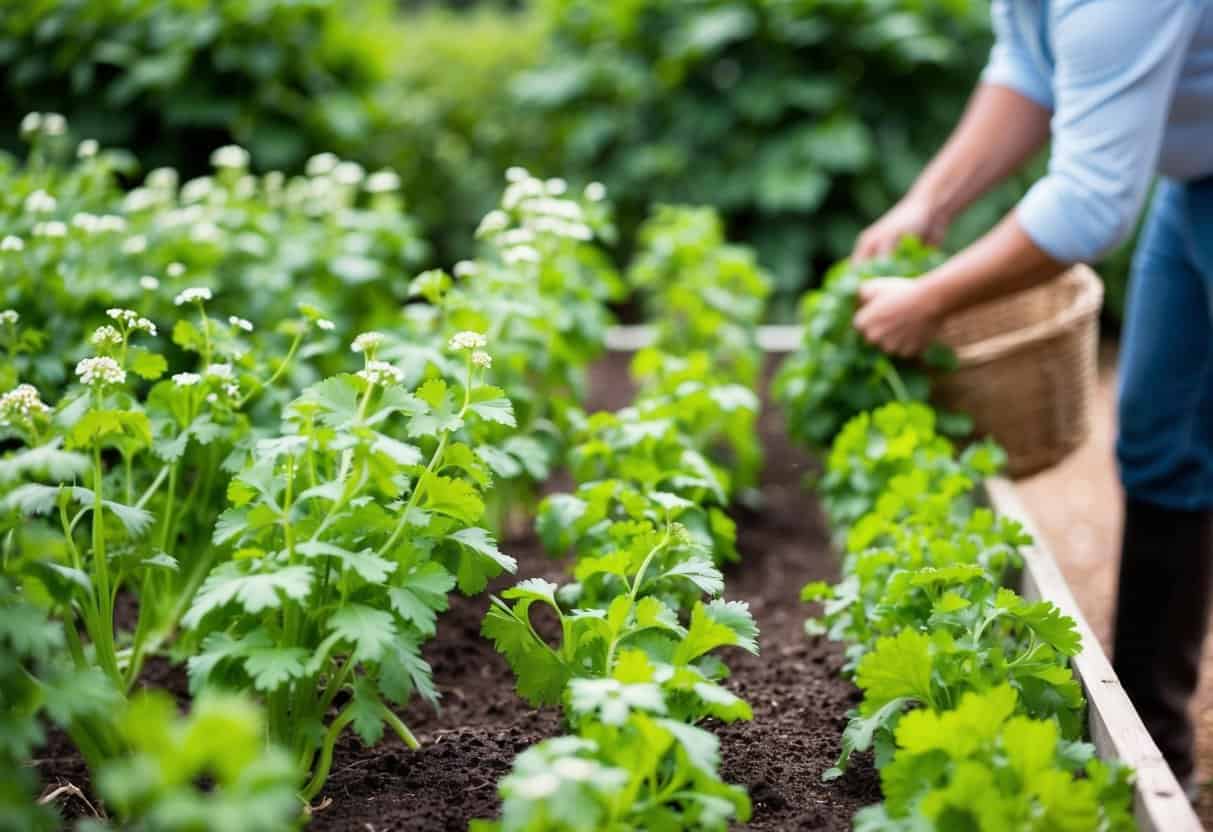
Timing your cilantro harvest means more flavor and a longer supply of fresh leaves. You can also collect coriander seeds for the spice rack if you let some plants go to seed.
When To Harvest
Start picking cilantro leaves when plants are about 6 inches (15 cm) tall and have enough leaves to keep growing. For the best taste, pick before the plant starts to flower.
If you’re after coriander seeds, let the plant flower and form round, green seed heads. Wait until those heads turn brown and dry out on the plant.
Seed stalks can show up in late spring or early summer, depending on your weather. Check your plants often. Leaves are best young, but seeds need to stay on the plant until they’re hard and dry.
How To Harvest
For harvesting cilantro leaves:
- Use clean scissors or snips to cut outer leaves.
- Leave the inner stems and new growth so the plant keeps going.
- Only take about a third of the plant at once.
For harvesting coriander seeds:
- Let flower heads dry and turn brown right on the plant.
- Cut the stems with seed heads and hang them upside down in a paper bag to catch seeds.
- When fully dry, rub the heads gently to release the seeds.
Harvest in the cool morning for the best flavor and freshness. Clean your tools before and after to avoid spreading disease.
Storing Cilantro (Coriander)
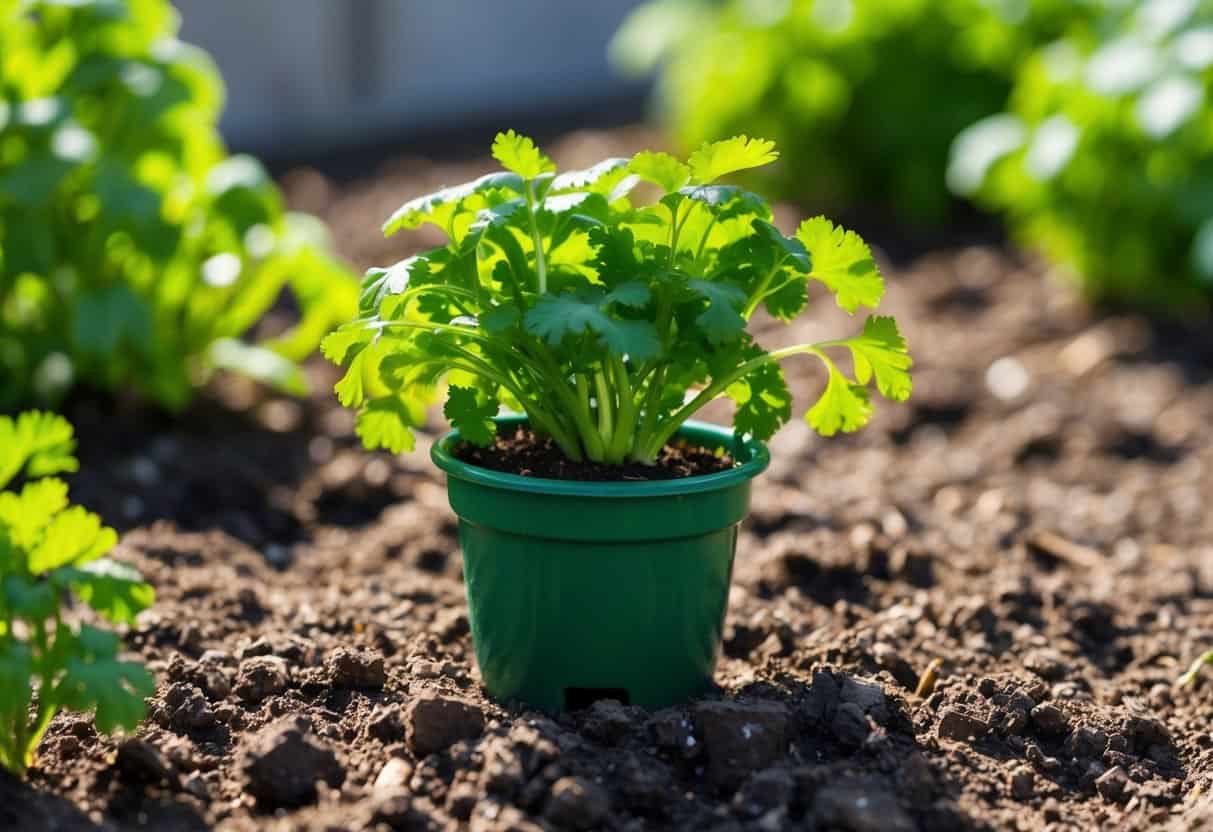
Once you’ve picked your cilantro, storing it right keeps it fresh and tasty for longer.
Refrigerator in Water Jar
Duration: Up to 4 weeks
Best For: Fresh salads, garnishes, quick cooking
Put the stems in a glass of water like a bouquet, cover loosely with a plastic bag, and pop it in the fridge. Change the water every few days.
Paper Towel Wrap
Duration: 5–7 days
Best For: Quick meal prep, sandwiches, short-term use
Wrap leaves in a damp paper towel and tuck inside a resealable bag. Easy, and it helps stop wilting.
Freezing
Duration: 4–6 months
Best For: Soups, stir-fries, cooked dishes
Chop or leave leaves whole. Freeze in bags or ice cube trays (add a bit of water or oil if you like). The flavor stays, but the texture gets soft after thawing.
Drying
Duration: Up to 1 year
Best For: Spice mixes, stews, long-term storage
Air-dry or use a dehydrator until crisp. Keep in airtight containers out of sunlight. Dried leaves lose some punch, but still work for many dishes.
Benefits and Uses of Cilantro
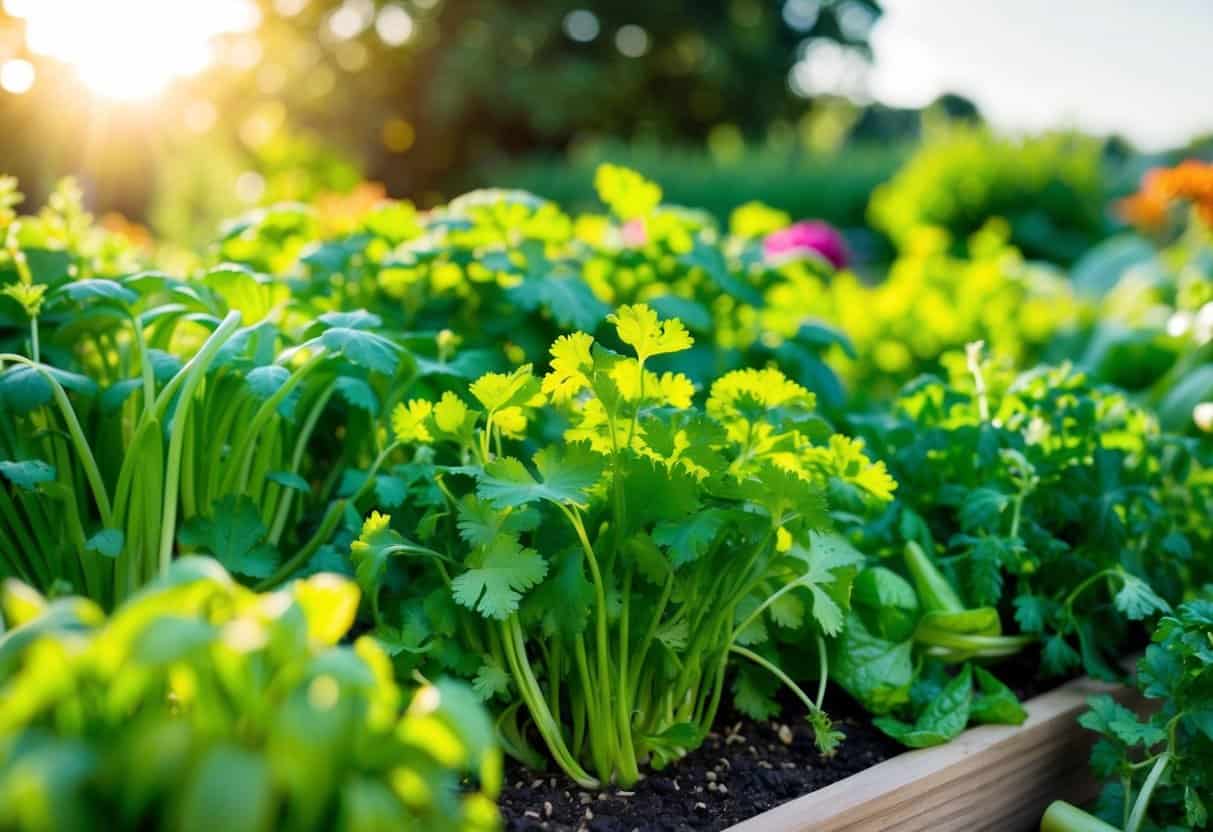
Cilantro brings a pop of bright, fresh flavor to a lot of recipes. It’s not just a garnish—both the leaves and seeds have unique health perks and can be used in all sorts of easy dishes.
Cooking With Cilantro
Cilantro has this cool, citrusy zing that just works with tomatoes, avocados, grilled meats, beans, and spicy stuff. You’ll spot it in salsa, curries, pestos, and salads pretty much everywhere.
If you want the best flavor, toss in fresh cilantro leaves at the end—heat kind of kills their spark. The stems? Chop them up for a little extra punch in soups or rice.
Storing fresh cilantro is simple: wrap it in a damp paper towel, seal it in a bag, and pop it in the fridge. Chopped cilantro actually freezes alright, but after thawing, it’s really only good for cooked dishes.
Quick Flavor Pairings:
- Salsa and guacamole (with lime and tomato)
- Chicken curry (with yogurt and spices)
- Tacos and wraps (with grilled meats or beans)
Family Recipes
Here are a few family favorites you can make with homegrown cilantro:
Fresh Tomato Salsa
Stir in chopped cilantro right before serving for the brightest flavor.
Coriander Chicken Curry
Use both ground seeds and leaves for a deeper, layered taste.
Lime-Cilantro Rice
Mix fresh cilantro into warm rice with a squeeze of lime juice and a little zest.
Thai-Style Peanut Noodle Salad
Toss in cilantro for color and a refreshing note.
Avocado and Tomato Salad
Top with a handful of cilantro leaves for extra freshness.
Try This:
Chop cilantro with mint and a splash of lemon juice for a quick salad topper or to liven up grilled veggies. It’s honestly underrated.
Frequently Asked Questions
You can grow cilantro indoors or out, as long as you’ve got some sunlight, well-drained soil, and you remember to water it. Cilantro grows fast from seed, but keeping it going strong takes a bit of care.
How long does it take for cilantro to grow from seed, and when can you start harvesting?
Cilantro seeds usually sprout in about 7–14 days. You’ll be able to start harvesting leaves in 3–4 weeks after sprouting.
Cut outer leaves once the plants hit 4–6 inches tall. If you’re after seeds (coriander), wait 90–120 days until they turn brown and dry on the plant.
Can you grow cilantro by using cuttings, and if so, how do you go about it?
Cilantro doesn’t really root well from cuttings. The most reliable method is sowing seeds straight into soil or pots.
Some herbs can root from stem cuttings in water, but cilantro stems almost never thrive or last that way.
Is there a difference in the growth process between cilantro and coriander?
Cilantro and coriander both come from the same plant. Cilantro refers to the leaves and stems, while coriander is what you call the seeds.
The main difference lies in how you use and harvest them. If you want coriander seeds, just let your cilantro plant flower and go to seed.
For cilantro, pick the leaves before the plant blooms. Once it starts flowering, the leaves can get a bit bitter—kind of disappointing if you're after that fresh flavor.