

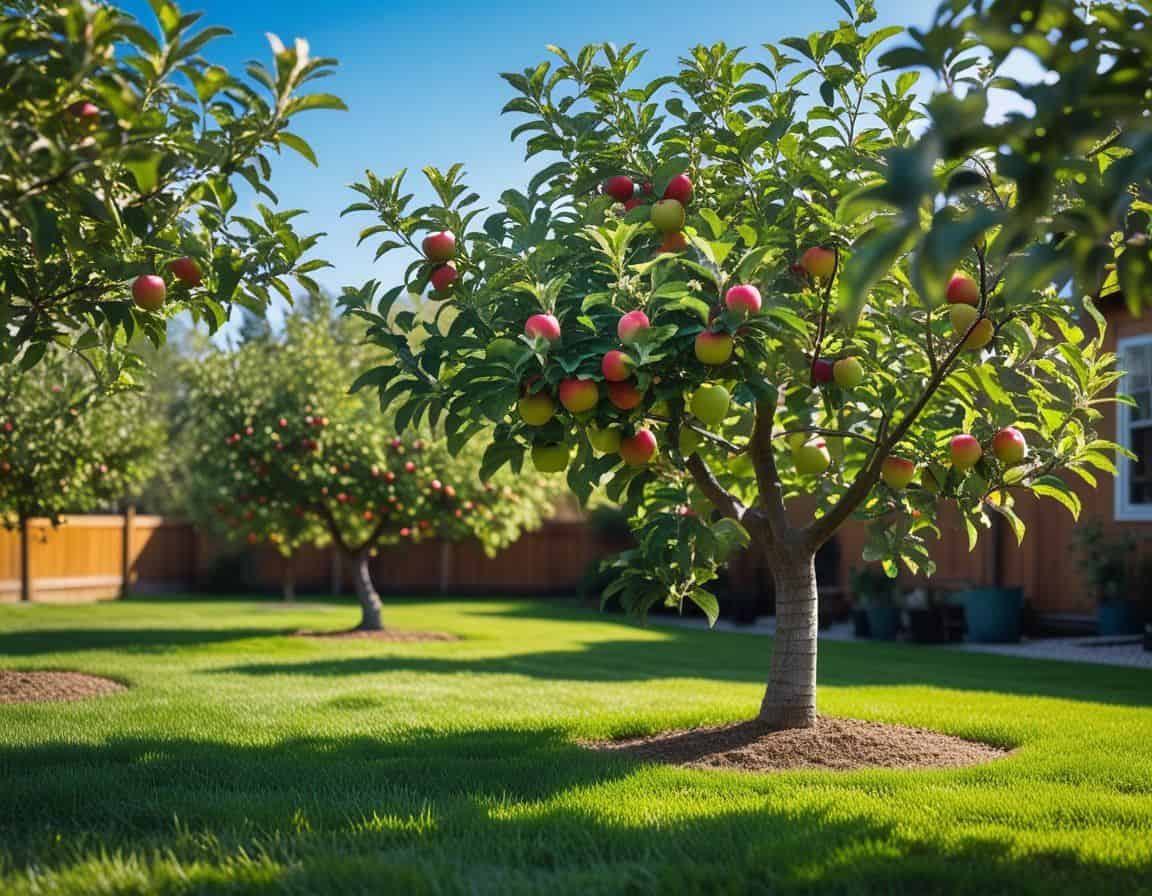
Growing your own apples is honestly more fun than you might expect, whether you’re brand new to gardening or just want fresh fruit for snacking and baking. All you really need is a sunny spot, decent soil, and two apple varieties for pollination.
Apples are perfect for tossing in a lunchbox, baking into pies, or making applesauce right from your backyard. There’s something special about eating fruit you grew yourself.
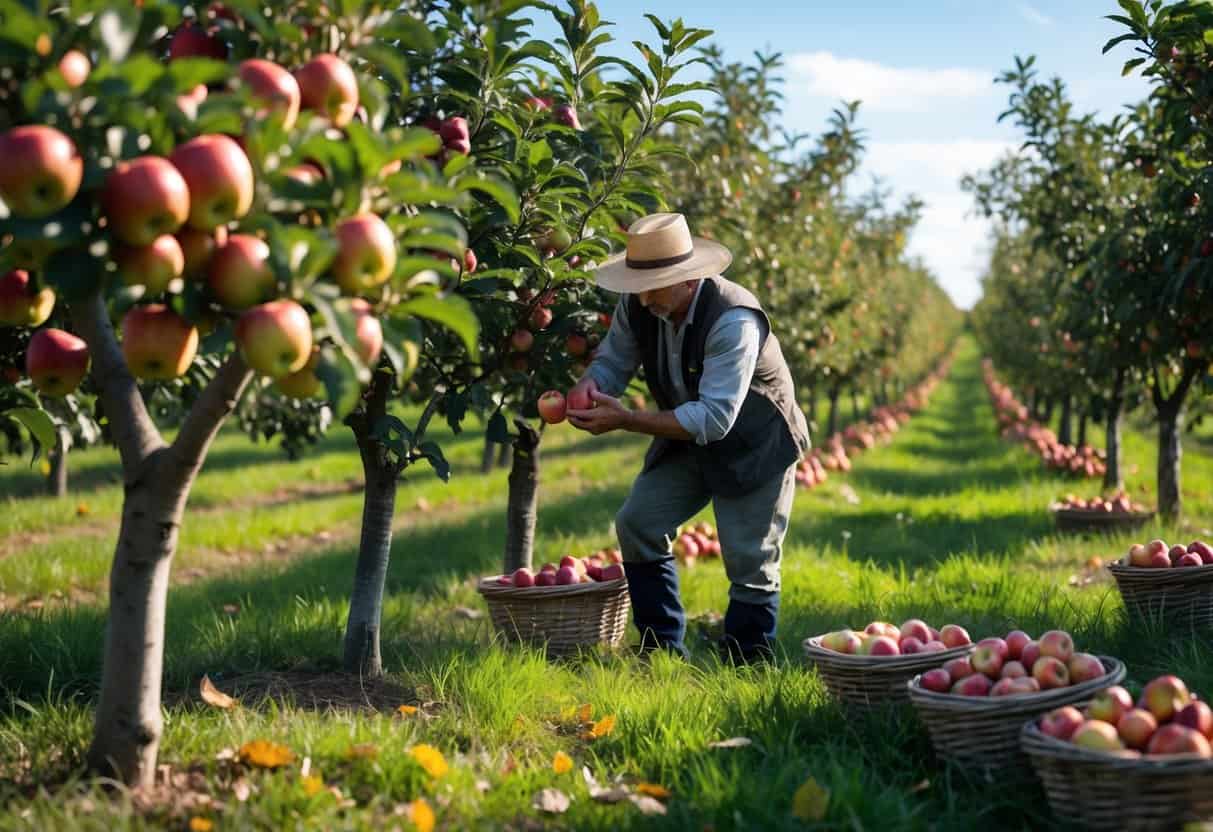
You don’t need an orchard—apple trees can fit in small yards or even big containers on a patio. If you want fruit sooner (and know what you’re getting), go for a grafted apple tree instead of starting from seeds.
With a bit of patience and care, your apple tree can give you crisp, tasty fruit for years. It’s worth the wait.
Quick Tips for Apples
Best Time To Plant
Early spring (after last frost) or fall (autumn) when dormant
Sun / Lighting
At least 8 hours of direct sunlight each day
Spacing
15–20 ft (4.5–6 m) apart for standard trees; 4–8 ft (1.2–2.4 m) for dwarf varieties
Soil Type / PH
Well-drained, light to medium loam; pH 6.0–7.0
Container Info
25–30 gal (95–115 L), at least 20 in (50 cm) deep; use dwarf trees for best results; containers need good drainage
Propagation
Grafted trees are best; seeds can be fun, but fruit may not match the parent apple
If you’re short on space, you can plant two apple trees in one hole (“family planting”) as long as varieties are compatible, which saves room and guarantees pollination.
My first apple tree was a little dwarf ‘Gala’ in a half-barrel on a tiny balcony. Even in that cramped space, picking my own sweet apple was the highlight of the year!
About Apples
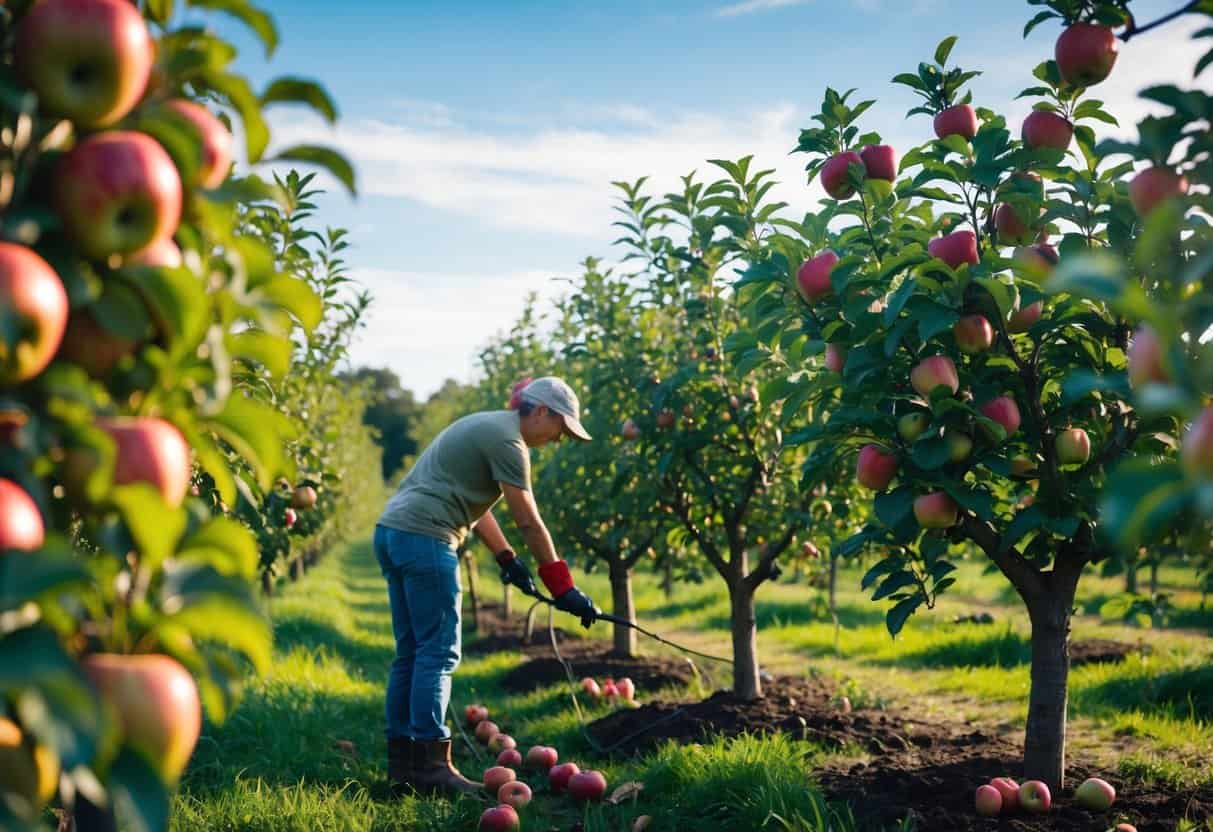
Apples are a classic fruit that gardeners love for their crunch, sweet or tart flavors, and how many ways you can use them. They look beautiful in the garden and keep giving you fruit every year.
Apple Growth Habits
Apple trees are deciduous, so they drop their leaves in winter and grow them back in spring. In early spring, you’ll see clusters of white or pink flowers.
Those blossoms attract bees and other pollinators, which you really need for fruit. After pollination, tiny apples start to form behind the old flowers.
As the season goes on, apples get bigger and their color and flavor develop. Most apple trees need some cold in winter—“chilling hours”—to set buds and fruit well.
They want full sun and moist, well-drained soil. Take care of them, and apple trees can stick around for decades, giving you a harvest every fall.
Watering, mulching, and a bit of maintenance help young trees become sturdy and productive. It’s not hard, but consistency matters.
Growing Zones for Apples
USA:
- Zones 4–8 as perennials
- In cooler zones, choose cold-hardy varieties; in warmer regions, select low-chill apples and mulch well in summer
Australia:
- Temperate, some Subtropical, Arid, and Alpine regions
- In warm areas, pick “tropical” or “low-chill” types; in frosty zones, use wind protection for spring blooms
Varieties Of Apples
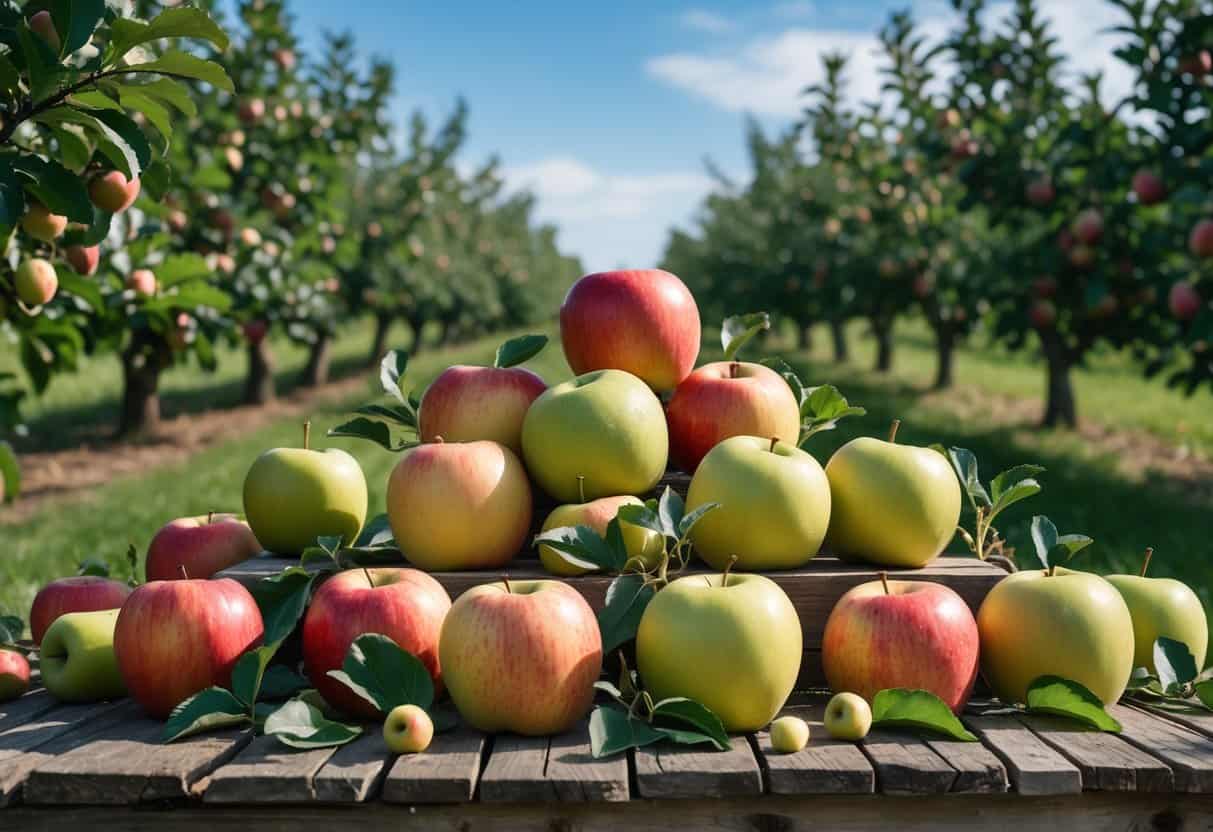
Once you’ve decided to grow apples, picking the right variety is actually a big deal. Each type has its own flavor, texture, and look.
Some apples are best eaten fresh, while others shine in pies or juice. Here are a few favorites:
Fuji
Appearance: Pinkish-red skin with a yellow base
Flavor: Very sweet and crisp
Best Use: Eating fresh, salads
Gala
Appearance: Light red with yellow streaks
Flavor: Mildly sweet and tender
Best Use: Snacking, lunchboxes
Granny Smith
Appearance: Bright green and shiny
Flavor: Tart and juicy
Best Use: Baking, pies, sauces
McIntosh
Appearance: Red and green skin, softer texture
Flavor: Tangy and slightly tart
Best Use: Sauces, cider
Crab Apple Trees
Appearance: Small, round, red or yellow fruits
Flavor: Sour, not usually eaten raw
Best Use: Jams, jellies, pollination
Some other great options are Honeycrisp (super crunchy, sweet-tart) and Macoun (juicy and best fresh). If you ask me, Honeycrisp is worth growing just for that bite.
When you’re choosing, think about your local climate, how tough the variety is, and what you want to do with your apples. A lot of types need another variety nearby for pollination—crab apples can help with that too.
Quick Tips For Variety Selection
Match your apples to your climate.
Go for disease resistance if you want less hassle.
Plant two types for better pollination.
Decide if you want apples for eating, baking, or preserving.
Crab apple trees are handy pollinators.


Planting Apples
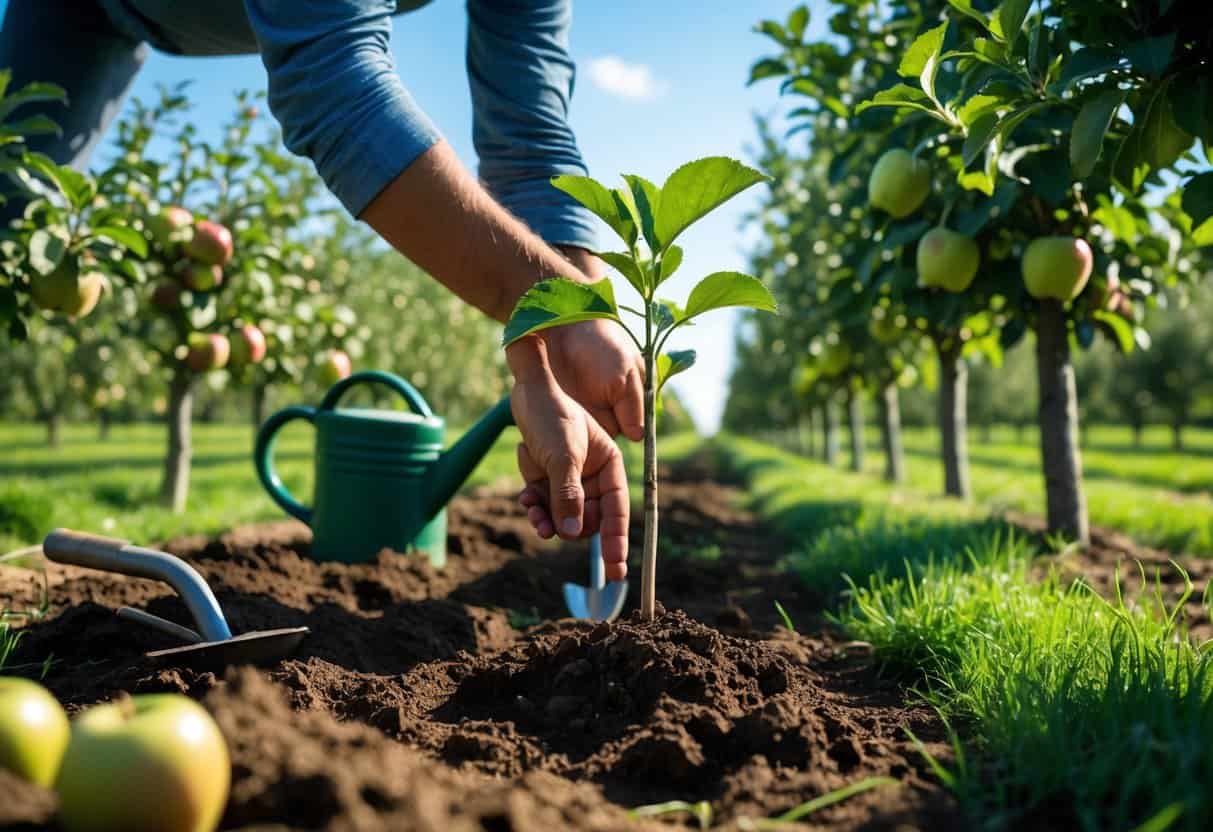
Planting apple trees takes a bit of planning. Healthy, productive trees start with good timing, the right spot, and solid planting technique.
When To Plant
The best time to plant apples is early spring, just after the ground thaws and frost is done. This gives your tree a whole season to settle in before winter.
In mild-winter places, you can also plant in fall, about a month before the first frost. Bare-root trees need to go in while dormant.
Container-grown trees are a little more forgiving, but still do best if planted before spring growth kicks in. Planting in summer isn’t a great idea—heat stress makes it tough for new trees.
Where To Plant
Where you plant matters a lot for apples. They love full sun—at least 6–8 hours a day.
More sun means better fruit and less disease. Look for a spot with good air flow, and avoid low spots where frost settles in spring.
Drainage is key—apple roots hate being soggy. Soil should be fertile, with plenty of organic matter, and a pH between 6.0 and 7.0.
If old apple or pear trees in your yard had disease, don’t plant in the same spot. Give standard trees 15–18 feet (4.5–5.5 m) of space, semi-dwarf 12–15 feet (3.5–4.5 m), and dwarf trees 6–10 feet (1.8–3 m) apart.
Container/Small-Space Growing
You can absolutely grow apples in big containers if you pick dwarf or mini-dwarf rootstocks. These stay small and are much happier in pots.
Use a container at least 15–20 gallons (60–75 L) with good drainage. Fill it with a high-quality, well-draining potting mix and toss in some compost if you can.
Keep your potted apple in a sunny spot. Water it regularly, and check the soil often.
Container apples need more frequent feeding since nutrients wash out quickly. Every couple of years, gently lift the root ball, trim the roots, and refresh the soil.
Growing in pots is perfect for balconies or tiny courtyards, but you’ll probably get less fruit than from trees planted in the ground.
How To Plant
Dig a hole about twice as wide and deep as your tree’s roots or root ball. If your soil needs it, mix in compost or well-rotted manure—but skip the fresh fertilizer in the hole.
For grafted trees, plant so the graft union (that little bump where the top meets the rootstock) is 2–4 inches (5–10 cm) above the soil. This keeps your rootstock from sending up shoots.
Fill in the hole and gently firm the soil around the roots. Don’t bury the trunk.
Water well to settle everything in. If your tree is tall or your area gets windy, stake it so it grows straight.
Mulch around the tree to keep soil cool and moist. Just keep the mulch away from the trunk.
Propagation
Most folks start with young, grafted trees from nurseries. Grafted apples grow true to type, fruit sooner, and are usually healthier than seedlings.
You can grow apples from seed just for fun, but the fruit will be a surprise—sometimes not in a good way. Seedlings often take 7–10 years to fruit.
Rootstocks (dwarf, semi-dwarf, standard) control tree size and toughness, so pick one that fits your space and climate. Some gardeners try air layering or cuttings, but apples are tricky that way.
Honestly, buying a healthy, grafted tree is the easiest route for most people.
Care And Maintenance Of Apples
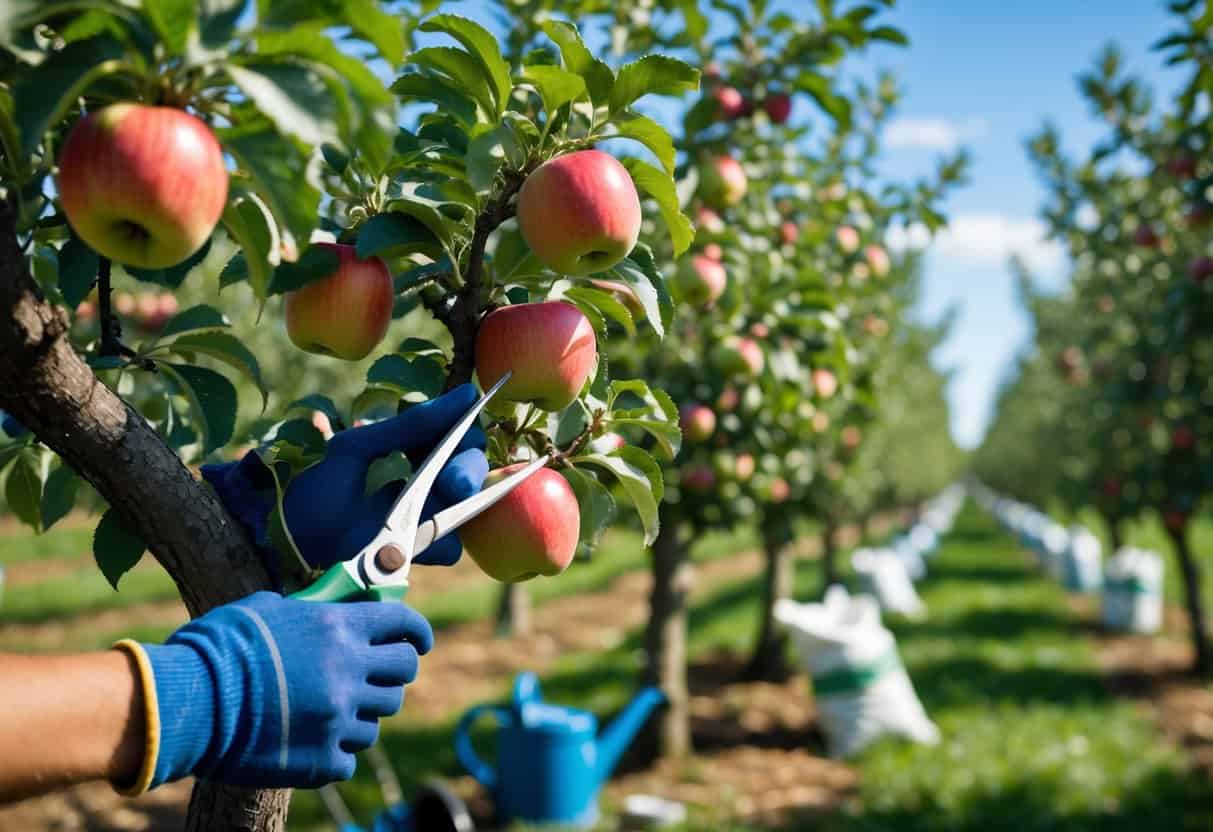
Taking care of your apple tree isn’t rocket science, but it does make a difference. Water, food, and a little pruning go a long way toward bigger, better fruit.
Watering Needs
Young apple trees need regular watering to help their roots grow deep and strong. For the first couple of years, water once or twice a week, giving each tree around 2–4 gallons (8–15 liters) at a time.
Check the soil—it should be moist but not swampy. Once your trees are established, you can water less often unless it’s really dry.
During dry spells or when fruit is growing, water deeply every week or two. Try not to get the leaves wet; that helps keep diseases away.
Spread a 2–4 inch (5–10 cm) layer of mulch around the base. It keeps moisture in and weeds out.
Drip irrigation or a soaker hose is ideal since it waters slow and steady. If apples don’t get enough water, the fruit can be small or fall off early.
If you notice wilting leaves, it’s probably time to water.
Fertilizer
Apple trees really thrive in soil that's rich in organic matter and has balanced nutrients. In early spring, go with a slow-release organic fertilizer with an NPK ratio around 10-10-10.
This encourages steady growth and healthier fruit. I like using an organic granular fertilizer—it just seems to make the soil feel more alive.
Spread the fertilizer in a circle beneath the tree's drip line, which is basically under the outer branches. Don’t pile it against the trunk.
After feeding, water thoroughly. That’s key.
You might notice your tree doesn’t need fertilizer every single year. If the leaves are dark green and growth is strong, skip a season.
Too much nitrogen? That’ll give you tons of leafy growth but not many apples. Always check the product label for how much to use.
Pruning
Pruning keeps apple trees strong and makes picking easier. It’s best to prune in late winter or early spring, while the tree’s still dormant.
Start by cutting away dead, damaged, or crossing branches. Thin out crowded spots so sunlight and air can reach everywhere.
This helps keep fungal diseases down and improves fruit ripening. For young trees, focus on shaping the central leader and main branches during the first few years.
That structure supports fruit and just makes life easier when it’s time to pick. Once fruit forms, thin out the extras so branches don’t snap and the apples get bigger.
Apple Problems And How To Fix Them
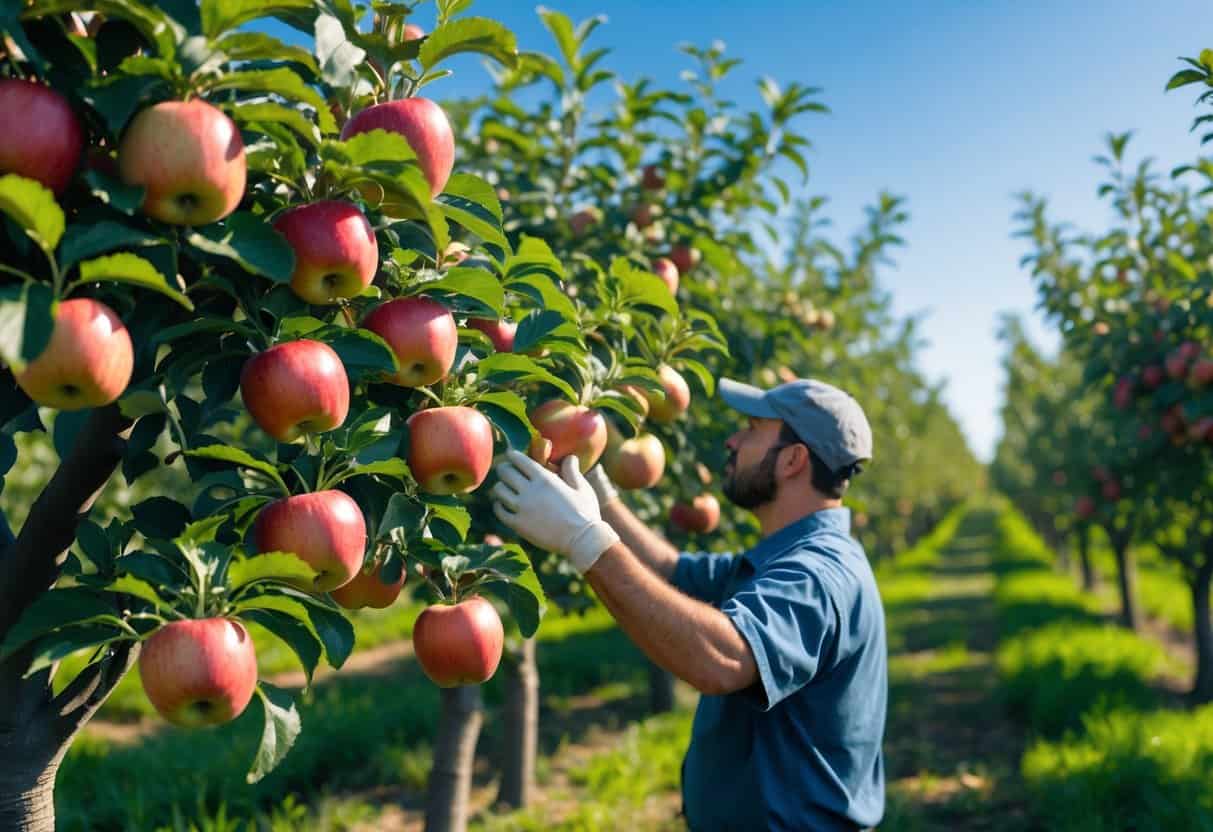
Apples deal with their fair share of problems—think insect pests, fungal diseases, or just weird fruit issues. Spotting the warning signs early can save your harvest.
Pests
Lots of insects (and some critters) love apple trees as much as we do.
Aphids
Symptoms: Small bugs cluster on new shoots; leaves curl, yellow, or feel sticky.
Solution: Spray with a strong jet of water and prune out infested shoots. Dormant oil in late winter or insecticidal soap in spring can help.
Codling Moth
Symptoms: Tiny holes in fruit, brown frass, or little worms inside.
Solution: Pick up fallen fruit fast. Try pheromone traps or bagging young fruit. Remove affected apples right away.
Apple Maggot
Symptoms: Brown trails in fruit; apples look weird and misshapen.
Solution: Hang sticky traps in the canopy. Destroy any fruit that’s infested.
Animal Pests
Symptoms: Chewed fruit, bark damage, or missing apples thanks to birds, squirrels, or possums.
Solution: Netting keeps birds and possums out (works in the US and Australia). Fencing or tree guards help keep rabbits and deer away.
Diseases
Apple trees can get hit by a few common fungal and bacterial diseases.
Apple Scab
Symptoms: Olive-green or brown spots on leaves and fruit; fruit might crack.
Solution: Choose disease-resistant types if you can. Rake up and destroy fallen leaves. Use organic fungicides like lime sulfur at bud break.
Fireblight
Symptoms: Blossoms and twig tips go black and wilt—almost like they were burned.
Solution: Prune infected twigs at least 8 inches (20 cm) below the damage. Clean pruners after every cut. Avoid heavy nitrogen fertilizer.
Powdery Mildew
Symptoms: White or gray powder on leaves and shoots.
Solution: Prune out affected shoots. Go with resistant varieties. Thin branches for better air flow.
Cedar Apple Rust
Symptoms: Bright orange spots on leaves, sometimes fruit; jelly-like blobs after rain.
Solution: Remove galls from nearby cedar trees. Spray organic fungicides early in the season.
Growing Problems
Sometimes apples just don’t grow or pollinate well, and it’s frustrating.
Poor Pollination
Symptoms: Few or no apples; fruit drops early.
Solution: Plant at least two different apple varieties for cross-pollination, or hope a neighbor’s crabapple helps. Attract bees by growing flowers nearby.
Fruit Drop
Symptoms: Apples fall before they’re ripe.
Solution: Water deeply during dry spells. Thin fruit in early summer to one per cluster. Don’t overdo the fertilizer.
Yellow Leaves/Stunted Growth
Symptoms: Pale leaves, slow growth, not much fruit.
Solution: Test your soil and adjust pH to 6.0–7.0. Add organic fertilizer or compost in early spring. Make sure the tree gets full sun and isn’t sitting in soggy soil.
Poor Fruit Quality
Symptoms: Small, weird-looking, or bland apples.
Solution: Thin out small fruit so the rest can grow. Prune for better air and light. If needed, add wood ash or a balanced fertilizer for potassium.
Harvesting Apples
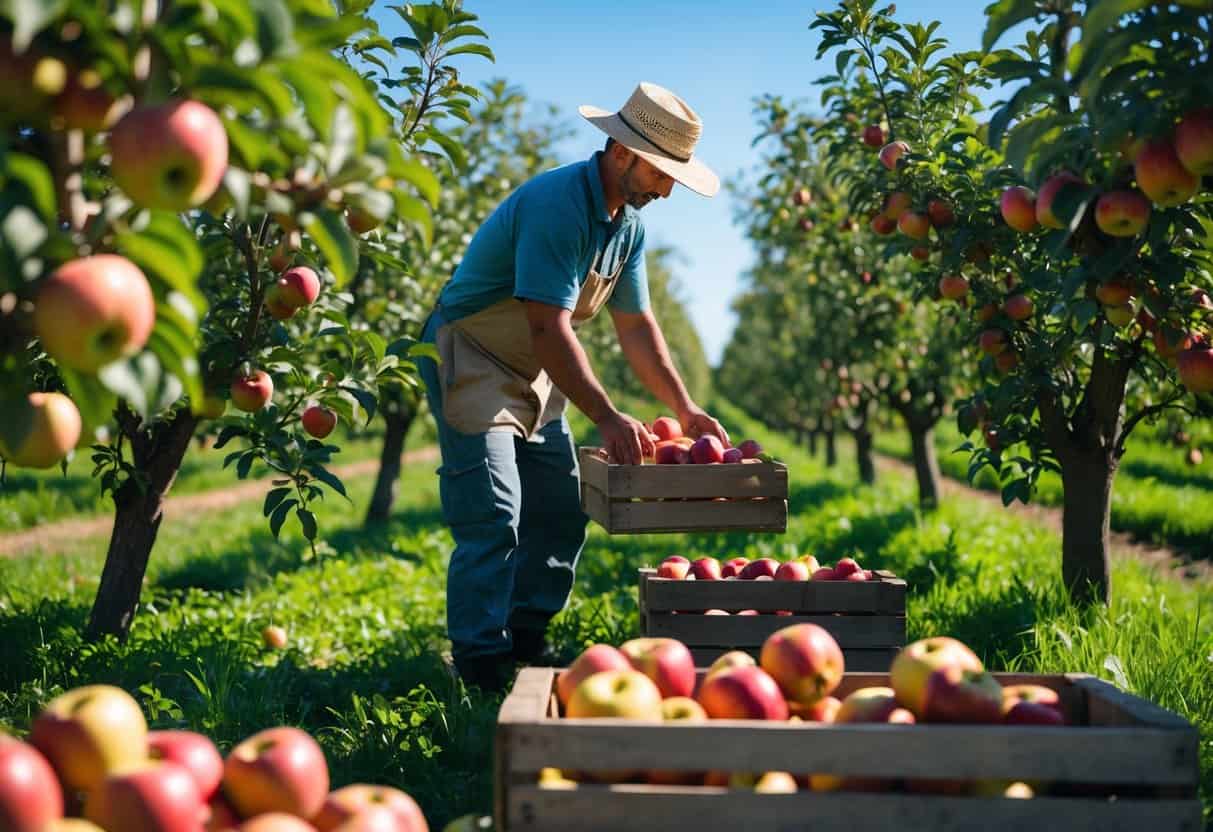
Apples are ready to harvest when they hit peak color and feel just right. Timing matters for flavor and storage.
When To Harvest
Harvest time depends on your apple variety, local weather, and climate. Most apples ripen from late summer through fall.
Mature apples show their usual color, feel firm, and come off with a gentle lift and twist. If they don’t want to let go, give them more time.
They’re often sweetest after a few cool nights, but don’t wait for a hard frost. Apples can handle cold down to about 26°F (-3°C), but don’t leave them out during a freeze.
If apples freeze on the tree, let them thaw before picking to avoid bruising. Try a couple from different spots on the tree—taste and check for firmness.
Early varieties need to be eaten quickly, while storage apples can hang out on the tree a bit longer.
How To Harvest
Be gentle when picking apples to avoid bruises. Cup the apple in your palm, lift, and roll it back toward the branch—it should pop off with the stem still attached.
Don’t yank or pull, or you’ll damage the spur where next year’s apple grows. Picking goes faster with two people.
Set apples gently in a bin or basket. Dropping or tossing them leads to bruises, and those don’t keep well.
Storing Apples
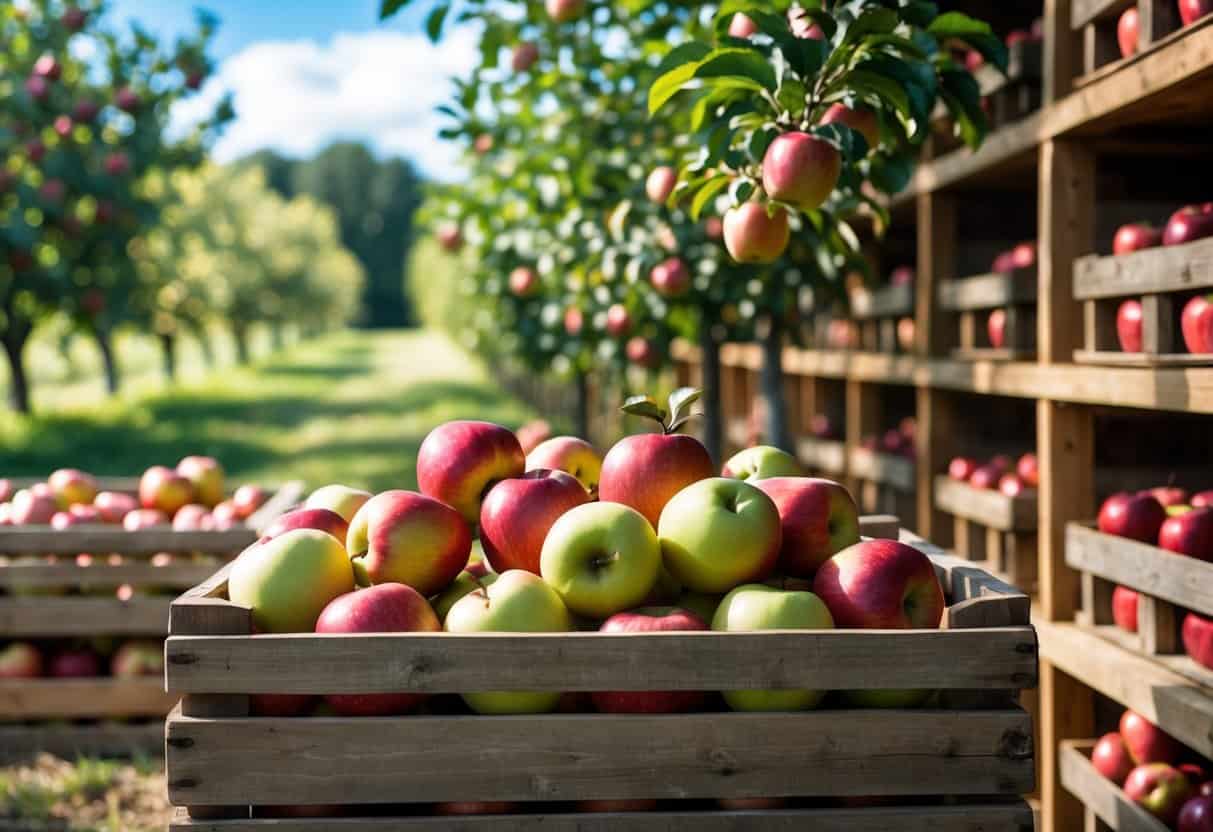
Once you’ve picked your apples, storing them right keeps them fresh and crisp. Good storage stretches out that homegrown flavor.
Best Methods for Storing Apples:
Crisper Drawer (Refrigerator)
Duration: 3–6 weeks
Best For: Snacking, everyday use
Paper Bag or Open Plastic Bag in Fridge
Duration: Up to 6 weeks
Best For: Preventing shriveling, easy access
Cool, Humid Cellar or Garage (32–35°F / 0–2°C)
Duration: 3–6 months
Best For: Long-term winter storage
Packed in Sawdust, Sand, or Newspaper (Cool Pantry)
Duration: 2–4 months
Best For: Storing big harvests if you’re short on fridge space
Keep apples away from potatoes or they’ll spoil faster. Check stored apples every week and pull out any that get soft or moldy.
Only stash apples that are unbruised and fully ripe. Smaller, flawless ones tend to last the longest.
If you want dried apples, slice them thin and use a dehydrator or a low oven. Store dried slices in airtight containers.
Preservation Tips
Don’t use sealed bags—apples need airflow.
Keep storage spots dark to prevent sprouting or softening.
Eat the soft or damaged apples first—they go bad quickest.
Benefits and Uses of Apples
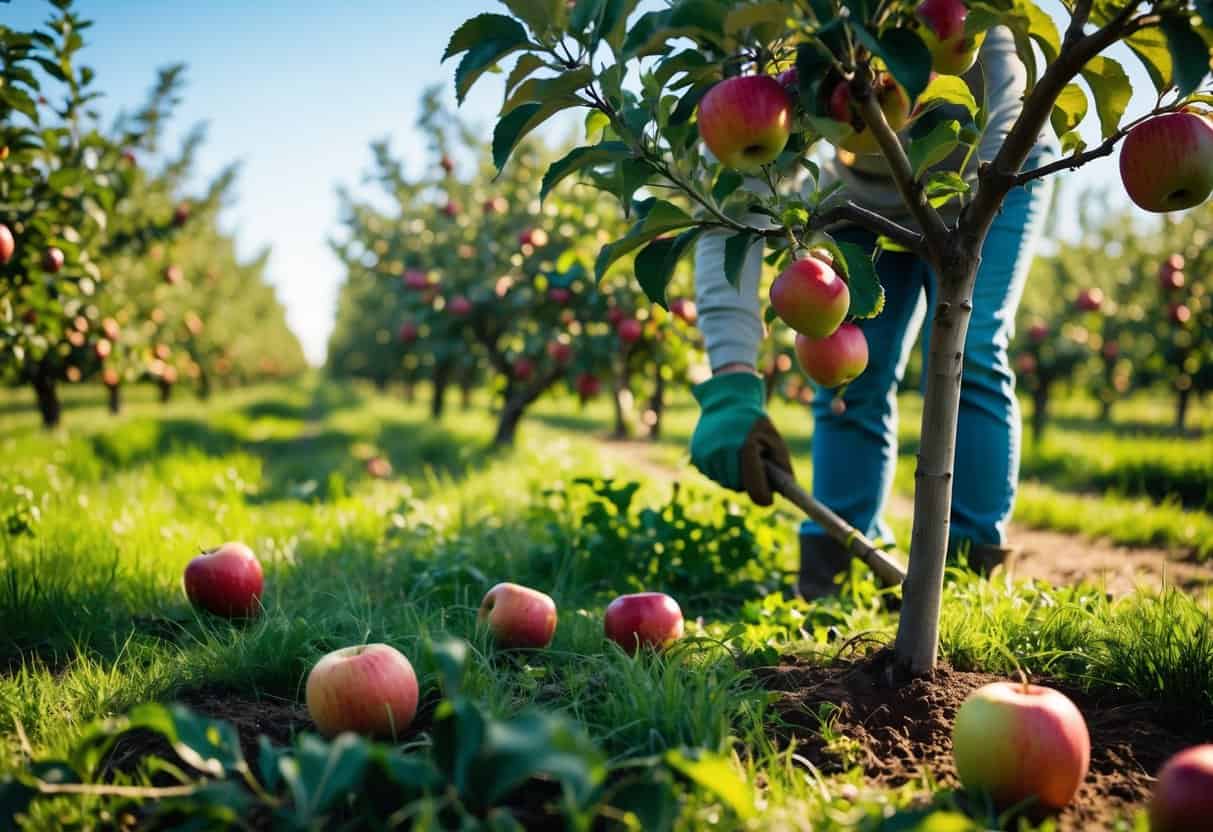
Apples are wildly versatile—way more than just a snack. They bring flavor and nutrition to so many recipes, and honestly, there’s something about sharing apple dishes that feels like tradition.
Cooking With Apples
Apples work in both sweet and savory recipes, thanks to their tartness and natural sugars. Toss them in salads, roast them with veggies, or serve with pork. Apples and cheese? Always a win.
Baking’s probably the easiest way to use up extra apples. Add slices to cakes, muffins, or crisps. If they start to get soft, just cook them down for applesauce or apple butter.
Freeze apple slices or sauce for later if you’re swimming in apples. Some folks dehydrate thin slices for a chewy snack—dried apple rings are great for lunches or hikes.
Family Recipes
Apples have a way of showing up in family kitchens, especially in old recipes or holiday treats.
Classic Apple Pie
Flaky crust, spiced apple filling—a favorite in the US and Australia.
Homestyle Applesauce
Slow-cooked apples, sugar, and a little cinnamon. Good warm or cold.
Apple Crumble
Oats and brown sugar on top—tastes like autumn.
Baked Stuffed Apples
Cored apples with dried fruit and nuts, easy and cozy.
Apple & Pork Sausage Rolls
Popular in Australia; apples keep the filling moist and tasty.
“Try This” Tip: Make a big batch of applesauce and freeze it in small containers for quick snacks or baking.
Frequently Asked Questions
Apple trees need regular care and the right spot to give you a good harvest. Getting started right—planting well and keeping up with maintenance—makes a big difference, even if your garden’s small.
What are the necessary steps to plant an apple tree in your backyard?
Pick a sunny spot with at least 8 hours of direct sunlight daily. Make sure your soil drains well—apple roots hate being soggy.
Dig a hole wide enough for the roots to spread, usually twice as wide as the root ball. Set the tree so the graft union sits just above the soil line.
Backfill with soil, water deeply, and mulch around (but not touching) the trunk. If you’re planting more than one, space them 12–15 feet (3.5–4.5 meters) apart.
How can you make your apple trees thrive and grow quicker?
Water your young apple tree deeply, especially if it hasn’t rained for a while. Dry spells can really stress them out.
Keep the area under the tree free of weeds. Mulch every year to help the soil stay moist.
In early spring, use a balanced organic fertilizer. This gives the tree a little energy boost as it wakes up.
Prune lightly. Snip off damaged branches and shape the tree so sunlight can reach the center.
Can you grow a healthy apple tree from the fruit's seeds, and how?
You can definitely try growing an apple tree from seeds you find in an apple. Just know the tree probably won’t give you apples that look or taste like the original.
Apple seeds don’t grow “true to type.” You might end up with tiny, sour apples—nature’s little surprise.
If you want to give it a shot, chill the seeds for a few weeks in moist paper towels in the fridge. This process is called “stratification.”
Once the seeds sprout, plant them in pots. Move them outside after they look strong and healthy.
Most folks who want reliable apples go for grafted trees instead.
What are some tips for managing apple tree growth in a small garden space?
Go for a dwarf or columnar variety if space is tight. These trees stay much smaller than the standard ones.
You can also plant in a big pot—something at least 18 to 24 inches wide and deep works well.
Prune every year to keep the tree’s height and shape manageable. In containers or windy spots, use stakes for support.
Is it essential to have more than one apple tree for fruit production?
Most apple varieties need pollen from a different apple tree to make fruit. Plant two compatible types within about 100 feet (30 meters) of each other for good pollination.
If you only have space for one tree, pick a self-pollinating variety. Even then, you’ll usually get more apples if there’s a second tree nearby.
How many years will it take for an apple tree to reach maturity and bear fruit?
Grafted apple trees can start producing fruit in as little as 2 to 4 years. This really depends on the rootstock you choose and how well you care for the tree.
If you grow an apple tree from seed, though, you might be waiting 6 to 10 years—or even longer—before you see any apples. That’s a long time to wait for a snack.
Dwarf and semi-dwarf apple trees usually fruit earlier than big, standard trees. Making sure your tree gets enough water, food, and sunlight can help move things along.
Wrap Up