

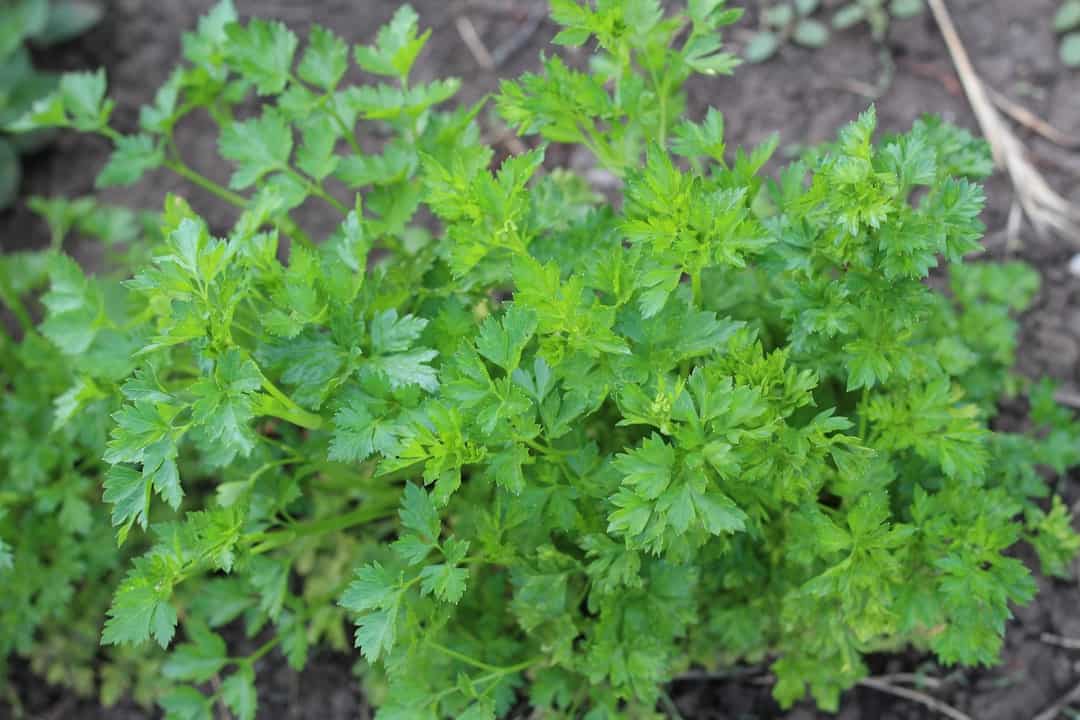
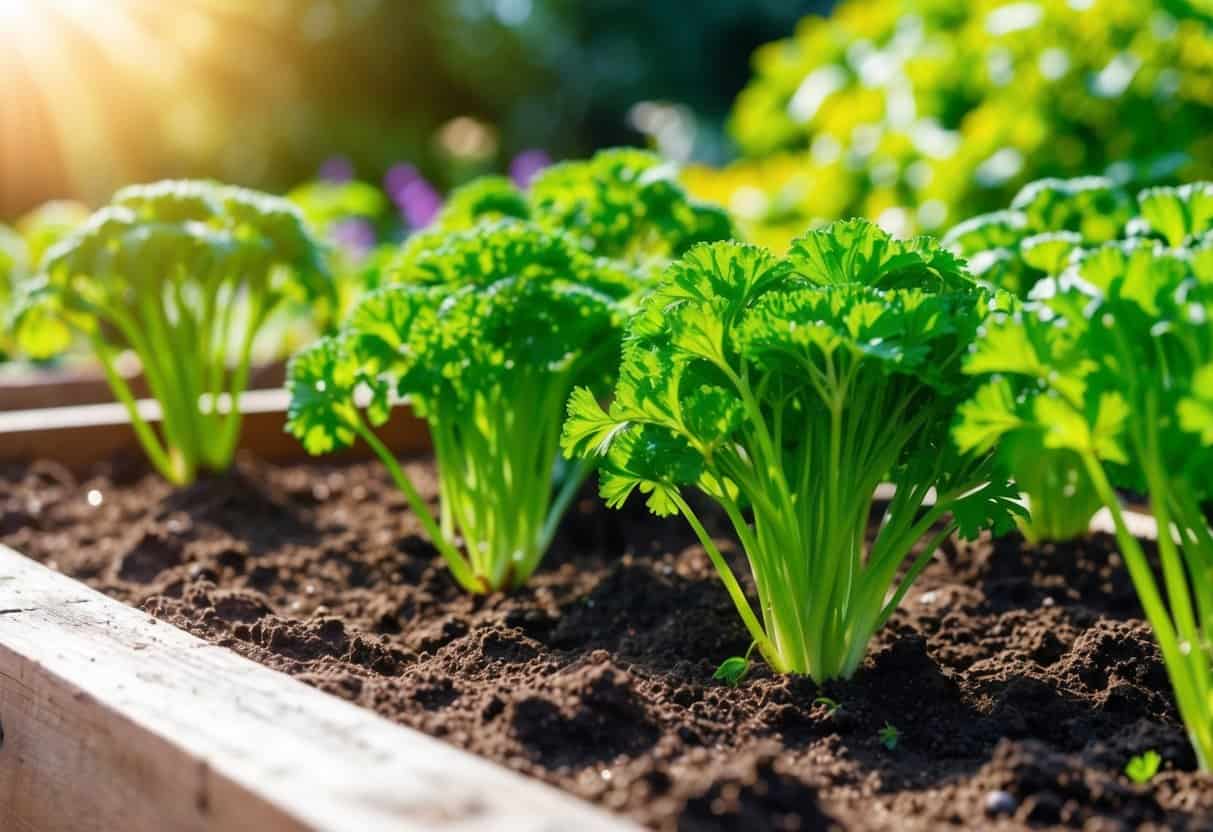
Parsley is a relatively easy herb to grow at home, as long as you provide the right spot. It thrives in a sunny location with at least 6 hours of light each day and prefers cool to moderate temperatures.
Whether you have a garden bed, patio pots, or a bright kitchen window, you can grow healthy parsley if these conditions are met.
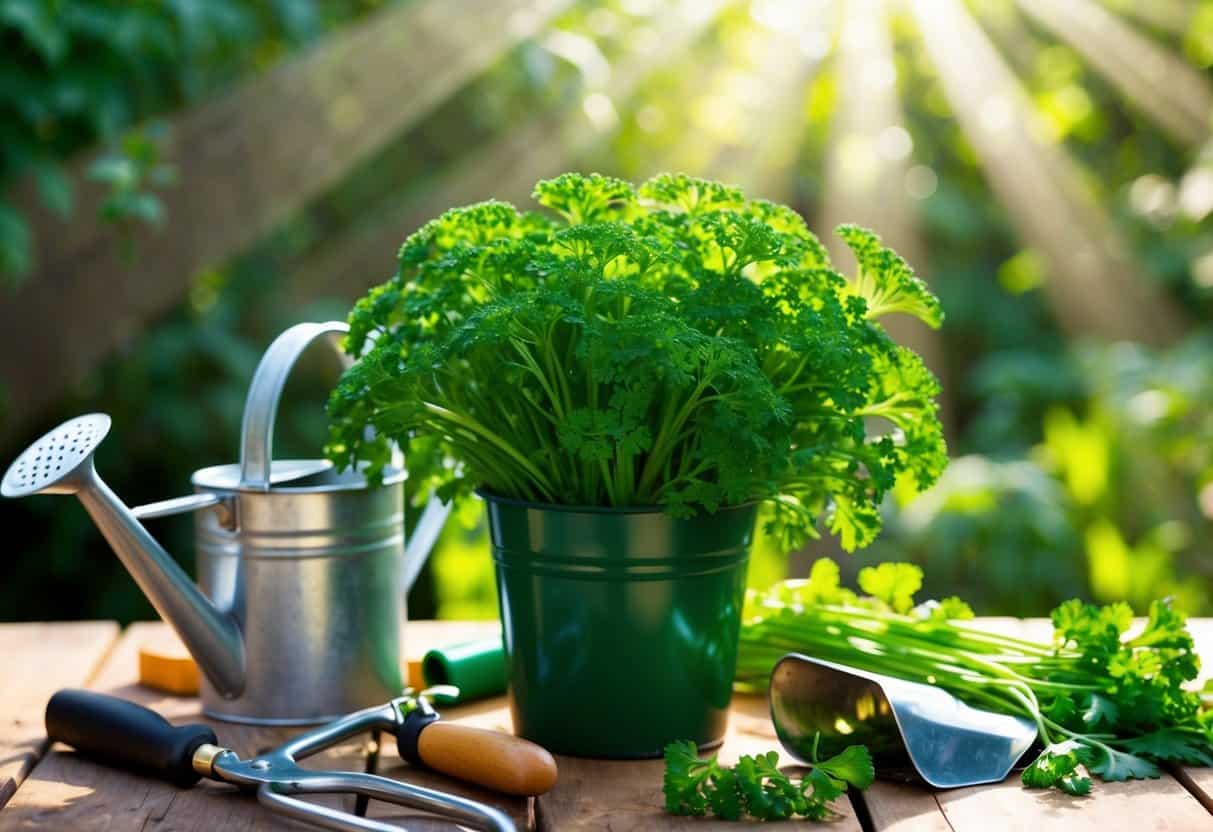
Growing parsley isn't just about sticking another herb in the dirt. It brings fresh flavors to your table and honestly, a little boost of pride when you see those green leaves thriving.
From soaking those stubborn seeds to trimming your first sprigs, every bit of it teaches patience. Mistakes? They happen. But that's how you figure out what works for your garden.
Quick Tips for Parsley
Best Time To Plant
Spring after last frost; fall (autumn) in mild climates
Sun / Lighting
Full sun to part shade (6–8 hours a day)
Spacing
6–8 in (15–20 cm) apart; 1 plant per 6 in (15 cm) pot
Soil Type / PH
Moist, well-drained, rich in organic matter, pH 6.0 - 7.0
Container Info
Medium pots with drainage holes; regular potting mix
Propagation
Seeds are best; soak before planting for faster sprouting
Parsley seeds can take up to six weeks to sprout? Don’t panic if you don’t see green right away.
My first time growing parsley, I almost gave up, but patience paid off with a lush planter in a few months.
About Parsley
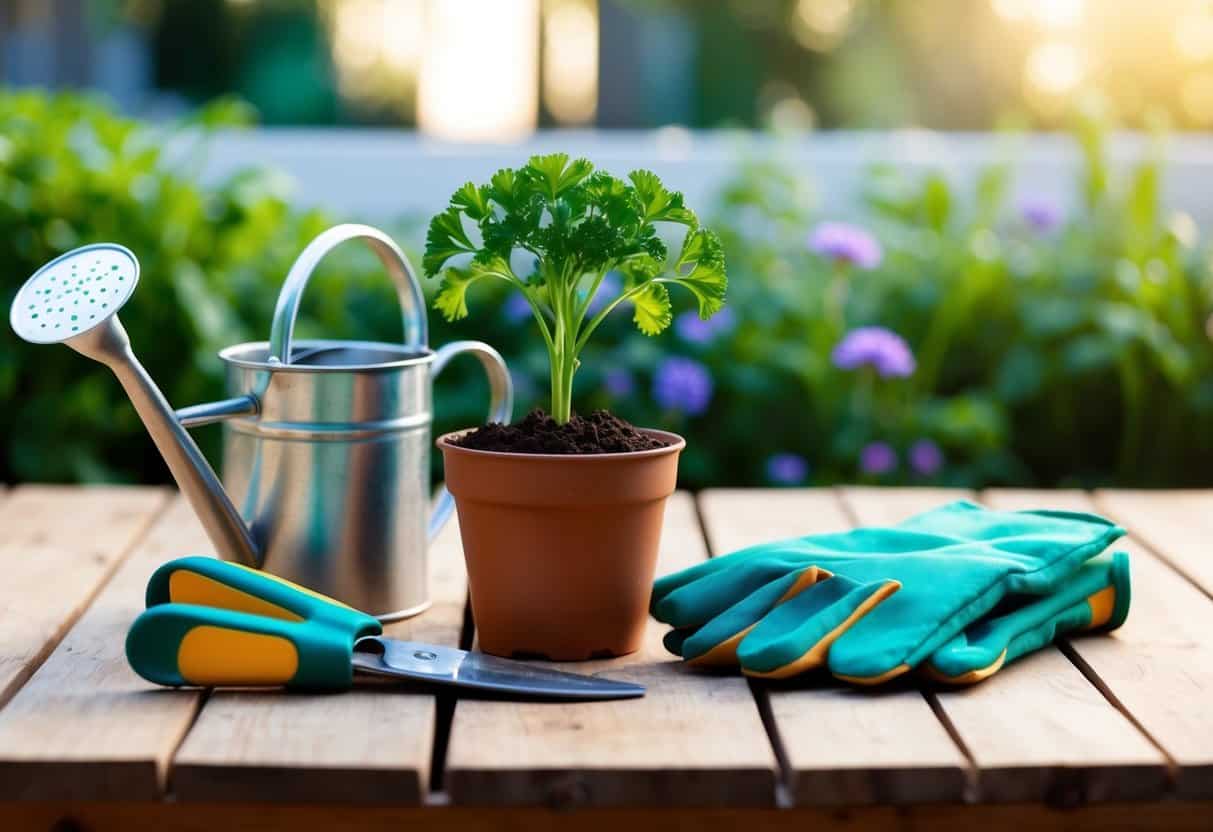
Parsley (Petroselinum crispum) is a versatile herb with bright leaves and a fresh, clean flavor. It’s a favorite for cooks and gardeners alike because it’s so easy to grow and use.
It adds a splash of color to dishes and fits right in whether you’re planting in a garden or a small container.
Parsley Growth Habits
Parsley is technically a biennial, so it grows leaves the first year and sends up flowers and seeds the second year—then it’s done. Most people grow parsley as an annual and just harvest the leaves before it bolts.
It really likes a sunny spot with 6–8 hours of light, though it’ll tolerate some shade. Well-drained soil and regular moisture are key.
Parsley grows with a sturdy central stem and clusters of curly or flat leaves. Its roots dig deep, so don’t let it dry out, but don’t drown it either. Fun fact: it’s in the same family as carrots and celery.
Growing Zones for [Plant]
USA:
- Zones 3–9, cool to temperate climates
- Grows as a biennial; can overwinter in mild areas, protect with mulch in colder zones
Australia:
- Temperate, subtropical, and some arid
- Plant in spring or autumn; provide afternoon shade in hot regions and keep soil moist
Varieties Of Parsley
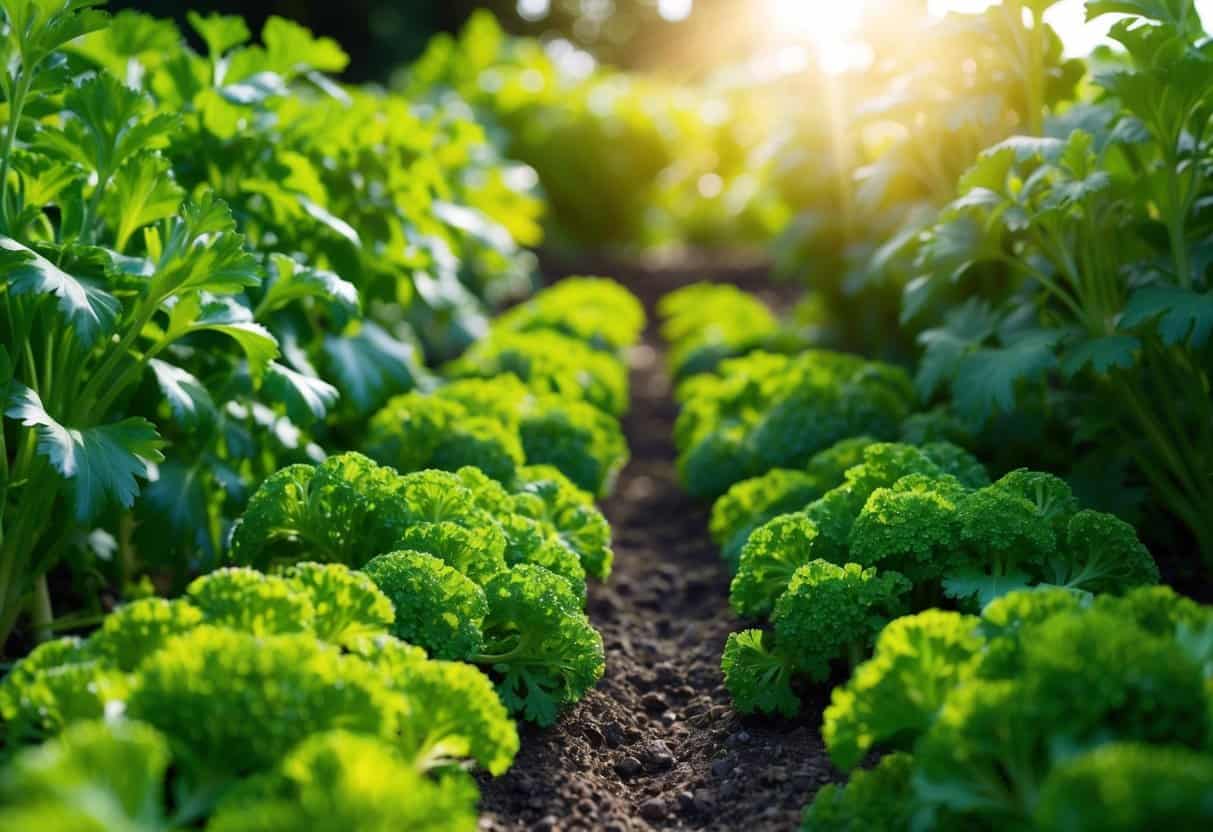
There are two main types: curly leaf parsley and flat-leaf parsley (Italian parsley). Both do well in gardens or containers, but they look and taste a bit different.
Curly Leaf Parsley
Appearance: Bright green, tightly curled leaves; compact, bushy growth.
Flavor: Mild, slightly grassy, and less intense than flat-leaf types.
Best Use: Garnishes, salads, and decorative plating.
Flat-Leaf Parsley / Italian Parsley
Appearance: Flat, serrated, deep green leaves; taller, more upright growth.
Flavor: Robust, fresh, and slightly peppery.
Best Use: Cooking, salads, sauces, and chimichurri.
Hamburg Parsley
Appearance: Similar leaves to flat-leaf parsley; grown for its thick, edible root.
Flavor: Leaves are parsley-like; root tastes like a blend of parsley and parsnip.
Best Use: Root used in soups, stews, and roasted dishes; leaves used as regular parsley.
Japanese Parsley / Mitsuba
Appearance: Triangular, flat, glossy green leaves; resembles celery or Italian parsley.
Flavor: Mild, slightly bitter, with a hint of celery.
Best Use: Japanese cuisine, salads, soups, and garnish.
Russian Parsley, cold-hardy variety
Appearance: Similar to curly or flat-leaf parsley, but more tolerant of cold.
Flavor: Fresh, earthy, much like common parsley.
Best Use: Cold-climate gardens, seasoning, and garnish.
Variety Selection Tips
For containers, pick curly or flat-leaf.
Cooking a lot? Flat-leaf is your best bet.
Want something different? Try Hamburg or Mitsuba.


Planting Parsley
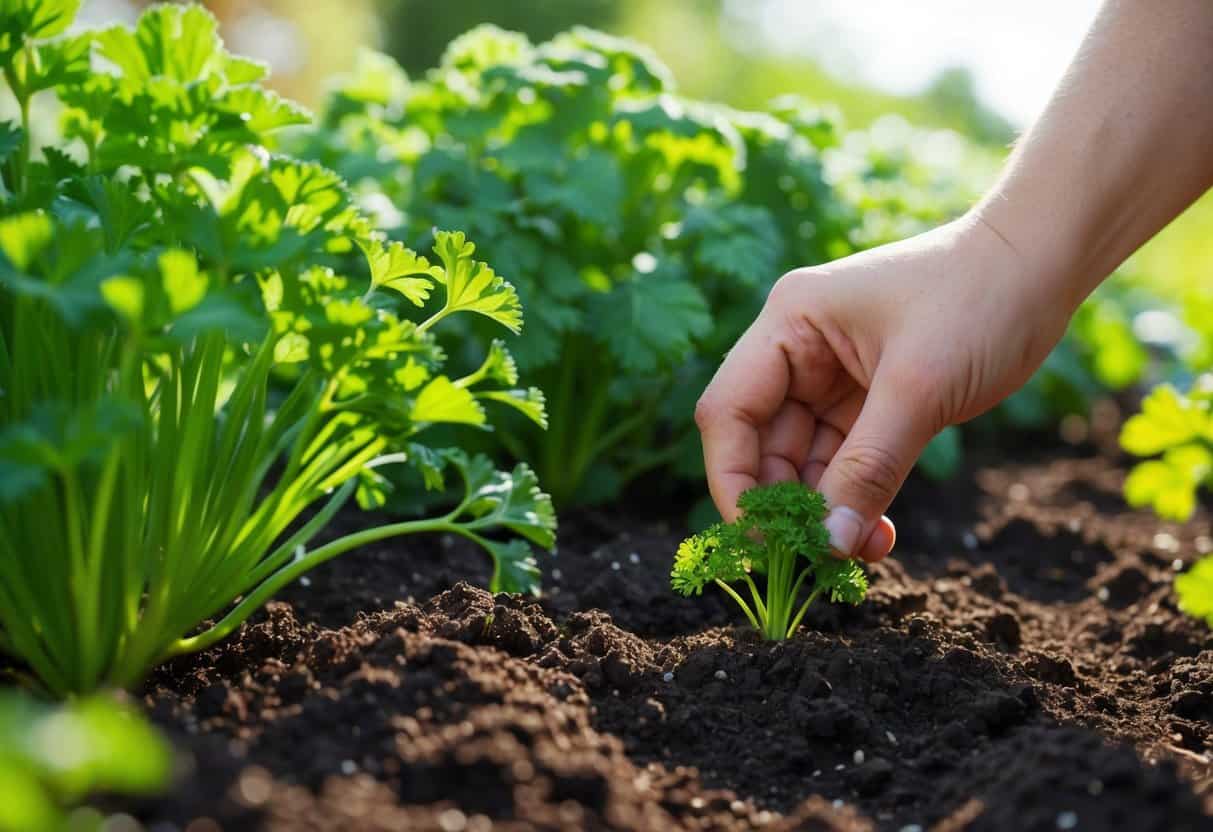
Growing parsley is pretty simple as long as you time things right and pick a sunny, well-prepped spot. Good soil and a bit of patience go a long way.
When To Plant
Parsley likes cool weather for starting out. In most places, sow seeds outdoors three to four weeks before your last expected frost. That way, parsley sprouts before the heat kicks in.
Spring works best for USDA zones 4–9 and in most of Australia’s temperate regions.
In mild winter spots, you can also sow in the fall. If you’re feeling ambitious, start seeds indoors 8–10 weeks before the last frost, but parsley seedlings are slowpokes.
Wait until the soil is at least 50°F (10°C) before planting outside. Parsley seeds can handle a light frost, but not a hard freeze.
Where To Plant
Parsley does best with 6–8 hours of direct sun. It’ll manage with some shade, especially if it’s hot, but more sun makes for bushier, tastier leaves.
Pick a spot with loose, well-drained soil and plenty of compost. Aim for rich soil, not soggy. Parsley likes a pH between 6.0 and 7.0.
If your soil is heavy clay, add some sand and compost to loosen it up. Mulch helps keep roots cool and moist. Don’t plant where water pools after rain—wet roots mean yellow leaves and rot.
Container/Small-Space Growing
Parsley is happy in containers, window boxes, or raised beds. Use a pot at least 8–12 inches (20–30 cm) wide and 8 inches (20 cm) deep so the roots have space.
Fill your pot with good-quality, well-draining potting soil. Mix in a slow-release fertilizer or compost before you plant. Drainage holes are a must—no one likes soggy roots.
Keep pots in a sunny spot, outdoors or on a bright windowsill. Water regularly, since pots dry out faster, but make sure extra water can drain away. In hot weather, container parsley may need a bit more attention to stay moist.
How To Plant
You can start parsley from seed or buy small seedlings. Seeds are easy but slow—germination takes two to four weeks. To speed things up, soak seeds in warm water overnight before planting.
• Sow seeds 1/8 inch (3 mm) deep, right into the soil or container.
• Space seeds or seedlings 6–8 inches (15–20 cm) apart.
• Water gently so you don’t wash seeds away.
• If you’re transplanting, keep seedlings at the same depth as in their pots.
Keep soil moist but not soggy for the first few weeks. Seedlings are tiny and can be crowded, so thin them out when they’re about 2 inches (5 cm) tall.
Propagation
Most folks start parsley from seeds because it has a long taproot and doesn’t love being moved or divided when mature. Growing from cuttings is possible, but honestly, it rarely works out.
For the best shot at success:
• Use fresh seed every year—old seed just doesn’t sprout well.
• Sow extra seeds and thin them later.
• In warmer areas, parsley can self-seed if you let a few plants flower and drop seed.
If you really want to transplant, do it while the seedlings are tiny, before they grow deep roots. Try not to disturb the roots much.
Avoid dividing old clumps—parsley only lives a year or two and doesn’t bounce back well.
Care And Maintenance Of Parsley
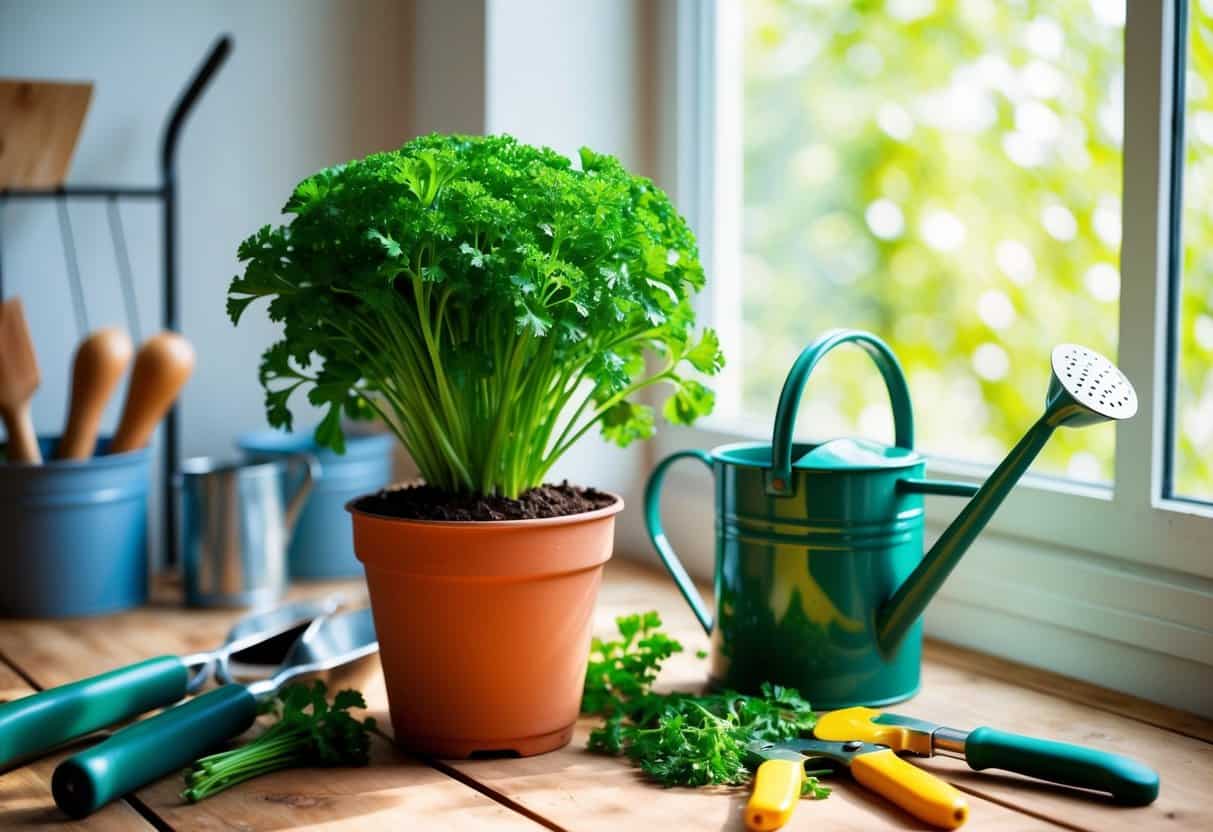
Parsley does best with steady moisture, a few nutrients, and regular trims. With a simple routine, you’ll have lush, healthy plants for months.
Watering Needs
Keep parsley’s soil consistently moist, but not soggy. Stick your finger in about an inch (2–3 cm)—if it’s dry, it’s time to water.
Plant parsley near other herbs that like moist soil—basil is a good companion.
If you see drooping or thin leaves, your plant probably needs more water. Yellow, limp stems? That’s usually too much water. Keep an eye out, and you’ll get the hang of it.
Fertilizer
Parsley really perks up when it gets fresh nutrients during its growing season. Start by mixing compost or well-rotted manure into the soil at planting time.
If you spot pale or yellow leaves or slow new growth, your parsley probably needs a boost. Always stick to the label directions with packaged fertilizers.
Pruning
Regular pruning is the secret to keeping parsley bushy and productive. Once the plant hits about 6 inches (15 cm) tall, you can start harvesting the outer stems.
Every few weeks, trim back up to a third if things look crowded or leggy.
Parsley Problems And How To Fix Them
Parsley’s usually pretty easygoing, but sometimes pests or diseases show up. If you know what to watch for, you can usually catch problems early and fix them before things get out of hand.
Pests
A few pests can cause trouble, especially in warm or crowded conditions.
Aphids
Symptoms: Clusters of tiny green, black, or white bugs on stems or under leaves; leaves may curl or feel sticky.
Solution: Spray with a strong jet of water or use insecticidal soap. Encourage ladybugs and lacewings.
Caterpillars (e.g., parsley worm, swallowtail larvae)
Symptoms: Ragged holes in leaves or missing leaf tips; you may spot colorful caterpillars on the plant.
Solution: Hand-pick caterpillars if numbers are small; relocate beneficial butterfly larvae if you wish to keep both.
Leaf Miners
Symptoms: Winding, pale trails inside leaves; leaves may look distorted.
Solution: Remove and destroy affected leaves; use row covers if infestations persist.
Check your parsley regularly for pests, especially on the undersides of leaves.
Deer, rabbits, and birds generally leave parsley alone, but young seedlings might need protection from curious pets or weeds crowding in.
Diseases
Most parsley diseases are linked to excess moisture or poor air circulation.
Root Rot
Symptoms: Yellowing leaves, wilting, and mushy roots; plant may collapse.
Solution: Use well-draining soil, water only when the top inch is dry, and avoid letting pots sit in water.
Downy Mildew
Symptoms: Yellow patches on leaf tops, fuzzy gray or purple growth underneath.
Solution: Remove and destroy affected leaves, increase airflow, and avoid overhead watering.
Leaf Spot
Symptoms: Brown or black spots on leaves; leaves may yellow and drop.
Solution: Remove infected leaves, avoid wetting foliage, and rotate crops each year.
Water parsley at the base and space plants well to discourage disease.
Growing Problems
Environmental stress or care mistakes are often behind parsley’s slow or weak growth.
Yellow Leaves
Symptoms: Lower leaves turn yellow or pale.
Solution: Check for overwatering or nutrient deficiency; feed with a balanced fertilizer if needed.
Leggy or Floppy Growth
Symptoms: Stems are long and weak, leaves are sparse.
Solution: Move to a sunnier spot; parsley needs at least 6 hours of direct sunlight.
Bolting (Premature Flowering)
Symptoms: Parsley sends up flower stalks early, leaves become tough or bitter.
Solution: Harvest leaves regularly and keep plants cool; once bolting starts, replant for a fresh crop.
Keep parsley healthy by providing plenty of sunlight, well-drained soil, and regular harvesting.
Harvesting Parsley
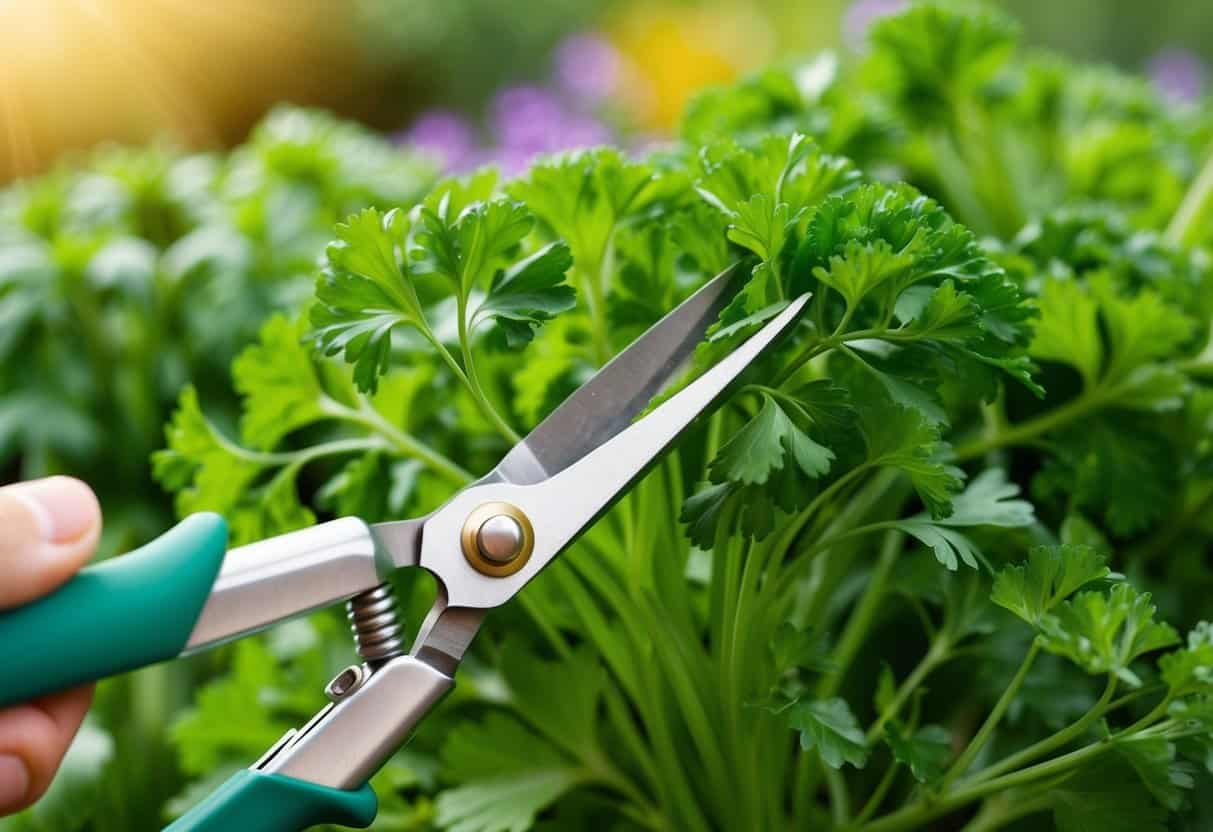
Freshly picked parsley is hard to beat for flavor and nutrition. Knowing when and how to pick it makes all the difference for keeping your plants healthy and productive.
When To Harvest
Start snipping parsley when the plant has at least three solid clusters of leaves—usually about 70–90 days after you plant. Look for leaves that are bright green, full-sized, and sturdy stalks.
Pick in the early morning if you can swing it—the leaves are crisp and packed with flavor then. Try to harvest before any flowers show up, since leaves get tough and bitter after that. If you spot yellow or old leaves, just leave them so the young ones get more energy.
Only take about half the plant’s foliage at once. That way, parsley keeps growing new leaves. Always leave a few stalks with leaves so the plant can bounce back.
How To Harvest
Grab some clean kitchen scissors or garden shears to cut parsley. Snip the outer leaf stalks near the base, about 1 inch (2.5 cm) above the soil. Go for the longest, darkest stalks first—they’re the oldest, and taking them makes room for new, tender leaves.
Move around the plant, only trimming what you need. Don’t pull leaves off by hand—it can mess up the stems and roots. And never cut from the center, or you’ll slow down new growth.
If you want a steady supply, just harvest a little each week. Regular picking keeps parsley from getting scraggly or bolting too early.
Storing Parsley
Preservation Tip
Don’t store fresh parsley near apples or other ethylene-producing fruit—they’ll make the leaves yellow faster.
Benefits and Uses of Parsley
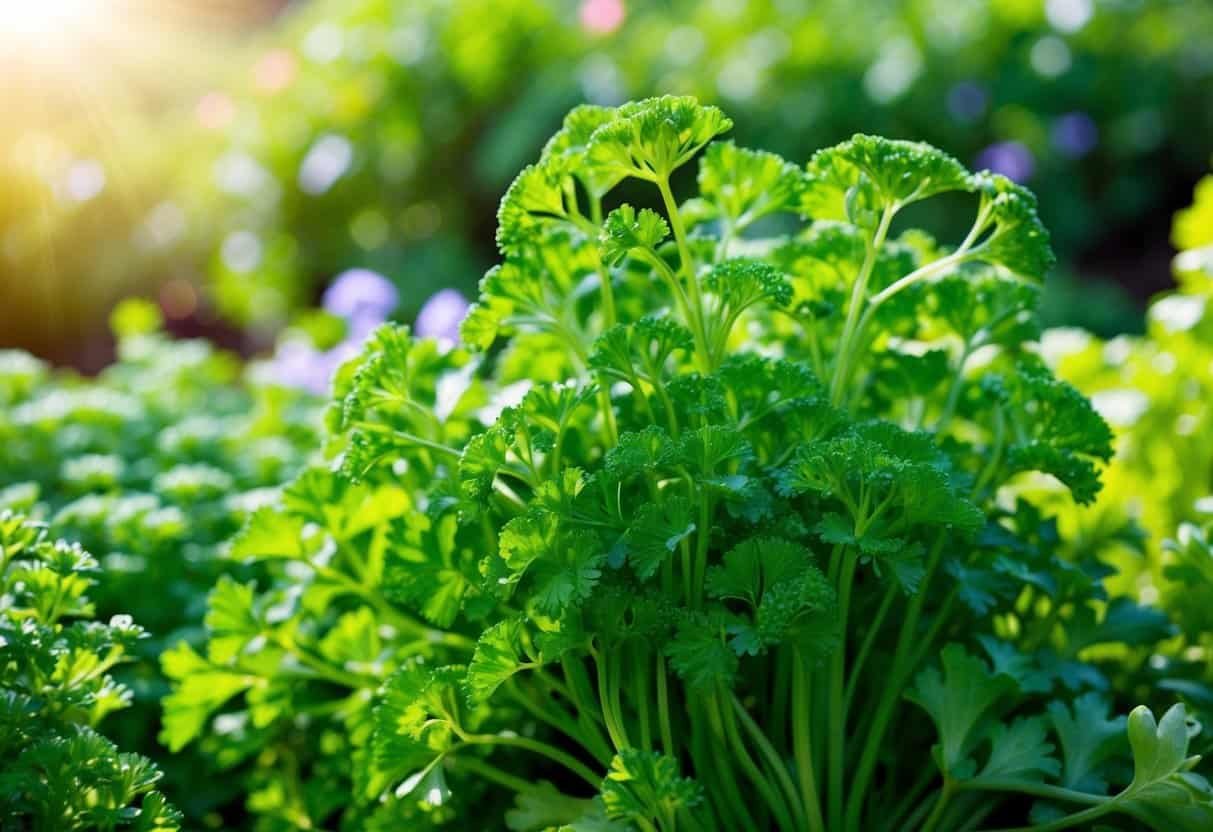
Proper storage keeps parsley fresh and flavorful, whether you’re using it right away or saving some for later. Here’s how to get the most out of your harvest:
Room Temperature Storage
Duration: 1–2 days
Best For: Quick use in salads, garnishes, or recipes
Place parsley stems in a glass of water on the counter, just like a bouquet. Change the water daily and keep out of direct sunlight.
Refrigerator Storage
Duration: 1–2 weeks
Best For: Keeping parsley fresh for meal prep and regular use
Wrap parsley in a damp paper towel and store it inside a plastic bag or airtight container in the fridge. Alternatively, keep stems in a jar of water in the fridge, loosely covered with a plastic bag.
Freezing
Duration: Up to 6 months
Best For: Cooking, soups, stews, and sauces
Chop parsley and freeze it in ice cube trays with a splash of water or olive oil. Once frozen, transfer cubes to a freezer bag for easy use.
Drying
Duration: 6–12 months
Best For: Long-term storage and seasoning
Tie parsley stems in small bunches and hang them upside down in a warm, dry, airy place until leaves are crisp. Store dried leaves in an airtight jar away from light and heat.
Properly stored parsley means you’ll always have that fresh, vibrant flavor ready for your favorite dishes!
Cooking With Parsley
Fresh parsley is a staple for its bright, clean taste. Both flat-leaf and curly types work. Chop the leaves and toss them on soups, roasted carrots, or baked asparagus for a quick flavor boost.
Parsley pairs well with other herbs like dill and chives. Mix it into salads, use it to finish dishes, or blend into sauces and butters for a fresh lift. If you add it at the end of cooking, you’ll keep the flavor and nutrients intact.
Family Recipes
Parsley shines in family recipes that stick around for generations.
Tabbouleh is a classic Middle Eastern salad with bulgur, tomatoes, fresh parsley, mint, and lemon juice—light and full of zing.
Chimichurri from Argentina uses flat-leaf parsley, garlic, vinegar, and oil for a sauce that’s perfect on grilled meats.
Try parsley mashed potatoes by mixing in finely chopped parsley for a fresh twist. Or add parsley to chicken broth, carrots, and noodles for a quick soup.
In Australia, parsley butter is classic—spread on hot bread or melted over asparagus.
Try This: Chop up leftover parsley stems and toss them into homemade stocks for extra depth. No waste, just more flavor.
Frequently Asked Questions
Starting parsley from seed takes a bit of patience, but with decent soil, warmth, and light, you’ll get there. Pots or cuttings? It’s all about the right container and keeping up with watering.
What are the best conditions for planting parsley seeds to ensure they sprout?
Parsley seeds can be slowpokes—sometimes three weeks before you see anything at all. Soak them overnight in warm water to nudge them along.
Plant in rich, well-drained soil and keep it moist, not drenched. Find a spot with sun or partial shade. If you’re in USDA zones 4–9 or similar climates, you’re good once spring hits about 50°F (10°C).
Can you guide me through the process of growing parsley in pots for my balcony garden?
Grab a pot at least 6 inches (15 cm) wide and deep for one plant. If you want a little parsley crowd, go for 12 inches (30 cm) across.
Mix potting soil with compost for happier plants. Sow seeds about ¼ inch (6 mm) deep and keep the soil just barely moist. Morning sun and afternoon shade work best, especially if it gets hot where you live. Parsley isn’t too fussy about the climate as long as you don’t let it bake or freeze.
What should I do to successfully propagate parsley from cuttings from my friend's garden?
Snip a healthy stem, about 4 inches (10 cm) long, right below a leaf node. Pull off the lower leaves and stick it in water by a sunny window.
Swap out the water every few days. Roots usually show up in 2–3 weeks. Once you see them, plant your cutting in rich, moist soil—either in a pot or right in the garden.
After I buy parsley from the supermarket, what steps do I take to grow it in my kitchen?
Rinse the stems and trim the bottoms a bit. Set them in a glass of water on a sunny windowsill.
When new roots start popping out, move the parsley to a pot with good potting mix. Water it well and keep it somewhere bright, but not in harsh direct sun.