

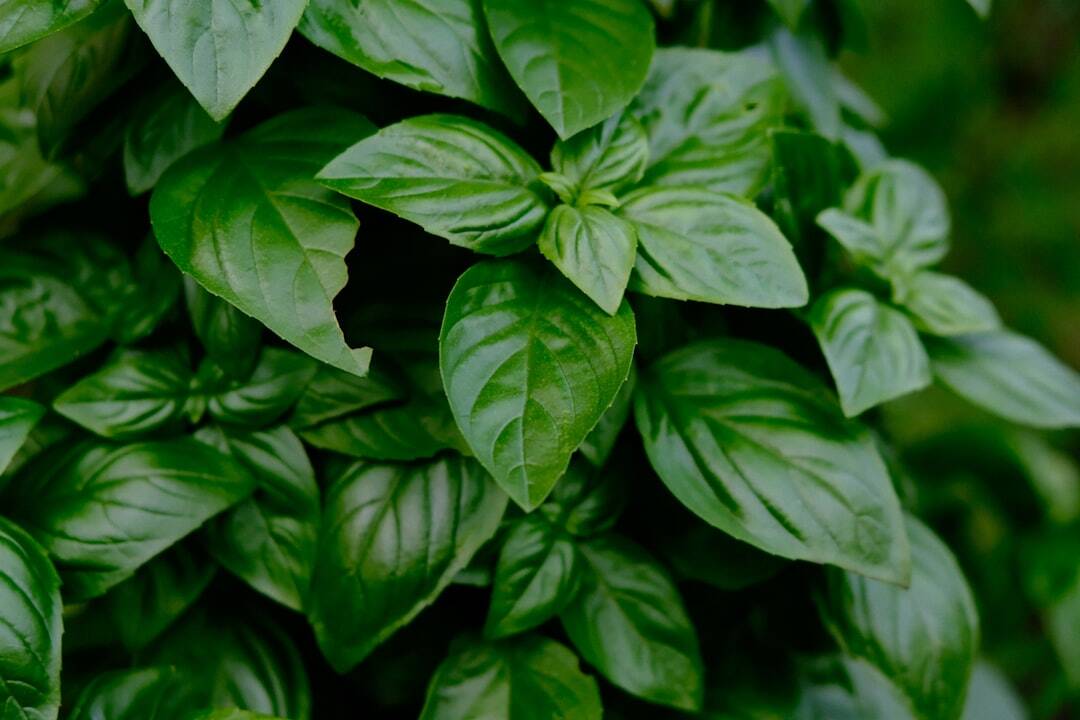
Basil is honestly one of the easiest and most satisfying herbs to grow. Whether you’ve got a sunny garden patch or just a little pot on the windowsill, it’ll reward you.
With a bit of sunlight, some water, and basic care, you’ll have fresh, fragrant basil leaves for months—perfect for your favorite recipes.
Basil adds a real kick to salads, sauces, and pizzas. Once you’ve tasted it straight from your own plant, store-bought just feels flat.
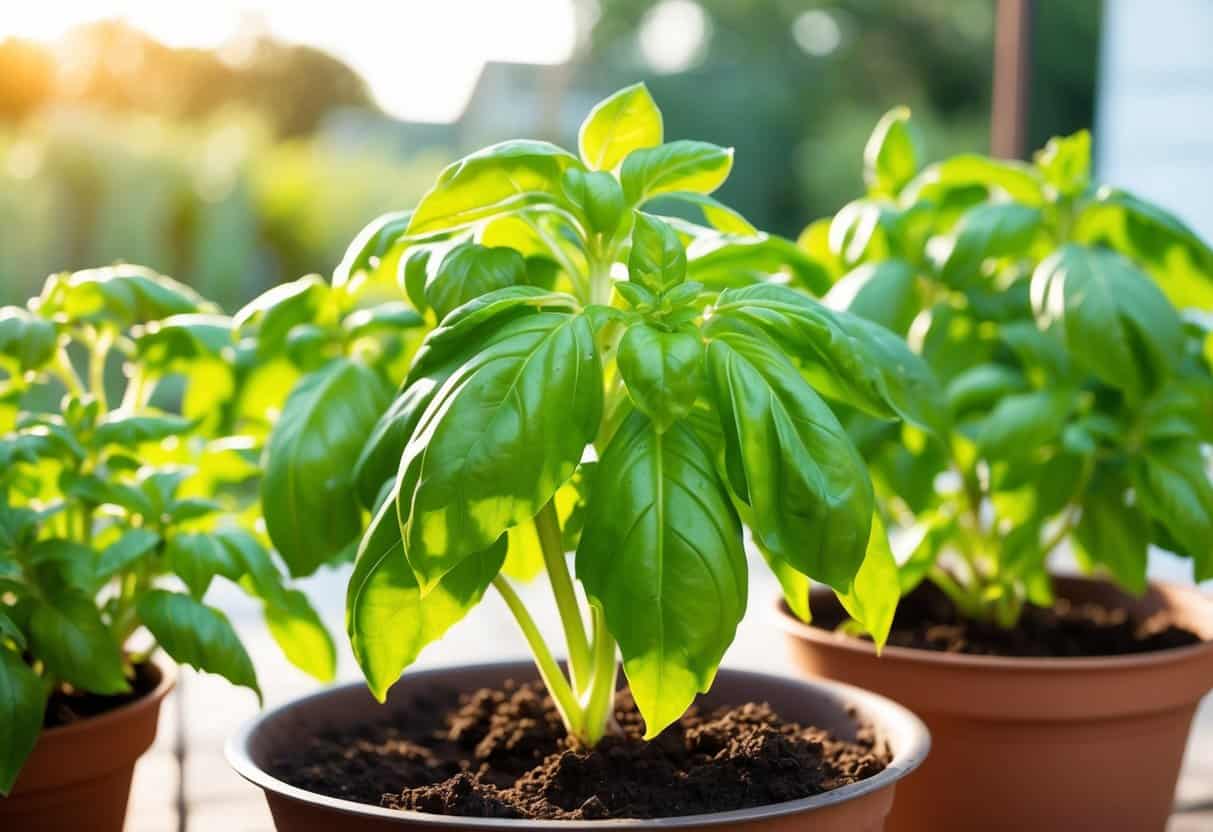
I still remember my first try at growing basil in an old coffee mug by the kitchen window. I over-watered it, the leaves drooped, but after a bit of trial and error, it bounced back and kept my kitchen smelling fresh all summer.
Gardening’s not about perfection. You’ll pick up plenty just by getting your hands dirty and seeing what works.
Quick Tips for Basil
Best Time To Plant
Spring, after last frost; soil temperature above 50°F (10°C)
Sun / Lighting
Full sun (at least 6 hours daily); tolerates partial shade in very hot climates
Spacing
12–18 in (30–45 cm) between plants; allows for airflow and healthy growth
Soil Type / PH
Well-drained, fertile soil; pH 6.0–7.5
Container Info
Medium container: at least 8–12 in (20–30 cm) wide and deep; use rich, well-draining mix
Propagation
Grown from seeds or cuttings; seeds germinate in 5–10 days; cuttings root easily
About Basil
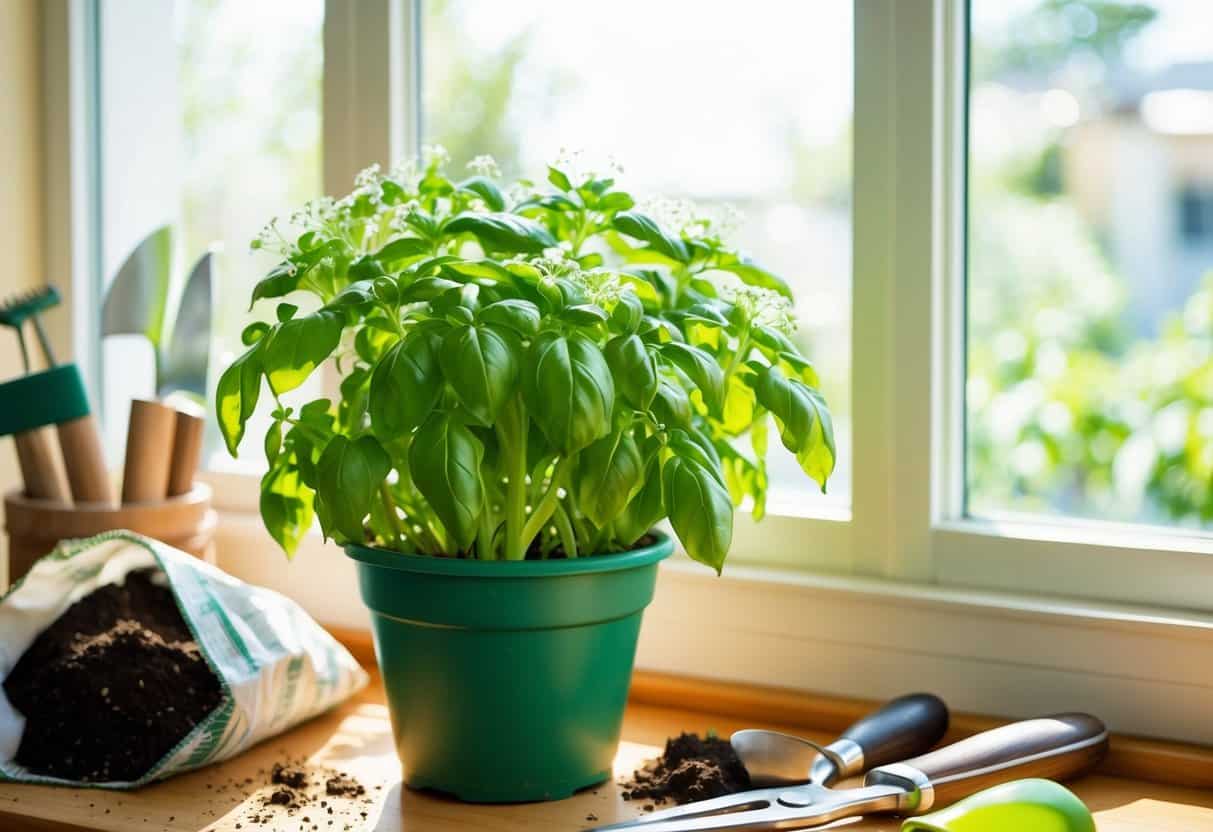
Basil is a popular annual herb known for its fresh taste and fragrant leaves. It’s fast-growing and brings a bright, aromatic flavor to gardens and kitchens everywhere.
Basil Growth Habits
Basil grows as an annual—it finishes its life cycle in a single season. Most folks start it from seed, and with enough warmth and light, it flourishes fast.
Basil likes loose, moderately fertile soil that stays moist but not soggy. It does best with 6 to 8 hours of sunlight daily.
Temperatures above 50°F (10°C) keep basil happy. Cold weather really slows it down.
The plants develop leafy stems with soft green leaves. If you pinch off the stem tips, you’ll get a bushier, upright plant.
Small white or purple flowers may pop up, but honestly, picking them off helps your basil focus on growing leaves instead.
Regular harvesting encourages new growth. In a good spot, you’ll have a steady supply of fresh basil all summer and into early fall.
Growing Zones for Basil
USA:
- Zones 2–11 as annuals (perennial in zones 10–11)
- Plant after last frost; in cooler zones, start indoors or use season extenders; protect from any frost
Australia:
- Temperate, subtropical, tropical
- Grows well in most regions; in hot areas, provide afternoon shade and regular watering during heatwaves
Varieties Of Basil
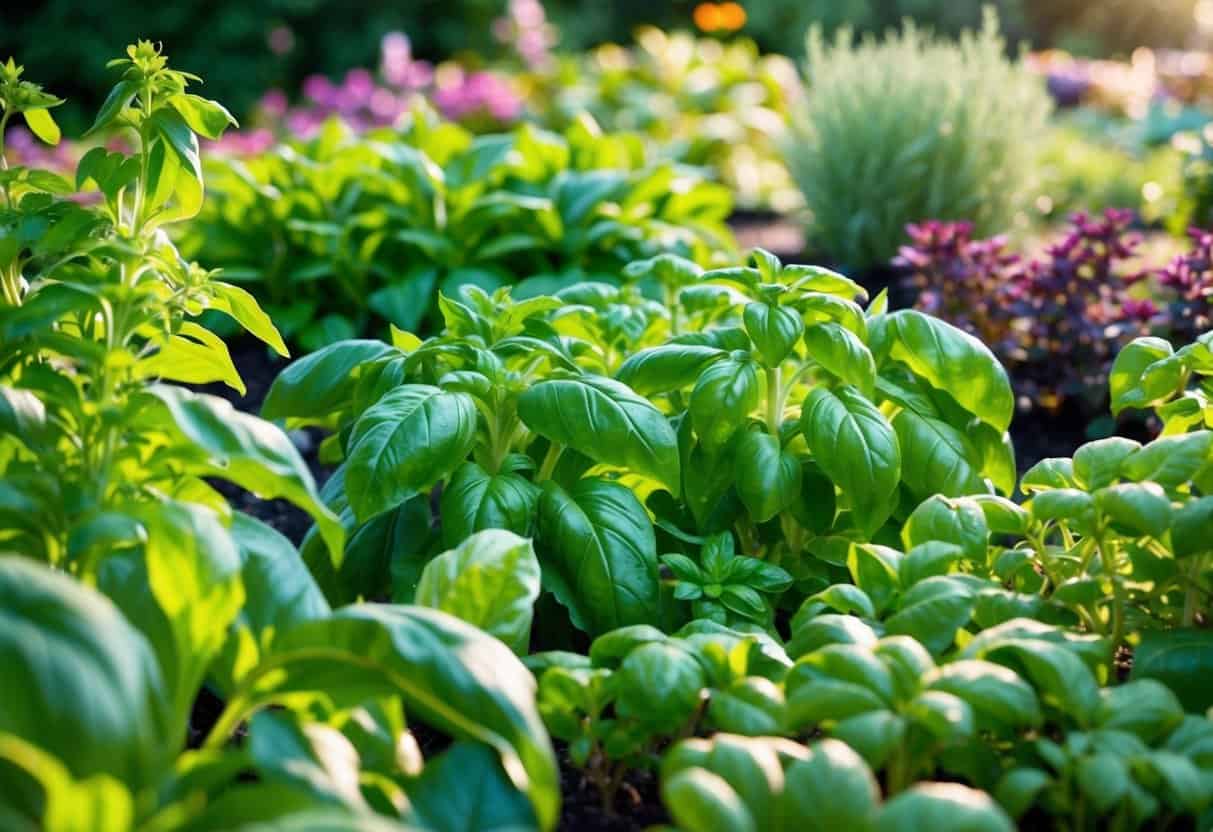
Basil comes in a surprising number of varieties, each with their own flavors, colors, and leaf shapes.
Sweet Basil
Appearance: Large, bright green leaves; classic basil look.
Flavor: Sweet, aromatic, and slightly peppery—the standard basil flavor.
Best Use: Pesto, Italian dishes, caprese salads
Thai Basil
Appearance: Narrow, pointed dark green leaves with purple stems and flowers.
Flavor: Spicy with a hint of licorice or anise; holds flavor well when cooked.
Best Use: Stir-fries, curries, pho, and other Southeast Asian dishes.
Greek Basil (Bush Basil)
Appearance: Tiny, rounded green leaves; compact, bushy growth habit.
Flavor: Strong, peppery, and slightly spicy.
Best Use: Containers, salads, garnishes, and small-space gardens.
Purple Basil
Appearance: Deep purple, glossy leaves; very ornamental.
Flavor: Mild, sweet, sometimes with clove undertones.
Best Use: Garnish, salads, vinegar infusions, and for adding color to dishes.
Genovese Basil
Appearance: Large, slightly cupped, bright green leaves; smooth and glossy with a traditional basil look.
Flavor: Rich, sweet, and aromatic with subtle spicy notes; the classic flavor associated with authentic pesto.
Best Use: Pesto Genovese, caprese salads, Italian sauces, fresh on pizza, and as a finishing herb for Mediterranean dishes.
When you’re picking basil, think about your climate and the space you have. Greek basil and compact types like “Bonnie” are great for containers or small gardens.
Tips for Variety Selection
Go with sweet basil for classic flavor and cooking.
Pick compact types like Greek basil for pots or tight spots.
Try purple or lemon basil if you want something different.
Match your basil choice to your favorite dishes and your growing space.


Planting Basil
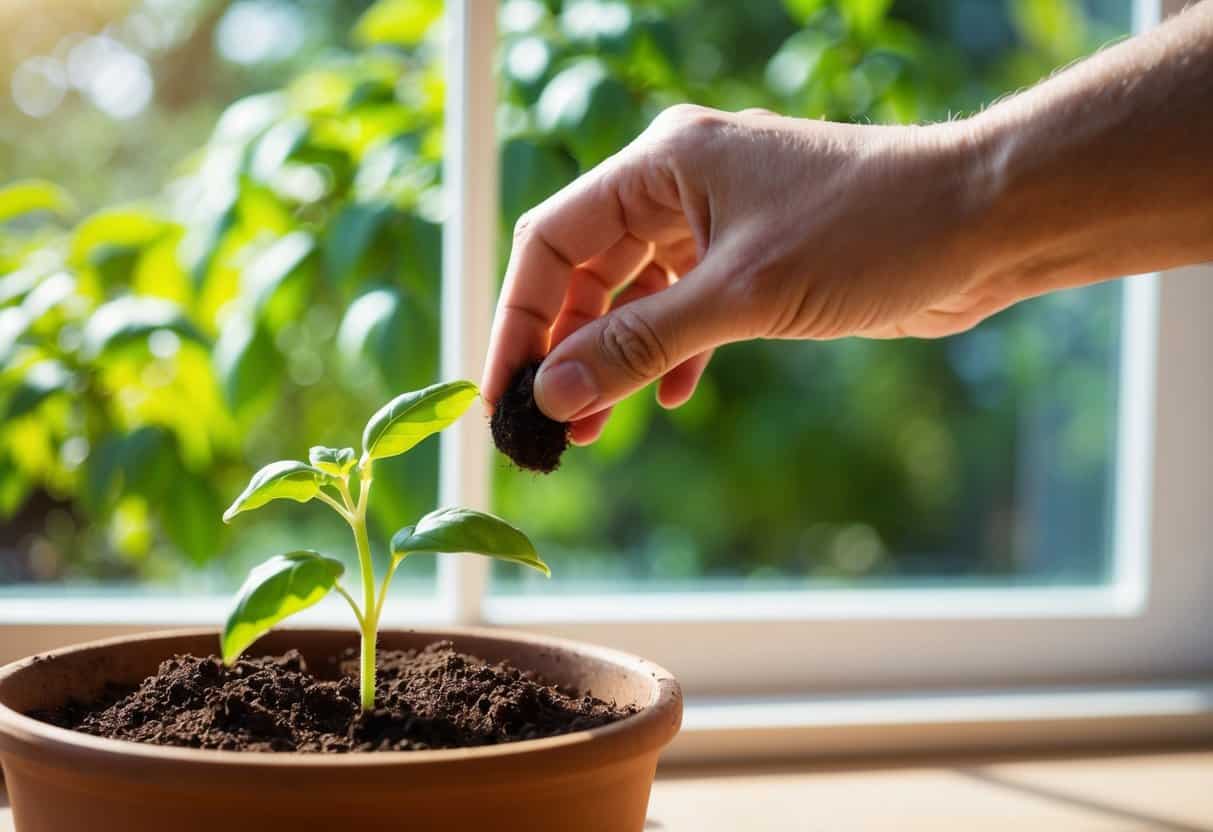
Basil needs warmth, plenty of sunlight, and rich, well-drained soil. Getting the timing right and picking a good spot makes a big difference for healthy plants and tasty leaves.
When To Plant
Don’t plant basil outside until temperatures are reliably above 59°F (15°C). Cold soil can stop seeds from sprouting and young plants just don’t like it.
Usually, you’re safe about two weeks after your last spring frost. If you want a head start, sow seeds indoors 4–6 weeks before the last frost date.
Basil is super sensitive to cold. Even a light frost can wipe it out.
If you’re in a cooler area, keep some cloches or row covers handy in case the weather turns chilly.
Where To Plant
Pick a spot that gets at least 6–8 hours of sun every day. Basil loves heat and direct light.
Shady spots make for tall, spindly plants and not many leaves. You want soil that’s well-drained and rich. Mix in compost or well-rotted manure before planting.
Stay away from heavy clay that stays wet or sand that dries out too fast. Shelter basil from strong winds if you can.
Raised beds or a spot near a south-facing wall work well. Slugs and snails can be a pain, so keep an eye out after rain.
Container/Small-Space Growing
Basil thrives in pots or small spaces, making it perfect for balconies, windowsills, or patios.
Choose containers that are at least 6–8 inches (15–20 cm) deep and have drainage holes to prevent waterlogging.
Fill your pots with a high-quality potting mix blended with some compost for extra nutrients.
Place your basil where it will receive plenty of direct sunlight—pick the sunniest spot you have.
Water your basil whenever the top of the soil feels dry to the touch, and feed with a light fertilizer every 4–6 weeks to keep it growing strong.
Wait to move your pots outside until the weather is consistently warm, since cold snaps can quickly set basil back.
If there’s a surprise frost in the forecast, simply bring your basil inside for the night to keep it safe.
How To Plant
Sow basil seeds 1/8 inch (3 mm) deep in moist, fine soil or compost. Outdoors, space seeds or young plants 12–18 inches (30–45 cm) apart.
If you want baby leaves for salads, thin seedlings to about 3–4 inches (7–10 cm) apart. After sowing, water gently—don’t drown them, just keep the soil moist.
Seeds usually sprout in 5–10 days. Once seedlings get two sets of true leaves, thin out the weaker ones so each plant has space.
Transplant hardened-off seedlings outside only after all risk of frost is gone and the soil feels warm.
Propagation
You can propagate basil from seed, cuttings, or even by dividing young clumps. Seeds are easy and let you try new varieties.
For cuttings, snip a healthy stem about 4–6 inches (10–15 cm) long, just below a leaf node. Take off the lower leaves and stick the stem in a glass of water.
Roots show up in a week or two. When they’re about 2 inches (5 cm) long, plant your cutting in moist, rich soil.
If you’ve got a plant with several stems, you can gently tease apart the clump and transplant. Not as common as seeds or cuttings, but it works.
Care And Maintenance Of Basil
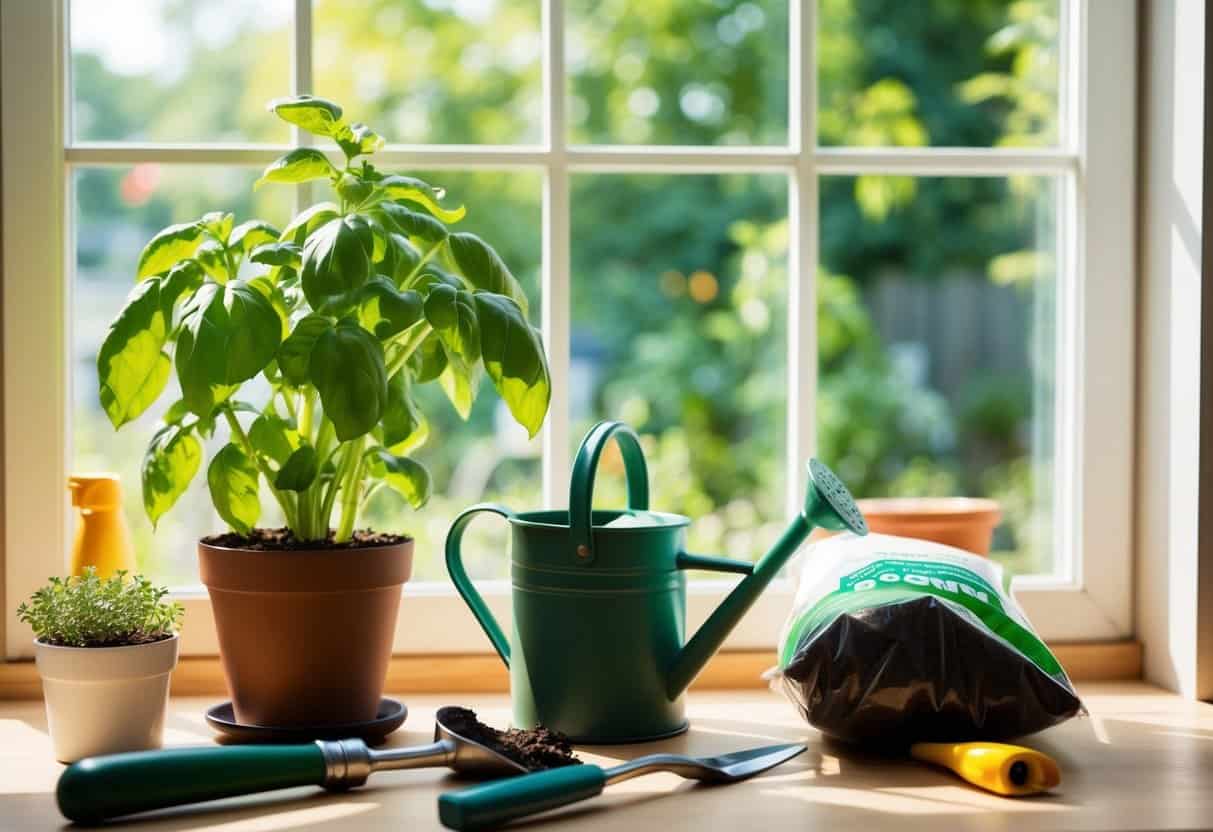
Keeping basil happy comes down to water, nutrients, and a little pruning. Good air flow and simple routines go a long way to prevent issues and keep those leaves coming.
Watering Needs
Basil likes moist, well-drained soil. Let the top inch (2.5 cm) dry before watering again.
Outdoors, basil usually needs about 1 inch (2.5 cm) of water per week. In containers, check more often—they dry out fast.
Water at the base of the plant, preferably early in the day. Try to keep the leaves dry to avoid disease.
Mulch helps soil hold moisture and keeps air moving around the base. In hot spells, check daily and water deeply so roots grow strong.
Shallow watering leads to weak plants, so go for a good soak when you do water.
Fertilizer
Basil likes a steady supply of nutrients but doesn’t need much fuss. Mix some compost into the soil when you plant for a gentle, organic lift.
A balanced, water-soluble fertilizer (like 10-10-10) works well every 4–6 weeks during the season. If you’re going with liquid fertilizer, dilute it to half-strength so you don’t burn the leaves.
Fish emulsion or worm tea are solid organic picks, packed with nitrogen for leafy growth. Just don’t overdo it—too much fertilizer can mess with flavor or make your plants tall and floppy.
Pruning
Frequent pruning is the secret to bushy basil that keeps going strong. Once your plants hit 4–6 inches (10–15 cm), pinch or snip the top sets of leaves above a pair of leaf nodes.
This encourages more branches and fuller growth. Remove flower buds as soon as you spot them, so the plant puts energy into new leaves instead of seeds.
Use clean scissors or just pinch with your fingers, making cuts just above a leaf set. Don’t take off more than a third of the plant at once—it stresses the plant out.
Basil Problems And How To Fix Them
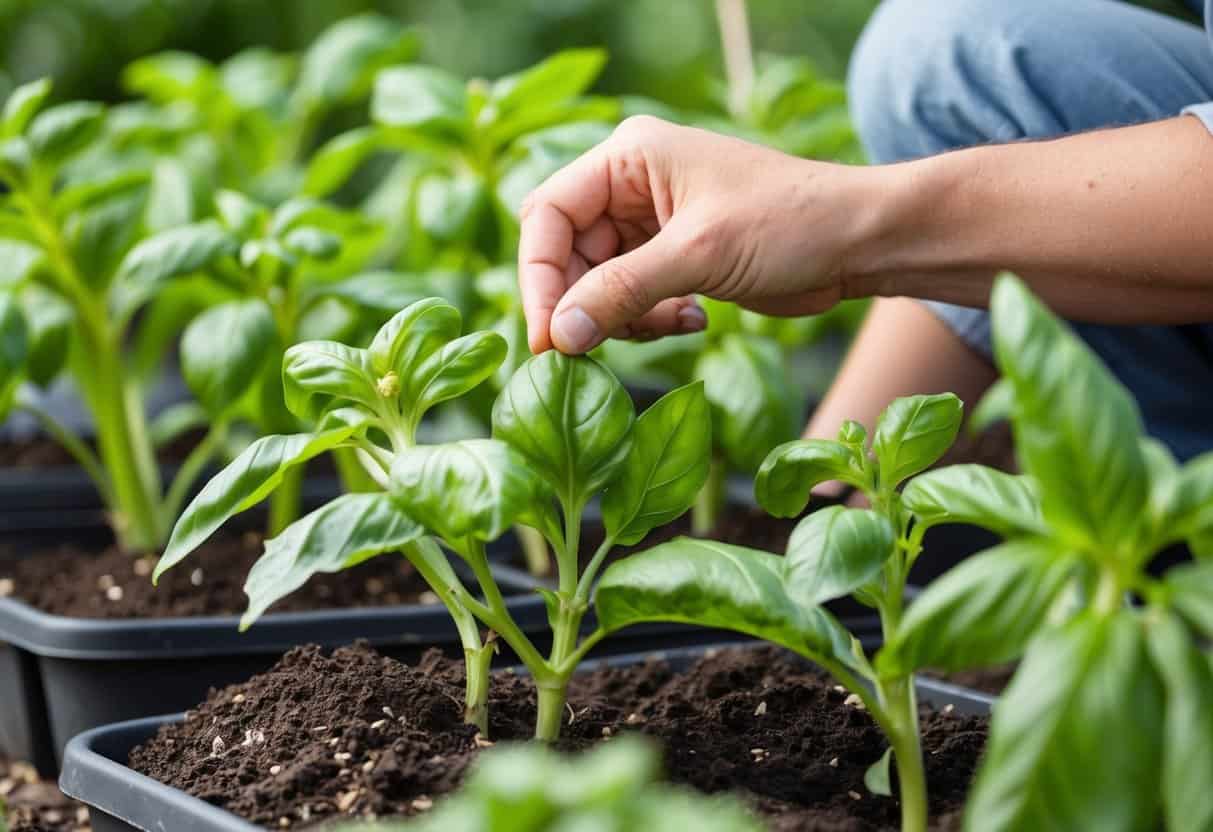
Basil runs into a few hiccups, but most are easy to spot and fix if you pay attention. Healthy basil needs some watchfulness—pests, diseases, and weird growth habits can pop up from spring through fall.
Pests
Small bugs and leaf-chewing beetles are the usual troublemakers when basil leaves look ragged or spotted.
Aphids
Symptoms: Curled or yellowing leaf tips, clusters of small green, black, or white insects (often on new growth).
Solution: Spray with a diluted soap solution (1 tsp mild liquid soap in 1 quart/liter of water), pinch off heavily infested tips, and rinse plants with a strong spray of water.
Japanese Beetles
Symptoms: Irregular holes and brown patches on leaves; beetles may be visible feeding on foliage.
Solution: Hand-pick beetles off plants, use beetle traps nearby, and remove damaged leaves if needed.
Slugs
Symptoms: Irregularly shaped holes in leaves, silvery slime trails on soil or foliage.
Solution: Hand-pick slugs in the evening or early morning, use barriers (like crushed eggshells), dry mulch, and remove mulch if slugs are persistent.
Diseases
Fungal and bacterial problems creep in if basil stays too wet or crowded. Root rot is common when soil doesn’t drain well, causing wilted, yellowed leaves and mushy stems.
Fusarium Wilt
Symptoms: Leaves yellow and droop, often with brown streaks on stems; plant may wilt and fail to recover.
Solution: Remove and destroy affected plants, avoid overhead watering, rotate crops each year to prevent recurrence.
Damping Off
Symptoms: Seedlings suddenly collapse, stems become thin and weak at soil level, often with a water-soaked appearance.
Solution: Use clean pots and fresh soil for seedlings, keep soil surface dry, and provide good air circulation.
Downy Mildew
Symptoms: Gray, fuzzy patches underneath leaves, sudden yellowing, and eventual leaf drop.
Solution: Remove infected leaves, increase air flow around plants, and avoid wetting foliage during watering.
Root Rot
Symptoms: Plants wilt despite moist soil, roots appear black and mushy.
Solution: Improve soil drainage, water less frequently, and remove severely affected plants.
Spot Check Tips
Yellow lower leaves? Check for over-watering or lack of sun
Sparse growth? Prune stems and feed with a balanced, slow-release fertilizer
Deformed new leaves? Look for aphids or other pests
Growing Problems
Environmental stress causes most basil headaches, but small changes help fast.
Too little light? Expect long stems and tiny leaves. Over-watering leaves soil soggy and roots unhappy, while dry soil leads to slow growth and crispy leaves.
Too much fertilizer can burn roots and yellow the leaves. Here’s a quick checklist:
Yellow Leaves
Symptoms: Lower leaves turn yellow and fade; plant may look tired or unhealthy.
Solution: Water regularly, making sure soil stays moist but not soggy, and avoid wetting stems directly.
Leggy Stems
Symptoms: Stems grow long, thin, and floppy; plant appears stretched and sparse.
Solution: Pinch growing tips regularly to encourage bushiness, and ensure the plant receives plenty of sunlight.
Shriveling
Symptoms: Leaves become crispy, curled, or dry.
Solution: Increase watering (especially during hot weather), and avoid exposing plants to intense midday sun.
Harvesting Basil
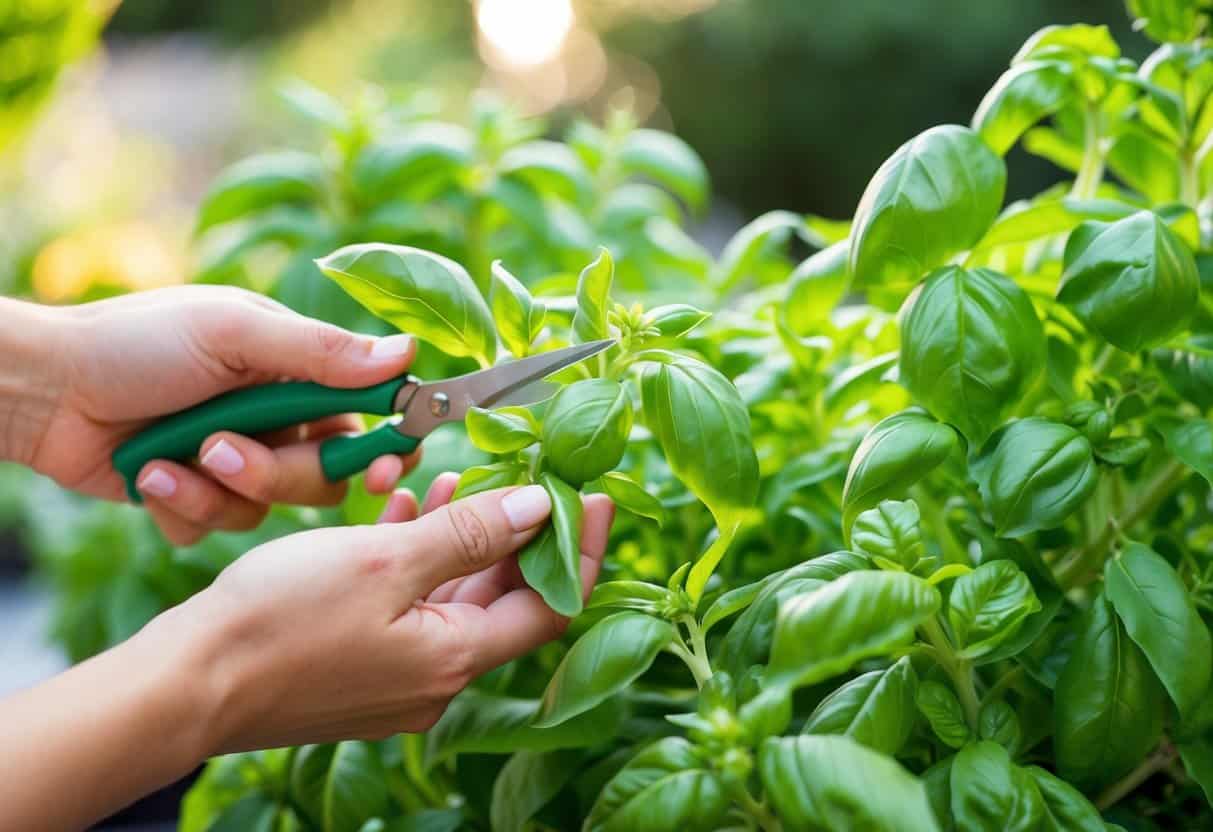
Basil is ready to pick once the leaves are a good size and the plant looks full. Harvesting the right way keeps your basil strong and pumping out fresh leaves.
When To Harvest
Start harvesting when plants are 6–8 inches (15–20 cm) tall and have several sets of leaves. The best time to pick is early morning, when the leaves are plump and full of flavor.
Basil grows fastest in warm weather—think 80°F (27°C) and up. If you harvest regularly, your basil stays bushy and healthy, and keeps growing more leaves all summer.
Avoid letting the plant flower; flowers can make the leaves taste bitter.
Regular picking encourages new growth.
How To Harvest
Use clean scissors or your fingers to harvest. Cut or pinch the stem just above a pair of leaves or a small growth node—where two leaves meet the stem.
This helps the plant branch out and get bushier. Don’t pull off single leaves from random spots; it stresses the plant.
Trim stems instead, so you encourage side shoots. Always leave at least two sets of leaves on each branch. Only harvest up to a third of the plant at a time.
Harvest only what you need. Trim often and your basil will reward you with more tender, tasty leaves all season.
Storing Basil
Fresh basil wilts fast, so storing it right really matters.
In Water
How-To: Snip basil stems and place them in a glass of water at room temperature, like a bouquet. Leave uncovered and out of direct sunlight.
How Long It Lasts: 3–5 days.
Dried
How-To: Harvest and tie small bunches of basil, hang them upside down in a warm, airy spot until the leaves are crisp, then store in an airtight jar.
How Long It Lasts: 6–12 months.
Frozen
How-To: Wash and chop basil leaves, pack them into an ice cube tray with a splash of water or olive oil, then freeze.
How Long It Lasts: Up to 6 months.
Preservation Tips
Pinch leaves only when needed to keep flavor fresh.
Store dried basil away from light and heat for best taste.
Freeze leaves in small portions so you only thaw what you need.
Benefits and Uses of Basil
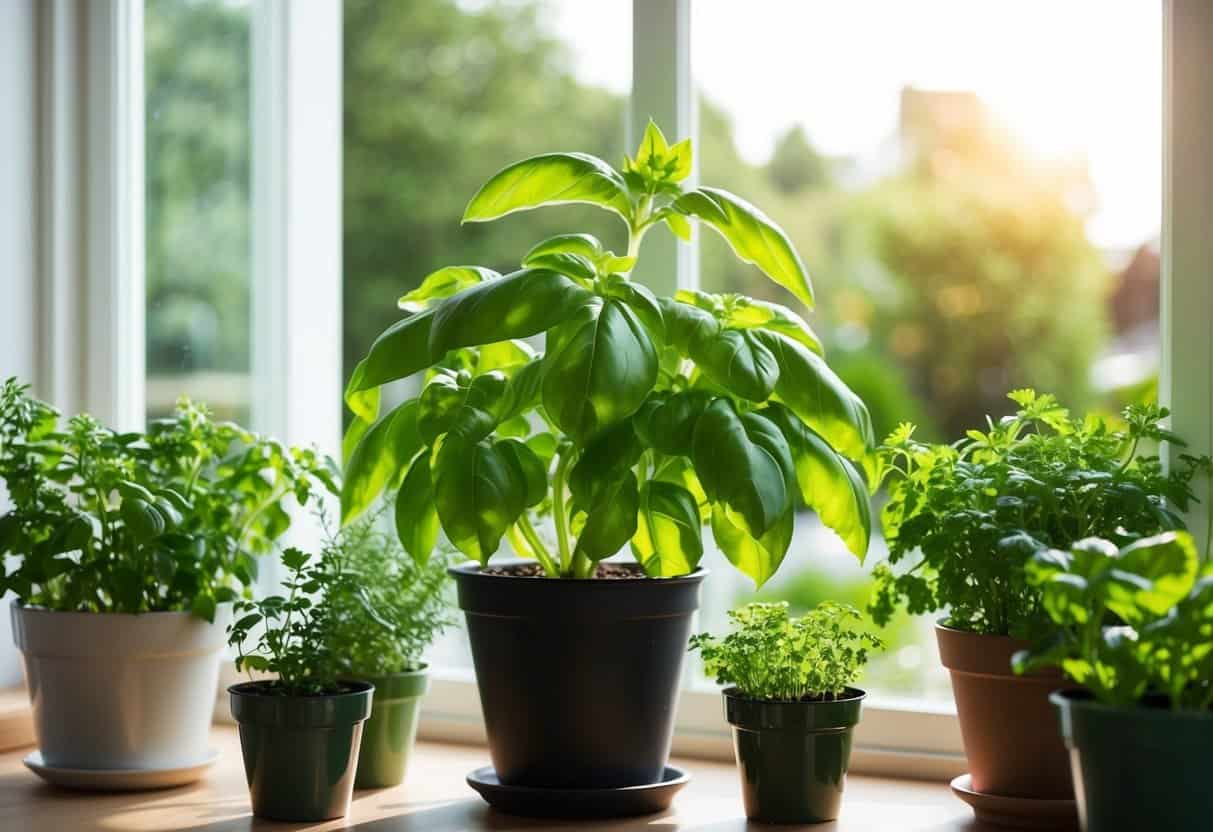
Basil is prized in the kitchen for its fresh flavor and bright scent. It’s got unique culinary uses and can help you whip up dishes your family will want again.
Cooking With Basil
Culinary basil is known for its sweet, peppery kick and that lively green color. You can chop it into salads, tuck a few leaves in a sandwich, or even fold some into scrambled eggs.
Most gardeners swear by homemade pesto—just blend basil with garlic, parmesan, pine nuts, and olive oil. It’s a classic, and honestly, there’s nothing quite like it.
Fresh basil’s best friends? Tomatoes, mozzarella, chicken, seafood, and pretty much any mild veggie you’ve got. Add the leaves whole, torn, or sliced thin—just do it near the end of cooking, since heat can zap that flavor fast.
If you wind up with more basil than you know what to do with, try this: snip the stems and pop them in a glass of water. For longer stashing, freeze chopped basil in ice cube trays with olive oil—makes whipping up a meal way easier.
Family Recipes
Want to mix things up? Toss chopped basil into fruit salad—seriously, it’s fantastic with strawberries or watermelon. Who knew?
Quick Family-Style Basil Recipes
Classic Basil Pesto: Blend 2 cups (about 50 g) fresh basil, 1/3 cup (35 g) pine nuts, 1/2 cup (50 g) grated parmesan, 2 garlic cloves, and 1/2 cup (120 ml) olive oil. Spoon it over pasta, potatoes, or grilled fish.
Tomato-Basil Bruschetta: Dice 2 medium tomatoes, mix with a handful of chopped basil, 1 tbsp (15 ml) olive oil, and a pinch of salt. Pile onto toasted baguette slices.
Thai Basil Chicken: Cook sliced chicken breast with garlic, chilies, and Thai basil. Serve over jasmine rice. Quick, spicy, and kind of addictive.
Basil-Lemon Butter: Soften 1/2 cup (115 g) butter, mix in 2 tbsp (8 g) chopped basil and zest of one lemon. Try it on corn or grilled veggies.
Australian Basil Omelette: Whisk 3 eggs, pour into a hot nonstick skillet, sprinkle with basil and cheddar, and fold once the eggs are just set.
Try This: Make basil ice cubes—chop fresh basil, mix with a splash of water, and freeze in trays. Drop a cube into soup or sauce for a quick flavor boos
Frequently Asked Questions
Basil needs warmth, bright light, and steady moisture to really thrive. You can grow it from cuttings, start from seed, or even rehab a store-bought plant if you’re up for a little experiment.
What are the ideal conditions for growing basil indoors?
Basil likes at least 6 hours of direct sun. If your window’s not sunny enough, a grow light does the trick.
Keep the room above 60°F (15°C) and away from cold drafts. Use well-draining potting mix, and water when the top inch (2.5 cm) feels dry. If your house is dry, mist the leaves sometimes—basil appreciates a little humidity.
Can you walk me through the steps for propagating basil from cuttings successfully?
Snip a healthy stem about 4 inches (10 cm) long, just below a leaf node. Strip off the lower leaves, leaving two or three sets at the top.
Stick the cutting in a glass of clean water, making sure no leaves are submerged. Set it in bright, indirect light. Roots usually show up in a week or two. Once they’re about 2 inches (5 cm) long, move the cutting to moist potting soil.
How can you transfer a supermarket basil plant to your garden?
Supermarket basil is usually packed tight in tiny pots. Gently pull the plant out and separate it into smaller clumps, each with roots attached.
Plant each clump in well-drained soil, spacing them 6–8 inches (15–20 cm) apart. Water well, and give them a few days in the shade to recover. Trim any sick or damaged leaves and let your new basil plants settle in.
What tips and tricks can help you grow basil in water?
Start by cutting a healthy basil stem. Pull off the leaves from the lower half—nobody wants soggy leaves floating around.
Drop the stem into a glass of clean, room-temperature water. That’s really all it takes to get started.
Remember to swap out the water every few days. Basil likes things fresh, and so do you, right?
When you spot roots about 2 inches (5 cm) long, you’ve got options. Move it to soil if you’re feeling traditional, or just keep topping up the water and let it keep doing its thing.
Basil grown in water likes bright, indirect light—nothing too harsh. You can snip off leaves for cooking whenever you need a little flavor boost.
If you’re curious, chives can be started in water too. Parsley, though? It’s just not as happy unless it’s in soil.