
There are a lot of different herbs that you can plant in your garden, but did you know that some herbs are better when planted together? In this article, we will discuss what herbs to plant together and why, as well as which ones to avoid planting together for the best success.
Companion Planting with Herbs
Companion planting is the practice of growing different types of plants together for mutual benefit. Companion plants can help protect each other from pests and diseases, and they can also improve the soil quality.
When it comes to companion planting with herbs, there are a few things to keep in mind. First, you want to make sure that the herbs have similar light, water, and soil requirements. Second, you should avoid planting herbs that will compete for the same nutrients.
We cover some of the most popular herb combinations for companion planting latter in this article but lets cover the difference between annual, biennial and perennial plants.
Annual, biennial and perennial plants examples.
Annuals - are plants that grow, flower and die all in one season. All the roots, stems and leaves die off each year. The only part of the plant that survives is the dormant seed, which will start the process over again the next season.
Perennials - are plants that come back every year. The top part of the plant might die off in the winter, but it will grow back again in the spring. Some perennials keep their leaves all year round.
Biennials - are plants that take two years to grow. The first year they grow a small rosette of leaves close to the ground. The second year they grow taller and flower, and then they die.
Annual/Perennial - Depending on how long a plant can grow, it may act like an annual or a perennial. In the southern United States, these plants grow quicker than those in the north as a result of the warmer weather and longer growing season.
Types of herbs
There are 3 main uses for herbs, culinary, medicinal and ornamental.
Culinary herbs are what we use to add flavor to our food, including drinks. Common examples include basil, rosemary, and thyme.
Medicinal herbs have been used for millennia to treat a wide range of illnesses. Lavender, and chamomile are just a couple examples of medicinal herbs.
Ornamental herbs are grown for their aesthetic appeal. They are often used in landscaping and can add color and interest to your garden. Some examples of ornamental herbs are borage, calendula, and nasturtium.
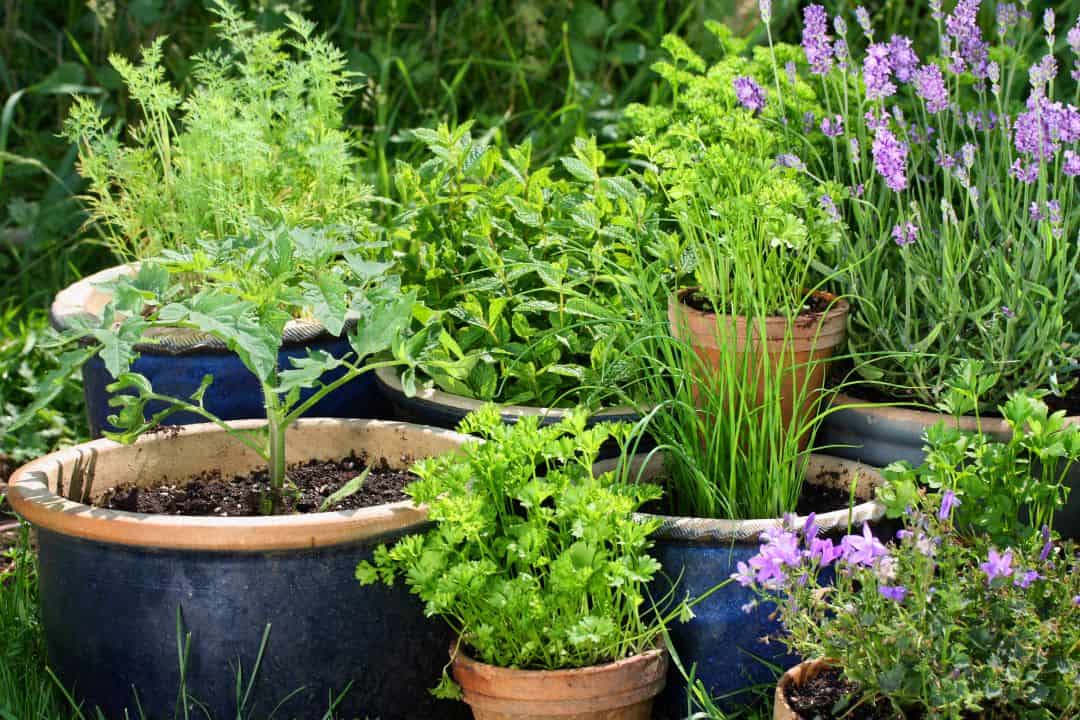
What Herbs Grow Well Together
There are four groups of herbs each group of plants has different needs in terms of soil, sunlight and watering. It is best not to mix the groups, but to plant them separately in your garden.
- Mediterranean herbs
- Moisture-loving herbs
- Lemon scented herbs
- Nursery herbs
The first group of herbs is the Mediterranean herbs. These plants like dry soil and plenty of sunlight. They include oregano, rosemary sage and thyme - the “classic Italian” herbs,
The second group of herbs are the moisture-loving herbs. These plants need moist soil and benefit from some shade on the hottest of days. They include basil, parsley and dill.
The third group of herbs Lemon scented herbs. Which include, lemon thyme , lemon balm and lemon verbena. These herbs need well-drained soil, full sun and regular watering.
The fourth group of herbs are the Nursery herbs. These plants can be grown in a variety of soils, but prefer moist soil. They include catnip, chamomile and tarragon.
What Herbs Do Not Grow Well Together
Rosemary
Rosemary does not get along with most other herbs. Sage is the only herb that can be used in the garden as a companion for rosemary. Rosemary, on the other hand, is an excellent combination with a variety of vegetables, it favorite friends include broccoli, beans and cabbage.
Basil
Basil prefers the company of vegetables to other herbs. In the garden bed, other herbs, especially rue and sage, should be kept at a safe distance from basil. When planting in containers I have always done best with basil in its own pot but if you must group make sure to pick other moisture loving herbs.
Tomatoes and basil are peas in a pod when it comes to vegetable-herb combinations. These two are also notable garden partners, since each plant is supposed to improve the other's flavor.
Cilantro
This herb, also known as Mexican parsley, grows in the cool season and is shade-tolerant. Fennel is the only herb you should avoid when growing cilantro because the two are extremely competitive when planted close to each other.
Sage
Sage is another plant that enjoys growing near to veggies and fruits over the majority of other herbs. The only herb sage will grow with is rosemary, so it's best in the vegetable garden or its own pot.
Dill
Dill is great herb but keep dill away from lavender in the herb garden, they are not the best of friends!
Mint
While Mint gets along with most others, is a has a very invasive nature, so keep that in mind when considering at as a companion plant in the garden or it will soon take over.
The various flavors of mint (peppermint, spearmint etc.) grow well together but there is a risk the plants will cross pollinated and change the flavor to something unexpected and maybe no so nice.
Consider planting mint in its own container or in a plastic pot buried in the garden to help contain its invasive roots.
Tarragon
Tarragon is a nature-nurturing plant that improves the taste and growth of whatever it's planted next to, making it a popular choice among gardeners. You can't go wrong with tarragon in any area of your yard.
Garlic
Garlic is one of the most useful plants to cultivate, since it repels just about every pest that may try to eat your garden. Garlic thrives alongside almost every other plant, with the exception of sage and parsley.
Q&A
What herbs grow well with chives?
Chives, like parsley, cilantro, tarragon, and basil, prefer moist soil that isn't too damp or sandy. Avoid planting Chives with the Mediterranean herbs, which like it drier and sandier soil.
Can parsley and basil be planted together?
Yes, parsley and basil are great herb companions since they both want for full-sun to partial shade exposure and require similar watering.
Can rosemary and lavender be planted together?
Yes. Both rosemary and lavender are plants from the Mediterranean area that require similar growing conditions for both sunlight and irrigation.